




What is swag? Swag is a marketing tool that focuses on practicality rather than direct advertising.
When someone searches for swag meaning, they usually don’t just want to know what swag is or what swag means. The real question is why swag is still important in the business world.
In this article, we’ll find the answer to the question “what does swag mean”, explore how it’s evolved, and explain why it’s still one of the most effective ways for brands to communicate with their audience.
Ready?
What Does Swag Mean? (Quick Answer!)
Swag, or branded merchandise, refers to physical promotional products like apparel, tech accessories, drinkware, etc. Companies use them for branding and marketing purposes, because they function as an effective form of indirect advertising through practical, everyday use. Swag makes a brand memorable and useful overtime.
If you’re a business owner looking to implement effective advertising through swag, Alpha Imprint is your trusted partner, offering over 250,000 promotional products Houston businesses and beyond trust, ready to be personalized with your logo.
Swag Meaning: What Does Swag Mean?
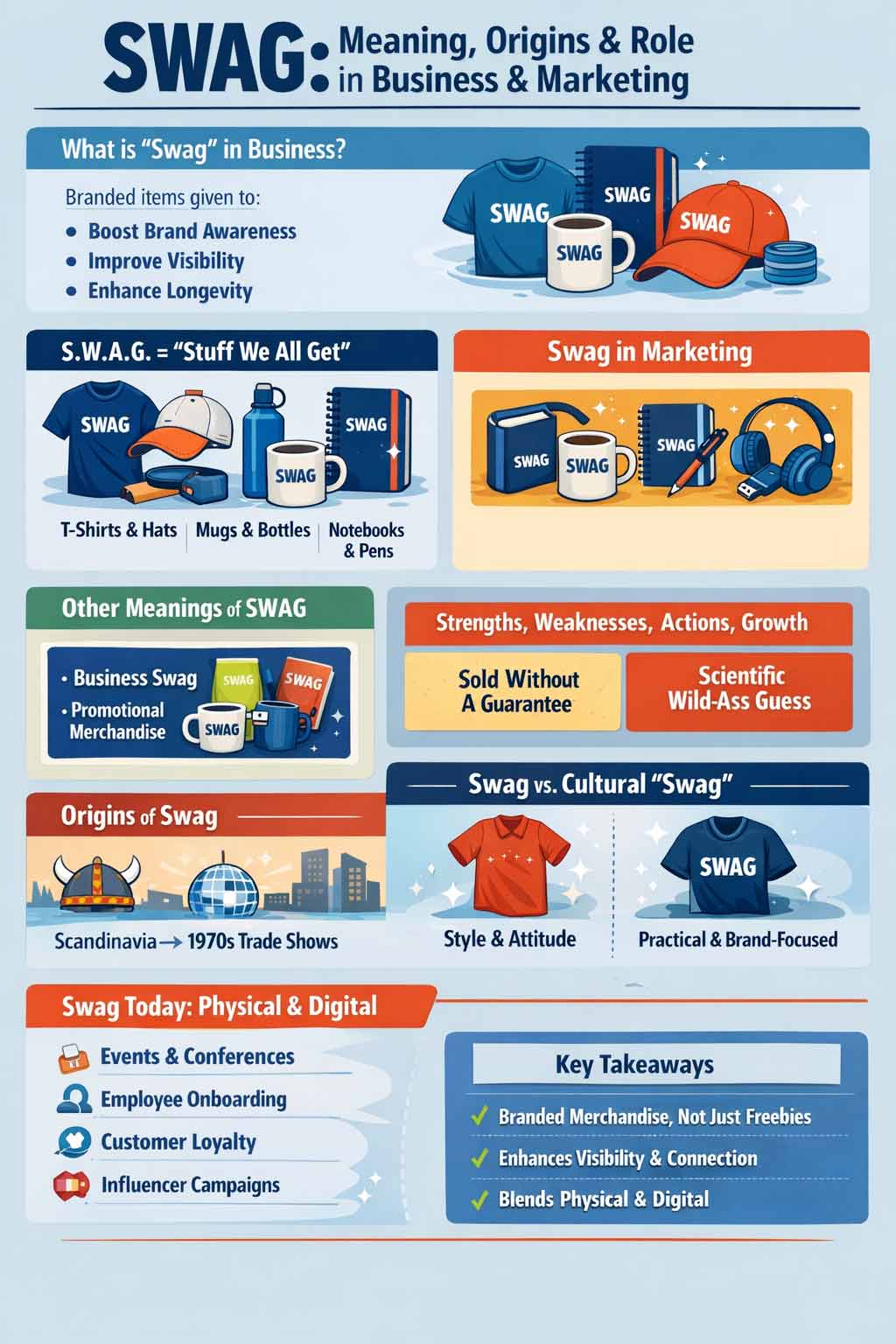
Swag meaning? In business and marketing, swag refers to branded items or gifts a company distributes to build brand awareness, visibility, and longevity.
Swag is often known as the famous acronym for “Stuff We All Get”, items everyone takes and keeps, from mugs and t-shirts to notebooks and digital devices.
In professional environments, the term business swag or marketing swag refers to branded merchandise or promotional merchandise; products that bring a brand’s logo or message into the everyday lives of the audience.
However, swag doesn’t have just one meaning. In some management texts, SWAG can refer to concepts such as Strengths, Weaknesses, Actions, Growth, or even Sold Without a Guarantee.
In the scientific space, the humorous term “Scientific Wild-Ass Guess” is sometimes used, though more for professional humor.
It’s important to note that marketing swag is different from its cultural uses. In popular culture, swag is more about “style,” “swagger,” or a sense of confidence. In marketing, however, swag is quite practical and tangible.
The term’s roots go back to Scandinavia, but its modern use began in earnest in the 1970s, with the rise of giveaways at trade shows and events.
Today, swag is part of both digital and physical branding strategies, serving as a bridge between the brand and the audience’s experience. That that we discussed swag definition, let’s find out who is swag for. Also, be sure to read our guide on what are promotional products.
Who Is Swag for and What Does It Do?
Who Buys Swag?
Swag buyers are usually organizational leaders. Companies of all sizes, from startups to large brands, use corporate swag for many different reasons.
Marketing teams use swag to promote their brand at events. HR teams give swag as onboarding gifts and to encourage employees. Event teams hand out swag at trade shows and conferences.
Non-profit organizations, schools, sports teams, and social campaigns also use swag to raise funds and build awareness.
What Is Swag Used For?
Swag can be used in many ways:
- Promoting a brand to increase its visibility
- Engaging customers to build loyalty
In a company, swag is given as onboarding gifts to boost employee morale or show employee appreciation.
Outside the company, it is a valuable tool for event swag, Trade show giveaways, fundraising, and event branding.
Even a simple item can send a strong message again and again.
Who Receives Swag?
People who receive swag include employees, current and potential customers, students, brand advocates, volunteers, and sponsors.
Recently, influencers and content creators have become important too, as swag is now often used in giveaways and partnership campaigns.
In the end, swag is meant for anyone who interacts with your brand, not just those who notice it.
What Are the Main Types of Swag?
Promotional Giveaways
This is the most common type of swag and is usually used at trade shows, events, or mail-order campaigns. Items such as pens, tote bags and simple mugs fall into this category and serve as the foundation for brand promotion at these gatherings.
Building on this, the primary goal of trade show promotional products is to get noticed quickly and make a first impression. Although these products are usually inexpensive, they need to be useful swag; something that will actually be used.
In recent years, brands have increasingly gravitated toward sustainable swag and eco-conscious products, “choices that speak before words do.” Through these considered selections, companies signal stewardship, accountability, and commitment to responsibility beyond the logo.
Corporate Gifts
This is where swag comes in. Corporate gifts are usually given to key clients, business partners, or employees. Items such as high-quality tumblers, branded apparel, and even small electronics fall into this category.
This type of swag is often associated with employee appreciation, client retention, and occasions such as year-ends or significant milestones.
Believe me, the actual value lies not in gratitude.
Items for Fundraisers & Support for Causes
In fundraising campaigns, swag isn’t just a gift; it’s the voice of a message. Nonprofits, schools, and community groups use items like bracelets, T-shirts, reusable bottles, or products with inspirational quotes to get people involved in their cause.
This type of fundraising swag is often sold or given to supporters as a thank you, creating a real sense of involvement.
When a simple gift can both raise awareness and attract financial support, swag becomes a powerful tool in cause marketing and donor appreciation, not an additional expense.
School Spirit Items
School swag is an essential part of an educational identity, especially for student recruitment and building team spirit.
From school-themed clothing to notebooks and spirit merchandise for students, teachers, and alumni, this type of swag is more than just a gift; it’s part of the shared memory and identity of an educational community.
Examples of Swag
Branded Office Essentials
This is the most common and long-lasting type of branded gifts because it goes straight into the workplace.
Pens, notebooks, mouse pads, sticky notes, webcam covers, or phone stands are all tools that are used every day. For example, one tech startup that hires remote workers includes eco-friendly notebooks and webcam covers in its welcome pack.
These gifts are simple, but they create a sense of belonging and organization from day one.
Drinkware & Kitchenware
Beverage and kitchenware make highly visible swag, especially for recipients who enjoy practical gifts that can be used both at home and in public.
Mugs, tumblers, collapsible cups, and reusable food containers can be good custom printed items that all appeal to users looking for daily function.
A good example: A real estate company gives new home buyers a small gift pack that includes a coffee mug, a wooden cutting board, and a branded coaster. These kinds of items easily integrate into the family’s everyday life.
Wearable Swag
Wearable clothing and accessories remain popular swag.
Examples? T-shirts, hoodies, hats, and ID lanyards are functional and reinforce visual identity.
Universities are a good example. Many of them give new students hoodies and hats with the university logo during orientation week. This not only creates a sense of belonging, but can also be used for years to come.
Tech Accessories
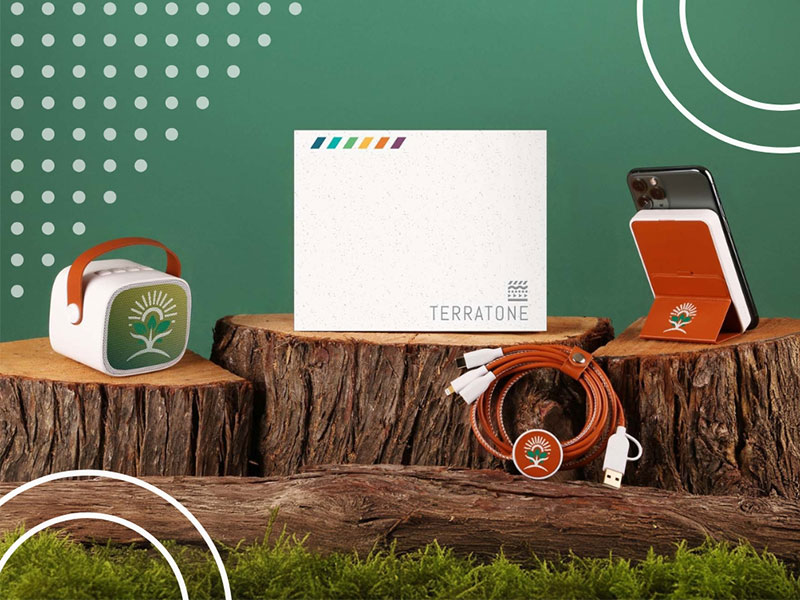
Technology accessories are very attractive to today’s audience. Charging cables, phone cases, wireless AirPods, Bluetooth trackers, or optical pens are choices that have high perceptual value.
For example, a SaaS company sends attendees a charging kit after a training webinar, including a multi-function cable and a mouse pad. This gift directly aligns with the audience’s work style.
Sustainable & Eco-Friendly Swag
This type of swag is not just a green choice; it’s a clear message: “We care about the future.”
When a brand goes for sustainable products, it’s actually demonstrating its values in tangible ways. Items like recycled bags, biodegradable pens, or bamboo accessories are both functional and create a sense of responsibility.
Such gifts are not usually thrown away; they are used and seen, which gives the brand credibility. This is where swag goes from being a simple gift to part of brand amplification.
What Is a Swag Bag?
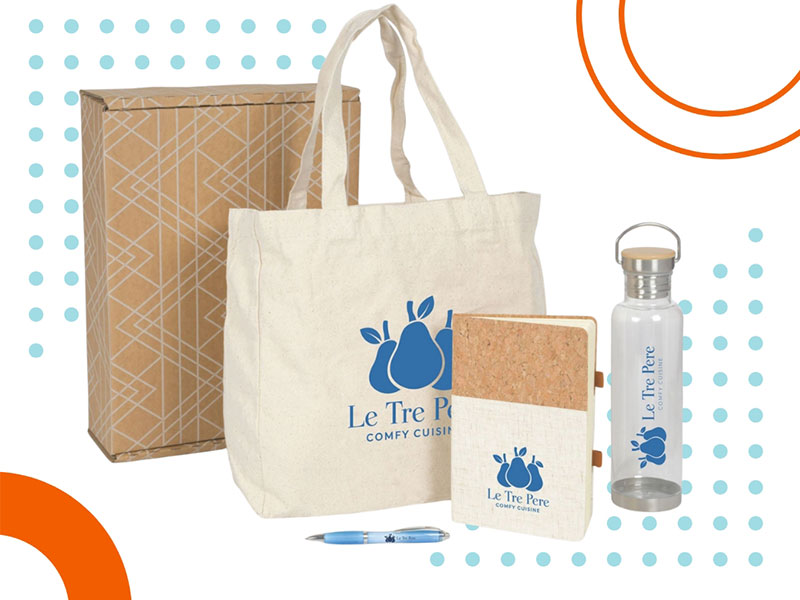
At its simplest, a swag bag is a package or gift bag that purposefully bundles several branded items together. Unlike a single gift, a swag bag is designed as a mini-experience; something that, when opened, tells the brand story step by step.
Swag bags have a variety of uses today. They are used in onboarding kits to welcome new employees, as brand introduction packages at conferences and trade shows, and as branded gift sets for influencer marketing campaigns or customer acquisition.
Even at online events, brands send physical swag boxes or a combination of physical and digital items to maintain a human connection.
The key is personalization. A swag bag can be designed based on role; for example, employee welcome gifts for remote workers with a mug, notebook, and webcam cover, or a pack specifically for real estate agents as a closing gift. Theming is also common, from Earth Day to the holiday season.
Nowadays, many brands use swag stores and dedicated platforms to make bulk or personalized orders easier to manage. Well, a good swag bag is not just a collection of gifts; it’s a lasting first impression of your brand.
Does Swag Mean Cheap Stuff That Gets Thrown Away?
When many people hear the word swag, they still think of cheap pens or gifts that get lost at the bottom of a desk drawer after a day.
But the truth is that this image is a thing of the past. Today, swag, if chosen correctly, is not just thrown away but becomes a part of people’s daily lives.
The main difference is the strategic choices.
For example, a well-made notebook, a simple but functional webcam cover, or a small technological gadget are seen and used much more than a flashy but useless gift.
In recent years, the wave of eco-friendly swag has also changed perceptions. The use of bamboo, wheat straw, or recycled plastic demonstrates the brand’s commitment to corporate responsibility and the environment.
This approach is part of sustainable branding and makes the audience feel better about the brand.
There are many functional and durable examples: folding straws, recycled notebooks, or small high-tech gadgets. Rather than being “promotional junk,” such gifts become valuable swag; something that builds trust and reinforces brand value.
Conclusion
So, now that you understand swag meaning, and know the answer to the question “what does swag mean”, you know swag matters most when it shifts from a mere giveaway to a memorable experience. If a brand understands what it offers, who it’s for, and why, swag stops feeling disposable. It becomes something the audience remembers; something helpful.