



Wondering what are promotional products? Well, that question is something everyone keeps asking today, especially now that digital ads are boring people out. The answer? What we touch, we remember.
If you don’t know the answer to the question: what is promotional merchandise? Or why so many big brands invest in them, this guide is for you.
In a world where messages disappear in a second, a good promotional product can be the most lasting touchpoint with your consumer, that stays visible every day.
And that’s where impact truly begins.
What are Promotional Products?
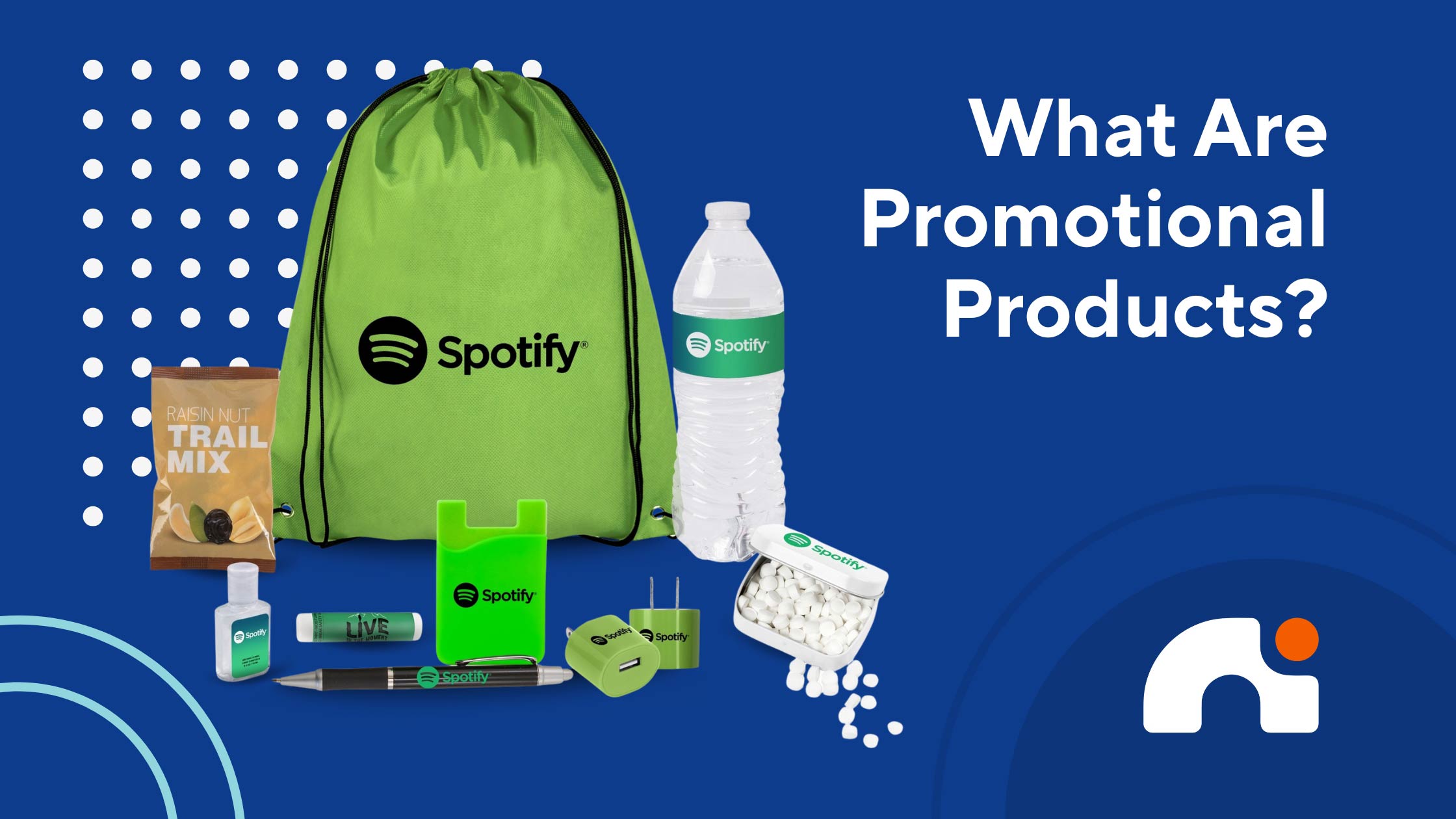
So, what is promotional merchandise? Well, when we talk about promotional products, we mean simple, tangible items that a company personalizes with its logo or message and delivers to customers, employees, or even event attendees.
These small promotional items have become a permanent part of the business world for years. They are almost an undetachable part of modern marketing, physical items that stick to minds like they are never living, with your brand logo there to remind people that you care about them.
These small promotional items have become a steadfast presence in the business world for years. They are almost an undetachable part of modern marketing, physical tokens that fasten themselves to memory as if they never loosen, with your brand logo lingering there to remind people that you hold them in regard.
The reason is clear: These products slowly but surely introduce the brand to the audience, creating a lasting connection.
If you take a quick look around, you’ll notice them everywhere, right?
At a sports event, the T-shirts that are distributed to the crowd are actually promotional products.
A new employee who receives a “swag bag” containing a notebook, water bottle, or branded hat on their first day on the job is getting their first real taste of the brand identity.
Trade shows are also often filled with small but useful giveaways, from charging cables to lightweight bags. Even a new student might receive a branded pen or t-shirt on their first visit to campus.
In the big picture, these aren’t just giveaways; they’re tools that businesses can use with complete control to grow their brand, increase awareness, and build a quiet but deep connection.
How Promotional Products Help Businesses

Now that you know what are promotional gifts, let’s see how can they actually help businesses.
To understand exactly how promotional products help businesses, look at how a simple gift can shape a professional connection.
When you attend a conference or trade show, hundreds of cards and brochures are passed around, but what really sticks in the mind is a functional, attractive giveaway.
Just “touching” a product creates a more lasting impression; something a business card can never do.
A high-quality product, whether it’s a thoughtfully designed booklet or a quality mug, quietly sends a strong message: “This brand values details.”
Research also shows that most people equate the quality of a gift with the quality of the company. So, if the gift is well-received, the brand feels more trustworthy.
These products have another advantage: they create an immediate sense of rapport.
When someone receives a gift that truly helps them, they feel understood by the brand. That small gesture is the beginning of a long-term relationship, as long as the brand stays in touch afterward.
Why Promotional Products Work
Only learning about the definition of promotional products isn’t enough, you also need to understand why promotional products work.
The secret to the effectiveness of promotional products is their simplicity. People hold onto things that are genuinely useful; their daily use keeps the brand top of mind in a subtle way. After all, everyone enjoys receiving a gift.
In a world where everything is digital and fleeting, a physical item can build a real connection; a connection that lasts much longer than any short-term ad.
How Do Organizations Obtain Promotional Products?
At first glance, sourcing promotional products can seem complex. However, most organizations follow a relatively simple process.
The entire process in the promo industry revolves around two main groups: suppliers and distributors.
- Suppliers produce and customize the items
- Distributors understand the brand’s needs, recommend products, and manage the order.
Companies usually start with a distributor, define the product idea, choose the type of customization, and leave the rest to them.
But it’s not just about “sourcing”; what’s important is how and where organizations use these products.
Many businesses rely on them to attract new customers or boost their presence at events. When companies unveil a new product, they often include a few branded gifts to create a friendlier atmosphere or encourage interaction.
These products also play a big role inside organizations. A simple gift can significantly strengthen an employee’s connection to the company or show appreciation to partners and investors. I can’t emphasize what are promotional products to employees, it is a touch of importance, to tell your staff you think about them, that you care.
These products also play a big role inside your organizations, A simple gift can profoundly fortify an employee’s tether to the company or convey reverence to partners and investors. I can’t emphasize what are promotional products to employees, it is a modest token of consequence, a quiet herald to our staff that you keep them in your thoughts, that you care.
Key Considerations When Choosing Promotional Products

When choosing the right promotional products for your brand, see it as more than just a purchase. You must know which promo products work best for you, and know how to use promotional products effectively.
These products are small extensions of your brand identity; something people touch, use, and sometimes keep for years.
That’s why choosing the right one goes far beyond a simple gift. You need to look at what honestly communicates your brand message while also being valuable to your client.
Know your user
People respond to things differently depending on their age, lifestyle, and interests. A tech product might be great for younger employees, but it might not appeal to more traditional customers.
Remember, the better you know your consumer, the better your choices will be.
Make sure the product matches your brand identity
Brands that emphasize quality or luxury can’t afford to give a gift that feels “cheap.” In contrast, young, creative brands often go for colorful or unique options.
Function plays a big role, too
People keep what they use. A product people use regularly will also remind them of your brand.
Your budget also comes into play
Choosing between the right price and the right quality is always a challenge. Still, experience has shown that in reality, very cheap items can damage the brand’s credibility.
Personalization, construction quality, and the product’s eco-friendliness
When you put these factors together, you end up with a product that stands out and communicates your brand message effortlessly.
In additional to all these factors, knowing the event in which you are giving away your promo items can help a lot; for more info on that, check out our guide on how to choose promotional products for events.
What Are The Distribution Techniques for Promotional Products?
The way promotional products are distributed is almost as important as the product itself. A great gift loses much of its impact if it is not presented at the right time or place.
That is why successful brands always consider where, how, and to whom they will give the gift.
One popular method is using an internal store. This system allows employees to choose what they want, which creates a greater sense of belonging. In addition, inventory control and order management are also easier.
Exhibitions and conferences have always been top opportunities for distribution. At these events, people are ready to interact, and the right product can be a conversation starter.
Moreover, Customer and partner gifts can be especially impactful. A high-quality product chosen for a specific person usually helps strengthen the relationship.
Well, social media contests and participation in local events are three other practical ways. Each helps get your product into the hands of the right people in a different way, sometimes quickly, sometimes widely, but always with a measurable impact.
It’s important to align your distribution method with your marketing goals so that your promotional products actually get into the hands of someone who understands their value.
What Are Some Examples of Promotional Gifts?
When we talk about promotional gifts, we’re talking about a gift that becomes part of your user’s daily routine.
With Alpha Imprint, you can find custom orders that do exactly that: practical, visible, and memorable items.
Here are four popular products:
- Water Bottle or Thermal Mug
In a world of busy schedules and constant movement, having a personalized bottle has become a necessity. A branded bottle that’s used every day is a huge opportunity for your brand.
- Backpack or Tote Bag
They’re a smart choice for people who move around a lot or don’t work at a desk. Alpha Imprint offers a wide selection of promotional tote bags and backpacks
- Tech gadgets like power banks or USB chargers
In the age of dead batteries and always-on mobile phones, a device people actually use quickly becomes a favorite item.
- Well-designed T-shirts or hoodies
Today, promotional clothing is no longer just about the logo; color, size, material, and even design are important for the new generation. When someone proudly wears a branded T-shirt, your brand becomes part of their lifestyle.
What Is the Expected Lifetime of Promotional Merchandise?
With so much fast-paced, short-lived advertising out there, promotional products have one important feature: they last.
But how long do they actually last, and what makes a product stay with consumers?
The longevity of promotional items mainly depends on three factors.
1. everyday use
A product that truly serves a purpose, a good pen, a lightweight notebook, or a small charging cable, will naturally become part of the daily routine, making people more likely to keep it.
2. Quality
A sturdy water bottle or a well-made T-shirt will last for years, while cheap items tend to get tossed quickly.
3. Emotional connection
If the color, design, or even the story behind a product creates a positive emotional response, it’s more likely to be kept. This is where personalization comes into play.
According to the industry reports, some products stay in people’s homes or workplaces for a year or more. High-quality bags are used for months, and calendars stay on desks or walls for the entire year.
This longevity means that a small gift can be seen hundreds or thousands of times, offering far more exposure than most digital ads.

Are Promotional Products an Effective Marketing Tool?
The short answer is: yes! More than you might think.
But their effectiveness depends on how and for what purpose a brand uses them. When a promotional product is both useful and effectively conveys the brand’s message, it becomes a tool that can raise awareness, drive engagement, and even influence customer behavior.
According to reliable promo industry data, the power of this tool is no accident. Almost all consumers, nearly 100%, are willing to take action to receive a promotional gift, whether that means filling out a form or visiting a booth.
Even more interesting, 96% of consumers prefer to know about it even before receiving it; the very anticipation of receiving a product creates engagement.
About 80% of people respond immediately to a promotional item, even if they don’t recognize the brand.
Here’s a key insight: Nearly three-quarters of consumers directly link the quality of a promotional product to brand credibility.
What’s more, promotional products have been chosen as the most effective way to generate a response across generations, from Baby Boomers to Gen Z. They even outperform online, print, mobile, and TV ads.
Finally, the big advantage of these products is their “stickiness.” A small gift that’s used every day can keep a brand’s message alive in a steady way, something that many other advertising methods can’t do.
Which Are Best for My Organization
There is no one-size-fits-all approach to choosing the best promotional products for any organization; it depends entirely on the industry, business objective, and brand identity.
What works great for a tech startup might be completely meaningless for a service company or an environmental brand.
So, the starting point is always this question: What do people actually use?
That’s why wearables, like t-shirts, hats, bags, and anything that’s “worn” or “carried”, have been among the most popular and effective promotional items for years.
People wear them, others notice them, and they generate thousands of impressions. Most importantly, they can be used for almost any type of organization.
But the range of choices is much broader than that. Companies should consider three main factors when choosing a product:
- Mission and Values
If a brand emphasizes sustainability, a disposable plastic product is not a good choice. Similarly, a luxury brand cannot give a cheap and poor-quality gift without damaging its image.
- Coordination with core products or services
It’s best to choose an item that does not challenge the company’s own products or confuse customers. Promotional products should complement the brand.
- Brand identity and strategy
The brand’s tone and personality should be visible in the product, from the color and material to the intended use. An item that reflects the brand’s personality stays in people’s minds longer than anything else.
To make a better choice, many companies use a simple yet effective method: surveying the recipients of the gift. It simplifies the decision and helps ensure the product will be genuinely useful.

Terms Related to Promotional Products
When you enter the world of promotional products, you’ll come across a range of jargon that will make choosing and managing your orders much easier.
These terms are used throughout the promo industry and serve as the shared language among brands, distributors, and manufacturers.
Promotional Merchandise / Promotional Items
These terms simply refer to any product that has been customized with a company’s brand and is used for marketing purposes or as a promotional gift.
Branded Swag
A popular, informal term used professionally in the industry, usually for more attractive, popular items that people love to keep. Such as special mugs, hoodies, designer stickers, or tote bags.
Customization / Imprint
The process of adding a logo, message, corporate colors, or other branding elements to a product. This customization can be printed, embroidered, UV, or even a private label.
CPM / Cost Per Impression
One of the most important concepts in advertising. This number shows how much you have spent each time your brand is seen on a product. Promotional products typically have very low CPMs.
Supplier vs Distributor
In the promo industry, manufacturers make the product, and distributors work with brands, take orders, and deliver it to customers.
Understanding these terms will help you make better choices, place smarter orders, and get the most out of promotional products.
Build Your Brand Using Promotional Products from Alpha Imprint
Brands that want to be seen don’t just advertise, they create experiences.
Alpha Imprint does exactly that: turning a simple logo into something that’s in the hands, on the desk, or with the customer every day. The products in this collection are designed to be both functional and professional, which is what a brand needs to stay top of mind.
At Alpha Imprint, the variety of products allows any business to find something that suits its personality, from minimalist brands to companies looking for a bold or tech-forward look.
The main advantage of this collection is its high-quality printing and customization. Choosing the right color, material, and printing type turns your gift into something more thoughtful and branded.
Conclusion
Well, now you know the answer to the question: what are promotional products? Promotional products aren’t just a gift; they’re a small extension of your brand that becomes part of people’s everyday moments. Now you know what is promotional merchandise, use them to silently build trust, spark conversation, and continue to make an impact years later. That longevity is what makes them one of the most reliable marketing tools.