


Construction signage is more than just a few signs on a fence. If it’s chosen or installed the wrong way, it could cause a serious accident or lead to a hefty fine.
A construction project involves movement, noise, and hidden dangers. That’s why signage matters. If you’re wondering what signage is required on a construction site, it’s not just one or two signs. Signs are essential for safety, compliance, and communication.
Below is a complete breakdown of required signage and a checklist.
What Signage Is Required on a Construction Site? (Quick Answer!)
| Sign Category | What You Must Post | Examples | Why It’s Required |
|---|---|---|---|
| Danger Signs (Red) | Immediate life-threatening hazards | High Voltage, Open Excavation, Falling Objects | OSHA requirement for deadly hazards |
| Warning Signs (Orange) | Serious hazards | Heavy Equipment Operating, Crane Swing Radius | Prevent serious injury |
| Caution Signs (Yellow) | Minor/moderate hazards | Slippery Surface, Trip Hazard | Reduce accident risk |
| Mandatory PPE Signs | Required protective gear | Hard Hat Required, Eye Protection Required, High-Visibility Vest Area | Required where hazards exist |
| Restricted Access Signs | Entry limitations | Authorized Personnel Only, No Trespassing | Prevent unauthorized entry & liability |
| Fire Safety Signs | Fire equipment & procedures | Fire Extinguisher Location, No Smoking | Emergency readiness |
| Emergency Signs | Exit & medical info | Emergency Exit, First Aid Station, Assembly Point | OSHA compliance & emergency response |
| Traffic & Directional Signs | Vehicle & pedestrian control | Truck Entrance, Speed Limit, Delivery Area | Prevent collisions & confusion |
| Project Information Board | Site identification | Contractor Name, Permit Number, Contact Info | Typically required by local authorities |
| Legal & OSHA Notices | Worker rights postings | OSHA Safety Notice | Federal compliance requirement |
What Is Construction Signage and Why Is It Important?
Definition and Purpose
When we ask what signage is required on a construction site, we must first understand what construction signage is.
Construction site signage refers to the collection of signs and symbols installed to communicate hazards, guide people, and maintain order on the worksite.
A construction site is full of potential hazards, from falling objects to moving heavy equipment. This is where hazard communication signage plays a vital role. Signs are installed not only for workers, but also for visitors, subcontractors, and even passersby around the project.
Construction safety signs help everyone know where to wear a hard hat, which routes are prohibited, and which areas are at risk of electrocution. In fact, construction site signage is the first line of defense against accidents.
Legal and Liability Implications
From a legal perspective, it’s not just about safety; it’s also about liability. Under OSHA requirements, employers must keep the workplace safe, and that obligation begins with the proper installation of construction signage.
The lack of warning signs can result in hefty fines, project shutdowns, or even lawsuits.
If someone enters a hazardous area without warning and is injured, the lack of construction site signage may constitute negligence.
What Signage Is Required on Construction Site? (Mandatory Categories Explained)
When an employer or contractor asks what signage is required on a construction site, they are not just referring to a few simple signs. Construction signage must be selected in strict accordance with construction site signage requirements and safety standards.
These sign ideas are directly related to preventing accidents and reducing legal liability.
OSHA Safety Sign Classifications (Danger, Warning, Caution)
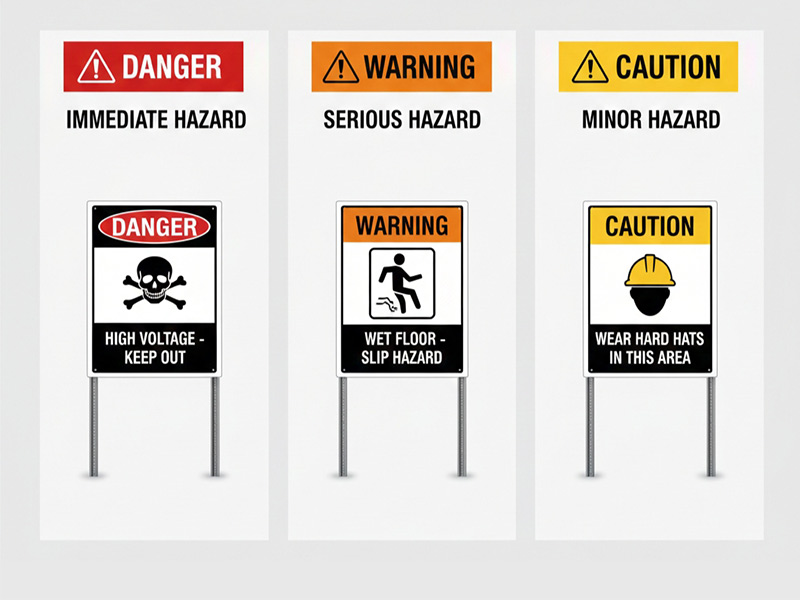
According to OSHA construction site signage standards, signs are categorized by hazard severity.
“Danger” is red for immediate and deadly hazards, such as “Danger: High Voltage”.
“Warning” is orange for serious but non-immediate hazards.
“Caution” is yellow for milder risks.
This classification serves as the basis for many construction safety and warning signs.
Mandatory PPE & Safety Requirement Signs
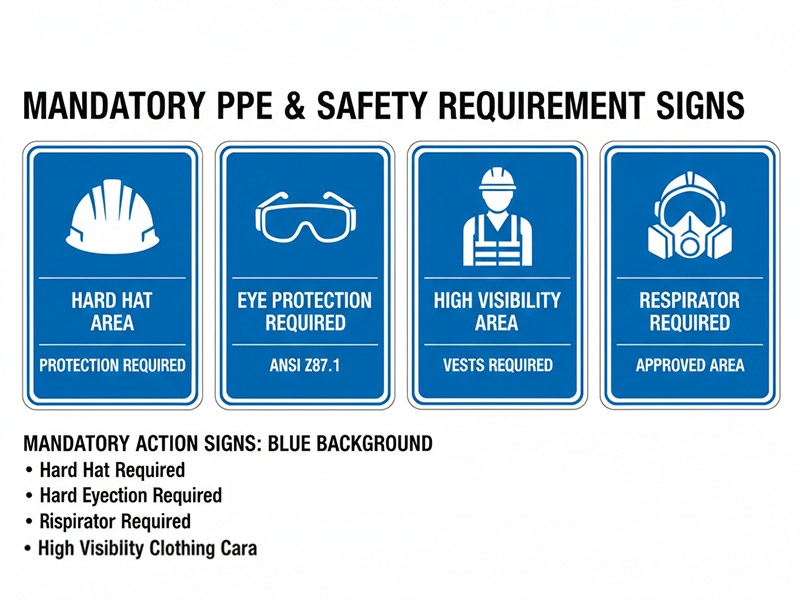
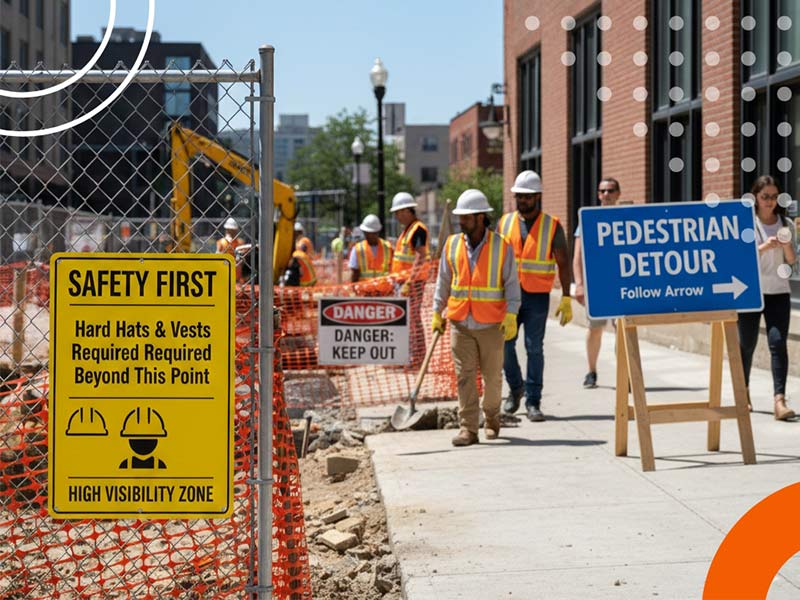
Many projects need PPE requirement signs. Signs such as “Hard Hat Required”, “Eye Protection Required”, or “High Visibility Clothing Area” are examples of mandatory safety signs.
These types of building site safety signs are required when there is a risk of falling objects, dust, or heavy machinery.
Restricted Access & Admittance Signs
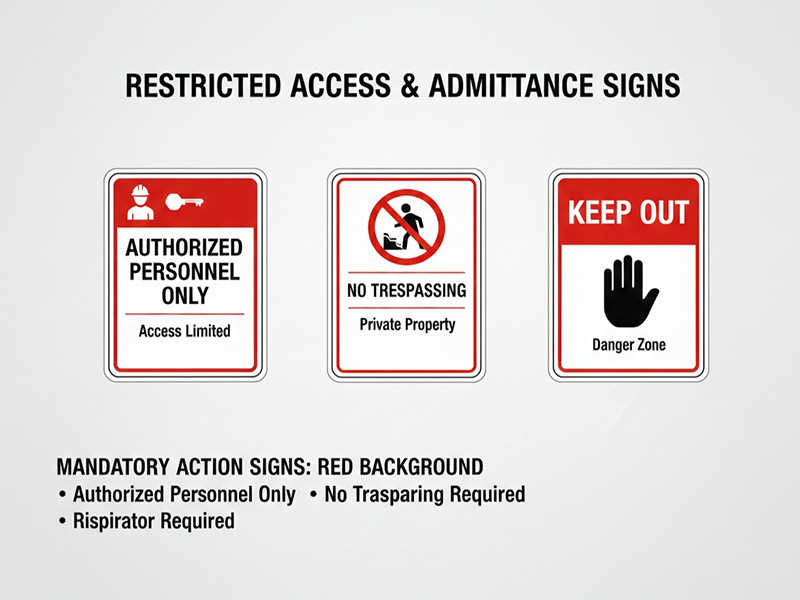
“Authorized Personnel Only” or “No Trespassing” signs are the most important restricted-area signage.
These types of admittance signs and construction site warning signs are installed to protect the public and prevent unauthorized entry.
Fire & Emergency Signs
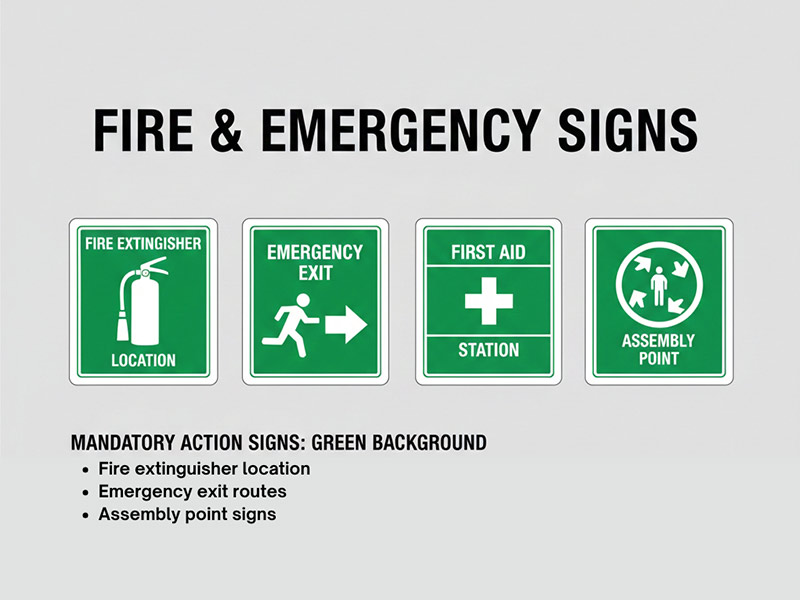
Every project should have emergency procedure signage, including fire safety signs for fire extinguisher locations, emergency exit routes, and assembly points. This complements the on-site construction safety signs setup.
How Alpha Imprint Helps You Meet Construction Site Signage Requirements
When a project is underway, the last thing a site manager wants is delays due to a lack of safety signs.
Alpha Imprint supports contractors when safety signage can’t wait. We specialize in producing construction signage that meets OSHA construction site signage standards, helping you comply with these requirements.
From large project-site signs to construction safety and warning signs, all are custom-sized and delivered quickly, with sun- and rain-resistant materials. That means you can focus on building rather than worrying about signs.
Don’t hesitate, get our signage Houston services today and experience the quality and speed you deserve. We proudly serve customers nationwide.
Informational and Directional Construction Site Signage
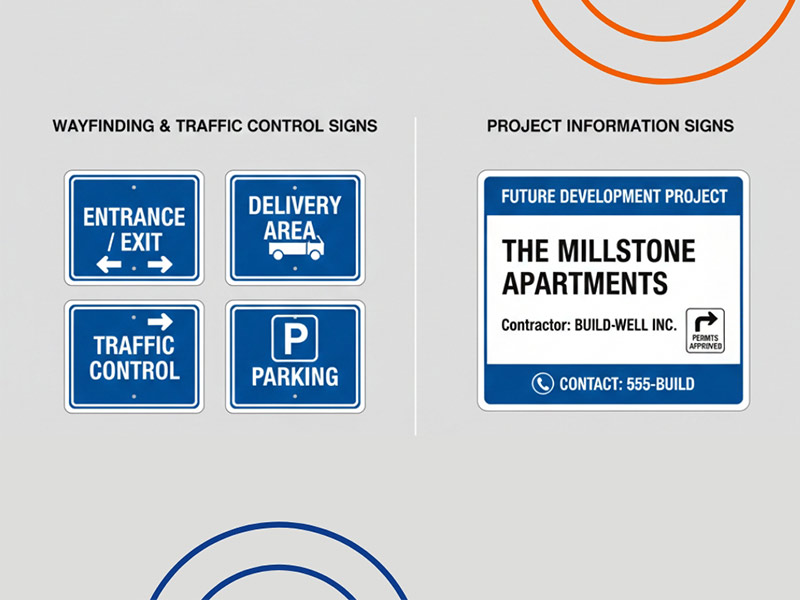
Not all signs on a construction site are hazard-related. An essential dimension of construction site signage lies in orientation and information, subtle instruments of order that shape movement and understanding across the worksite, creating what might be called “structured clarity amid controlled chaos.”
When you have a large site with multiple entrances, heavy machinery, and many visitors, a lack of clear signage can lead to confusion, internal traffic, and even accidents.
Wayfinding & Traffic Control Signs
Entrance and exit signs, unloading areas, parking areas, and truck routes are the mainstays of directional construction signage.
Imagine a concrete truck driver entering a project for the first time. If construction site wayfinding is not clear, he may take the wrong turn or stop in front of a crane.
Using traffic control signs such as speed limits, “Truck Entrance,” or “Delivery Area” helps control traffic flow.
This type of construction site signage not only increases productivity but also reduces the risk of collisions between vehicles and pedestrians.
Project Information Signs (Site Boards)
Large project entrance signs, or site signs for construction, typically include the project name, contractor name, contact information, permit number, and legal warnings.
These signs are typically required at most construction sites.
For example, when a project is being built downtown, neighbors and city inspectors need to know who is responsible for the project and what number to call if a problem arises.
Alpha Imprint’s Professional Construction Site Signage Solutions
Alpha Imprint specializes in designing and producing construction site signs that are clear and easy to read.
We offer everything from directional signs and full wayfinding systems to large project signs and temporary fence graphics, all made with durable materials for outdoor use.
Besides making site and safety signs, we help you pick the right sizes, place signs properly, and build a clear navigation system to keep your site professional, safe, and organized.
Construction Signage Requirements: OSHA, ANSI & Local Standards
A thorough understanding of construction site signage requirements goes beyond simply putting up a few warning signs.
If you have a project under construction, compliance with federal and local standards is directly related to safety, potential fines, and even project shutdowns. Many contractors realize the importance of the issue only when an inspector arrives on site.
OSHA Signage Standards (29 CFR 1926.200 Overview)
According to OSHA construction site signage regulations in section 29 CFR 1926.200, signs must be clear and legible and posted at the location of the hazard.
These are called legible sign requirements, meaning the text must be readable from a reasonable distance and use standard words like “Danger,” “Warning,” or “Caution.”
For example, if there is a high-voltage power line in the worksite, the sign should be posted right next to the hazard, not 10 feet away.
This is the correct concept for compliance signage placement: the sign is installed in a location that provides a warning before a hazard is encountered.
ANSI Design Standards
ANSI sign standards focus more on design. Red is defined as a deadly hazard, orange as a serious hazard, and yellow as a caution. The use of pictograms is also required to ensure that even non-English-speaking people fully understand the message.
Readability at a distance, a font size appropriate to the installation location, and consistency in formatting are all part of the ANSI standard.
Local & Municipal Requirements
In addition to national standards, municipal regulations are also important. Some cities set specific dimensions and permits for street-facing signs.
Rules regarding temporary signs, project information, and building permit numbers are also considered construction site signage requirements. Ignoring these can result in fines or the need to remove the sign.
Construction Signage Checklist (Must-Have Signs for Every Site)
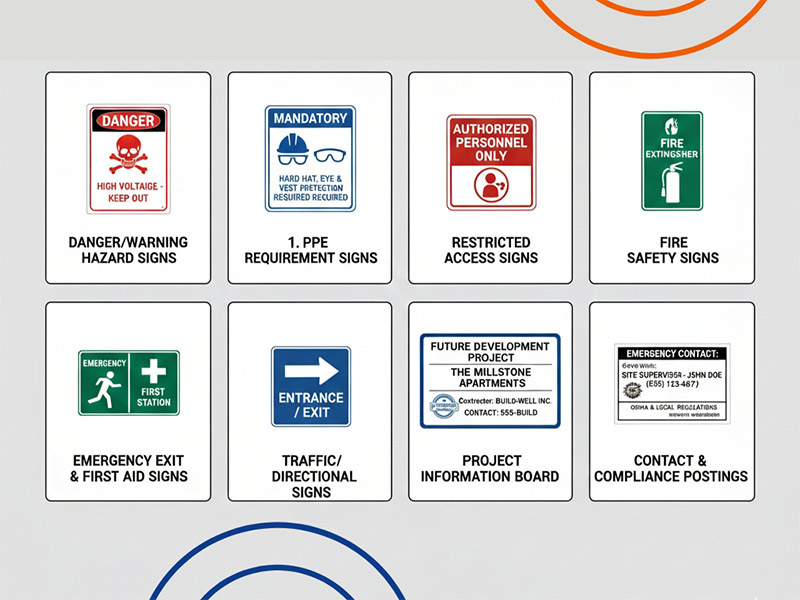
A good construction site signage checklist covers all the key areas. This list will help make sure you don’t miss any important signs:
- Danger/Warning signs for high voltage, falling objects, or open excavation – the foundation of construction safety signs
- PPE mandatory signs such as “Hard Hat Required” or “Eye Protection Required”
- Restricted access signs such as “Authorized Personnel Only”
- Fire safety signs and fire extinguisher locations
- Emergency exits and first aid areas
- Traffic signs and route guidance for truck access or parking
- Project information signs at site entrance
- Emergency contact notices and posted legal permits
This checklist should be reviewed periodically because, as the project progresses, risks and sign locations change.
Custom Construction Signs & Branding Opportunities
Branding & Marketing Signs
On many urban projects, the first thing people see is the fence surrounding the site. Using mesh banners on fences, in addition to providing visibility, creates a great opportunity to display your logo, services, and project information.
Post & Panel signs at site entrances, graphics on project vehicles, and full-width Fence Wraps are examples of construction branding signs that keep your brand visible throughout the project execution. This is where safety and marketing come together.
Construction Sign Ideas to Improve Safety & Engagement
Some of the best construction sign ideas don’t just warn, they communicate. For example, installing multilingual signs on projects with a diverse workforce reduces the risk of misunderstandings.
Digital boards to announce traffic changes, motivational safety signs (“Zero Accidents Starts with You”), and QR Code signs linking to online safety guidelines are modern custom construction signs that both drive engagement and increase accountability.
Why Choose Alpha Imprint for Custom Construction Signs
When it comes to the precise and professional execution of custom construction signs, details matter. Alpha Imprint doesn’t just print; it first considers the project type, location, and duration.
For example, if mesh construction site banners are to be installed on a metal fence exposed to the Texas sun, a UV-resistant material with reinforced hems is recommended.
On larger projects, the design team helps arrange logos, contact information, and safety messages to comply with construction signage regulations and ensure readability from a distance.
From custom fence wraps to post-and-panel signs and vehicle graphics, all are produced using durable outdoor printing.
The result? A site that is both secure and looks professional and trustworthy.
Best Practices for Construction Site Signage Placement & Maintenance
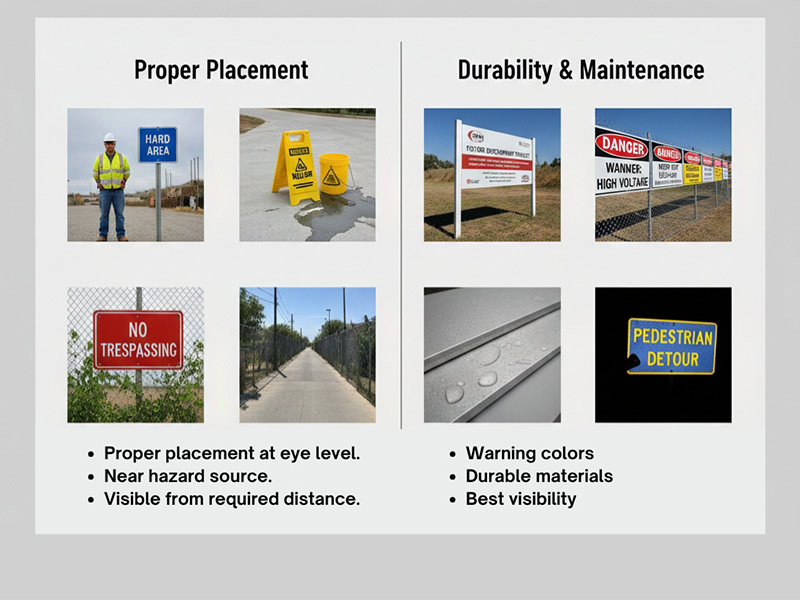
Proper placement of construction signage is as important as the sign itself; even the best construction safety signs lose their effectiveness when placed incorrectly.
Proper Placement
Signs should be installed at a visible height, typically eye level or slightly higher, so the worker can see them as they walk without stopping.
More importantly, the sign should be right next to the source of the hazard. If there’s a trench or open excavation, the warning should not be placed more than a few meters away from it.
It should also be legible from a distance and not obstructed by anything; no scaffolding, no equipment, not even a truck parked in front of the sign.
Placing signs in the correct locations is a key requirement of construction site signage rules.
Durability & Maintenance
Outdoor signs must be fabricated from resilient materials capable of enduring relentless sun, driving rain, and airborne dust without degradation. Incorporating reflective surfaces is essential for nocturnal visibility, particularly on projects that operate continuously, ensuring what can only be described as “uncompromised visibility in unforgiving conditions.”
A damaged sign won’t warn people effectively. So, it’s also important to check signs regularly.
Conclusion
A simple sign on a construction site can stop a serious accident. Construction site signage isn’t just for covering fences; it keeps workers, visitors, and passersby safe and helps lower legal risks.
If you haven’t checked your site’s signs recently, now that you know what signage is required on a construction site, take some time to review them and ensure they meet all requirements.
FAQs
What are the OSHA signage requirements for construction?
OSHA requires warning signs to be posted at hazardous areas, be easy to read, and use standard words such as Danger, Warning, and Caution in specific colors. These signs must warn people before they reach the hazard.
What signage is typically required on a jobsite?
Common hazard signs include those that require PPE, restrict access, show fire safety info, and mark emergency exits. Usually, a project info sign and emergency contact number are also needed.
What is mandatory signage?
A mandatory sign instructs you to take a specific action, such as wearing a hard hat or safety glasses. These signs appear where there’s a particular hazard.
Does OSHA require its law signage?
Yes, OSHA requires that notices about worker rights and safety rules be posted where everyone can see them. All employees should have easy access to these notices.
What are the 5 types of safety signs in construction?
The five main types are Danger, Warning, Caution, Notice, and Mandatory. Each one shows a different level of risk or instruction.
What are OSHA’s 3 most cited violations?
Falls from heights, lack of proper edge protection, and ladder problems are among the most commonly reported violations on construction projects. These are directly related to worker safety.