


Choosing the best fonts for signs is more than important. Imagine walking down a busy street. Dozens of signs compete for attention, yet only a few stand out. In many cases, the font makes the difference.
The font used on a sign can determine whether a message is seen at a glance or completely ignored.
Choosing the best fonts for signage enhances readability, visibility, and even brand recognition. From street signs to posters, different types of signs often require different font styles.
In this guide, you’ll learn which fonts are right for each type of sign.
What Are The Best Fonts For Signs? (Quick Answer!)
| Use Case / Goal | Recommended Fonts | Why They Work | Avoid |
|---|---|---|---|
| General signage (most cases) | Helvetica, Arial | Clean, highly legible, balanced | Script, overly decorative fonts |
| Modern / trendy signs | Futura, Montserrat, Bebas Neue | Geometric, minimal, contemporary look | Complex or traditional serif fonts |
| Attention-grabbing (short text) | Impact | Thick strokes, high visual impact | Long text in Impact |
| Elegant / classic signs | Garamond, Baskerville | Serif style adds formality and sophistication | Thin or overly stylized fonts |
| Outdoor signs | Helvetica, Arial, Futura | Readable at distance, bold and simple | Thin, low-contrast fonts |
| Street / road signs | Highway Gothic, Clearview | Optimized for fast recognition (drivers) | Any standard decorative font |
| House signs | Garamond, Baskerville (classic) / Sans-serif (modern) | Matches architectural style | Inconsistent or overly decorative fonts |
| Branding / store signage | Helvetica, Montserrat, Bebas Neue | Professional, clean, brand-friendly | Mixing multiple fonts |
| Artistic / niche signs | Decorative or script fonts (limited use) | Adds personality in close-range contexts | Using them for distance readability |
What Makes a Font Good for Signs?
Key Characteristics of Effective Signage Fonts
Choosing the best font for signs isn’t just about aesthetics; the most important factor is readability.
Signs should be readable at a glance, even from a distance. That’s why many effective signage fonts use appropriate stroke thickness, generous letter spacing, and simple letterforms.
One of the most important characteristics of easy-to-read fonts for signs is thick, clear strokes. Letters that are too thin are difficult to see in bright light or at a distance. Also, proper letter spacing makes words easier to recognize.
In fact, the most successful signage font styles convey the message clearly without unnecessary complexity.
When the font design is right, people can grasp the message in seconds. In professional sign design, letter height is often calculated based on viewing distance to ensure the text remains legible.
Common Font Mistakes to Avoid in Signage
A common mistake in sign design is using the wrong fonts. Many bad sign fonts are script or handwritten, making them difficult to read from a distance. While these font types are beautiful, they are not a good choice for signage.
Which fonts should you avoid for signage? Some fonts are too thin or too decorative. These fonts lose their clarity at large sizes or in different lighting conditions.
Another mistake is using multiple fonts on the same sign. Poor color contrast is another common problem, since even a good font becomes difficult to read if the background and text colors are too similar. This creates visual clutter and makes the message harder to read.
Many decorative fonts for signs are suitable for artistic posters, but they usually do not work well for functional signs.
10 Best Fonts for Signs (Used by Professional Sign Designers)
Helvetica; One of the Best Signage Fonts
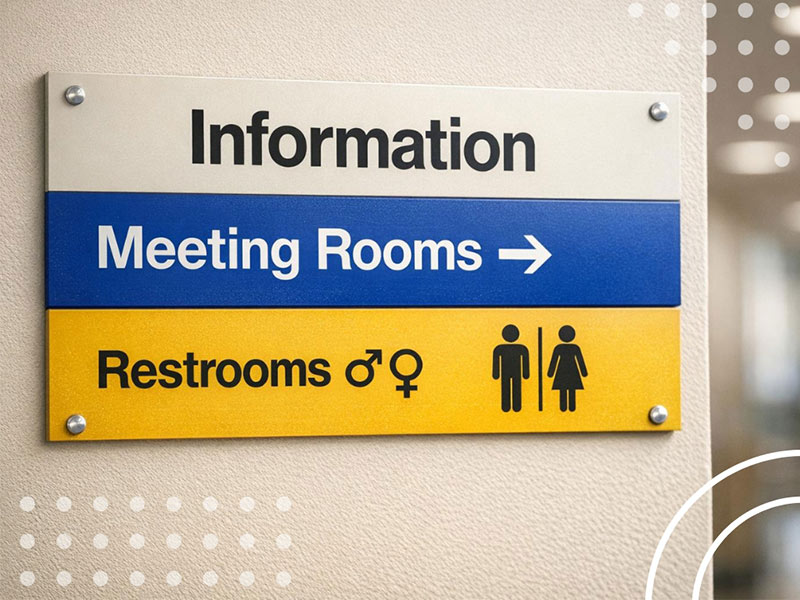
If there were to be just one option as the best signage fonts, Helvetica would always be on the list. The reason is simple: the letterforms in this font are balanced, clean, and highly legible. It’s neither too formal nor too decorative.
That’s why it’s often seen on corporate signs, interior building signs, and store branding. When a brand wants to look professional, clear, and trustworthy, Helvetica is often the best font for signs that gets the message across without drawing unnecessary attention.
Futura; Modern Font for Signs and Posters
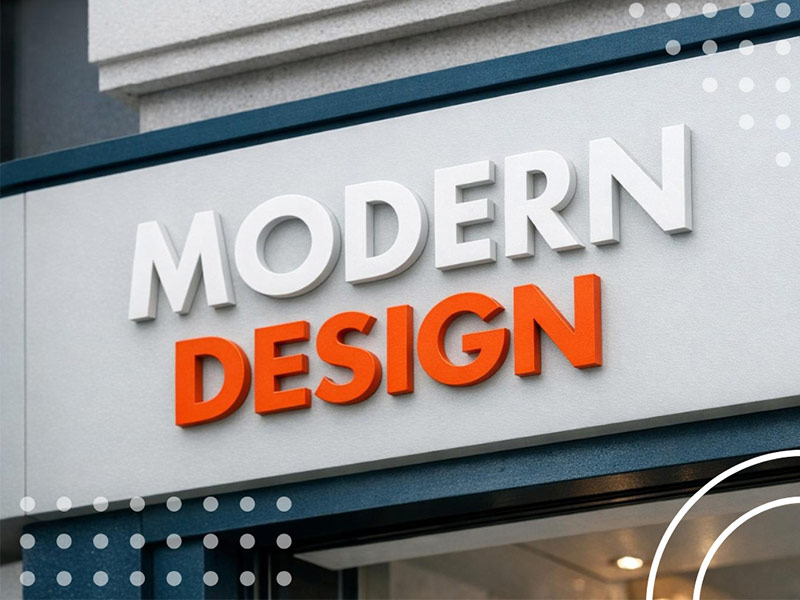
Futura is one of the fonts that works really well in modern design. Its geometric structure, clean lines, and minimal look make it a popular choice for contemporary advertising, store signs, and even poster board fonts.
If a modern cafe, design studio, or clothing store wants a more contemporary look, Futura can be a smart choice. Among the modern signage fonts, this font has both personality and visual order. That’s why many designers include it on their lists of best fonts for signage.
Impact; Bold Font for Attention-Grabbing Signs

When the goal is to grab immediate attention, Impact is often the first choice. Its thick letters and compact letter spacing make it very effective for posters, discount banners, and short-term advertising signs.
For example, phrases like “50% OFF” or “Grand Opening” immediately catch the eye in this font.
Of course, it should be used with caution, as it is not suitable for long texts. But for short, powerful messages, Impact is still one of the good sign fonts.
Montserrat and Bebas Neue; Modern Display Fonts

Montserrat and Bebas Neue are popular fonts for modern sign design. Their elongated letterforms, clean appearance, and good readability have made them popular for store signs, menu boards, and urban branding.
If you pass by a new boutique or minimalist store, you are likely to see one of these two fonts.
These two options are especially great for brand names or short headlines, making them popular choices for signage, with a modern, professional feel.
Garamond and Baskerville; Elegant Sign Fonts
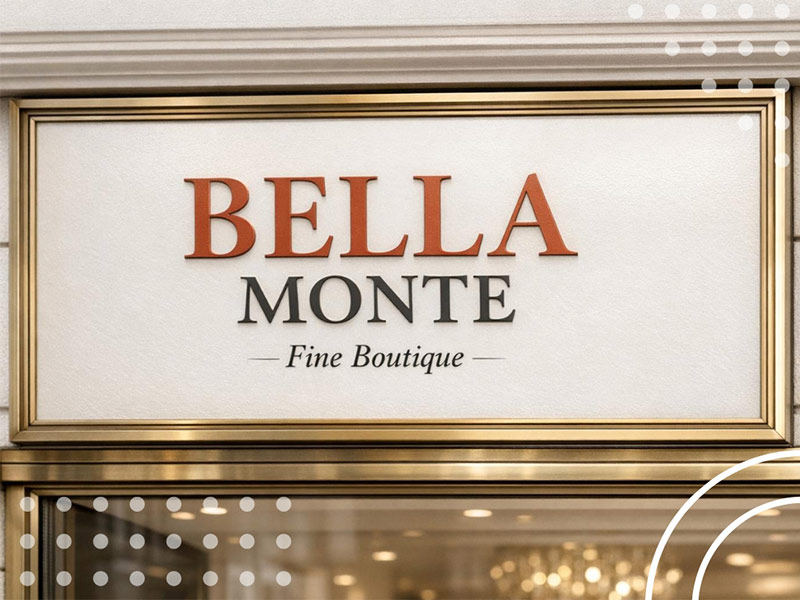
Not all signs are meant to be bold and modern. Some spaces need elegance. That’s where fonts like Garamond and Baskerville come in.
These serif fonts are great choices for classic restaurants, luxury boutiques, formal plaques, and even house signs. They create a sense of authenticity and dignity, without completely sacrificing readability.
For projects where a stylish, timeless look is important, these fonts can be among the best for signs, provided the letter size and spacing are set correctly.
Best Fonts for Different Types of Signs
Best Font for Outdoor Signs
Outdoor signs have special conditions. Sunlight, distance, and even the movement of people or vehicles can make it difficult to read text. That’s why choosing the best font for outdoor signs is very important.
Fonts suitable for outdoor spaces usually feature bold weights, simple letterforms, and proper character spacing.
In many projects, fonts like Helvetica, Arial, and Futura fall into the outdoor signage fonts category. These fonts have a clear structure and are readable even from a distance.
When a store wants to put its name on a sign, using easy to read fonts for signs allows customers to recognize the brand name faster.
Street Sign Fonts and Road Sign Typography
Street and road signs need to be read in a split second. For this reason, street sign fonts are usually specialized fonts designed for fast recognition.
Two popular examples of these fonts are Highway Gothic and Clearview. These are used as font for street signs and font for road signs in many countries, as the letter spacing and character shape are designed to help drivers recognize words faster.
These fonts are often paired with reflective materials and specific spacing standards to improve nighttime visibility.
Best Font for House Signs
House address signs or house number signs usually have a different style. The choice of font for house sign often depends on the house’s design and the sign’s material.
For a classic house style, serif fonts such as Garamond or Baskerville can be a good choice. This type of house sign font creates a formal and traditional look. In contrast, modern houses often use simple sans-serif fonts.
The material of the sign is also important. For example, in fonts for metal signs, fonts with clear lines and appropriate thickness are more readable.
Popular Signage Font Styles Explained
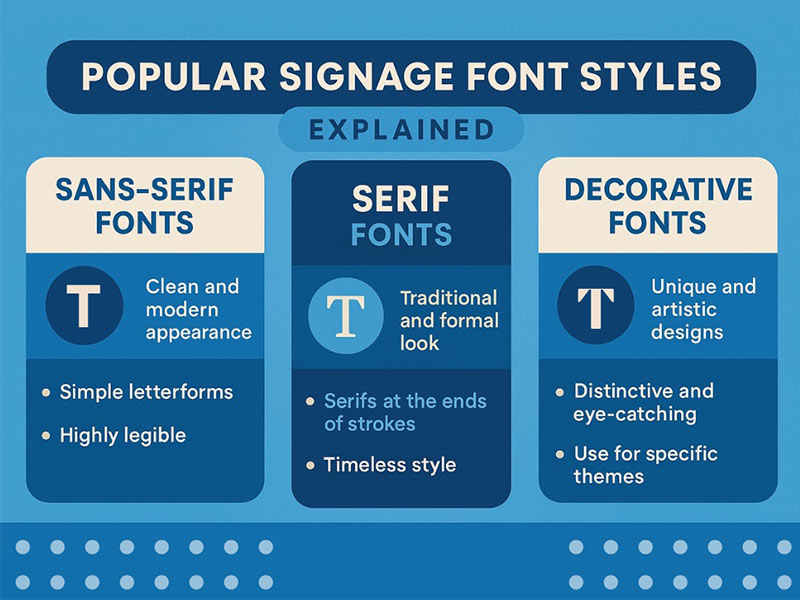
Sans-Serif Fonts (Most Common Signage Fonts)
In many signage projects, sans-serif fonts are the most commonly used. The reason is simple: high readability. Without decorative strokes, the shapes of the letters remain clear even at smaller sizes or from longer viewing distances.
Many of the signage font styles that we see in stores, city signs or business branding are from this family. Fonts like Helvetica, Arial and Montserrat are well-known examples of the best fonts for signage.
The simple structure of these fonts makes the letters clearly visible. When the text needs to be read in a few seconds, using easy to read fonts for signs becomes very important. For this reason, designers often turn to sans-serif fonts for store signs, advertising banners, or directional signs.
Serif Fonts for Classic and Elegant Signs
Serif fonts tend to have a classic and formal feel. These fonts have small, extra lines at the end of the letters, giving the text a more traditional look. For this reason, serif signage fonts are often used in settings that demand authenticity or luxury.
For example, classic sign fonts such as Garamond or Baskerville are used on signs for historic buildings, memorial plaques, or some classic restaurants. Of course, it should be noted that these fonts are usually better suited for short texts.
Decorative Fonts (Use Carefully)
Decorative fonts can be attractive, but they should be used with caution. Many decorative fonts for signs often feature intricate details or complex shapes, which can reduce readability.
These fonts are more commonly used in niche applications, such as boutiques, wedding signs, or cafe chalkboards. Some script fonts for signs are also good for creating a handwritten or artistic feel, but are usually not ideal for signs that need to be read from a distance.
Tips for Choosing the Best Font for Signs
The first thing to consider when choosing the best font for signs is readability. It is wise to favor bold, unembellished typefaces so the text remains discernible even from afar, “like a whisper that still carries across a crowded room.”
This is a lesson we’ve learned after 4 years of providing signage Houston businesses rely on.
Many of the best fonts for signage are highly readable due to their appropriate letter thickness and simple structure.
Also, be sure to test the text from several meters away. The color contrast between the background and the text is also very important. Finally, avoid using multiple fonts and choose one that aligns with the brand identity.
Conclusion
In signage design, choosing the right font directly affects the message’s readability and impact. Typically, the best fonts for signage are simple, clear, and easy to read from a distance.
Before finalizing the design, it is a good idea to test the font on an actual sign or mock-up to choose the best font for the sign type, material, and viewing distance.
FAQs
What is the best font for signs?
Fonts like Helvetica, Futura, and Arial are among the best fonts for signs because they are simple, bold, and highly readable.
What font is used for street signs?
Most street signs use specialized fonts such as Highway Gothic or Clearview, designed for fast recognition by drivers.
What are the easiest fonts to read on signs?
Easy-to-read fonts for signs include Helvetica, Arial, and Montserrat due to their clear shapes and strong letter spacing.