


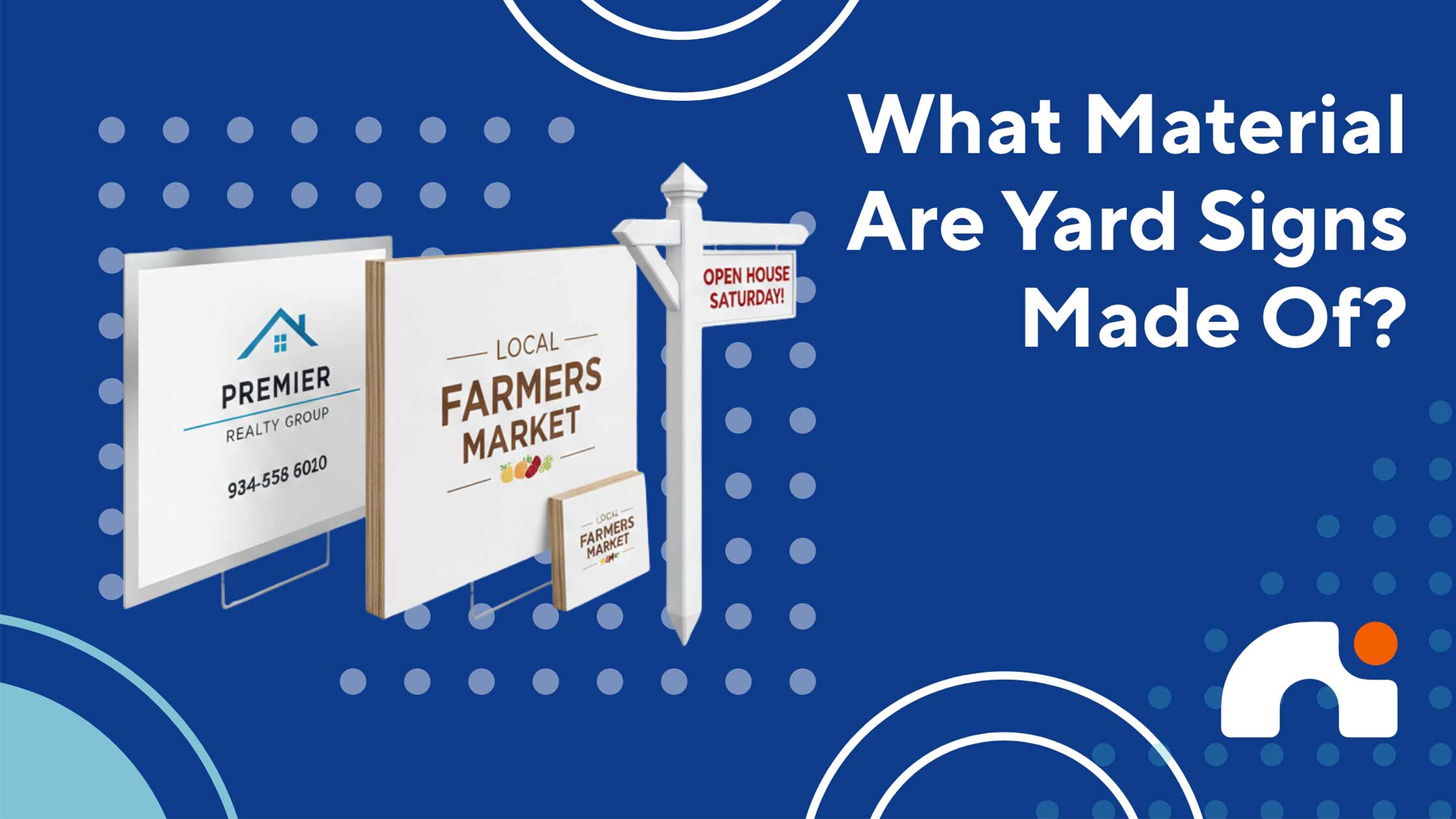
Wondering what material are yard signs made of? Well, that is a highly important question since print quality, longevity, and final cost all depend on making a smart choice between yard sign materials.
Choosing yard sign materials isn’t just a technical matter; it also directly affects durability, cost, longevity, and print quality.
This article focuses entirely on materials, what they are, how they perform, and which makes the most sense.
What Material Are Yard Signs Made Of? (Quick Answer!)
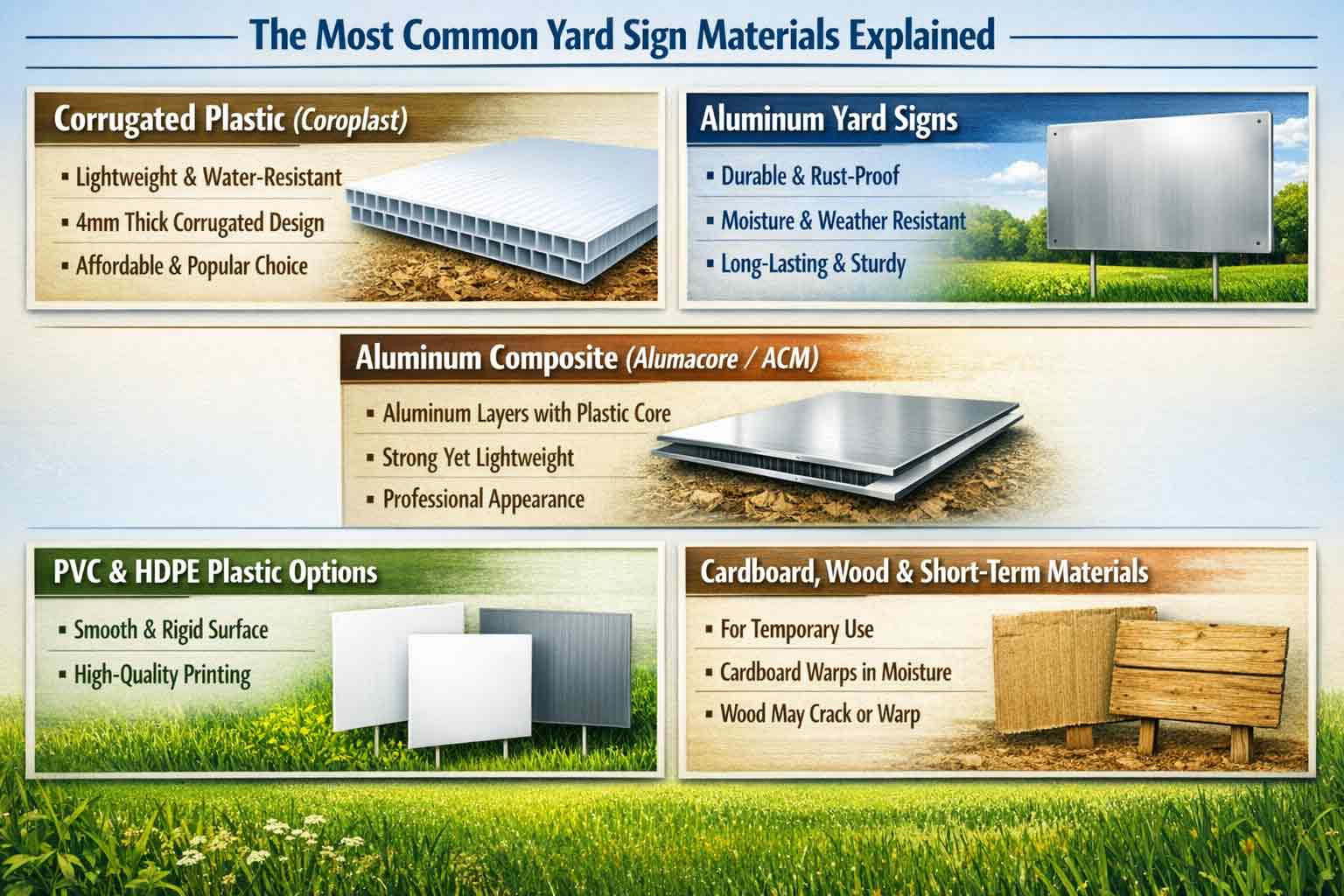
Here’s also a brief table for you:
| Material | Durability | Outdoor Lifespan | Cost Level | Best For | Key Pros | Main Drawbacks |
|---|---|---|---|---|---|---|
| Corrugated Plastic (Coroplast) | Medium | Several months | $ (Low) | Political signs, garage sales, short-term promos | Lightweight, waterproof, affordable, easy to print | Not ideal for multi-year use |
| Aluminum | High | Several years | $$$ (High) | Long-term business signage | Rust-proof, rigid, very durable, recyclable | Higher cost |
| Aluminum Composite (ACM / Alumacore) | High | Several years | $$ (Mid-High) | Professional outdoor signs | Strong but lighter than solid aluminum | More expensive than plastic |
| PVC (Rigid Plastic) | Medium-High | Months to 1+ year | $$ (Mid) | Signs needing smooth, high-quality print | Smooth surface, good print clarity | Less common, pricier than corrugated |
| HDPE Plastic | Medium-High | Months to 1+ year | $$ (Mid) | Stronger plastic needs | Denser, more durable than standard plastic | Not as common |
| Cardboard | Low | Days–Weeks | $ (Low) | Very short-term / indoor | Cheap, lightweight | Absorbs water, warps, fades fast |
| Wood | Low-Medium | Short-term | $$ (Mid) | Rustic / decorative use | Natural look | Heavy, can crack/warp outdoors |
Why Yard Sign Material Matters
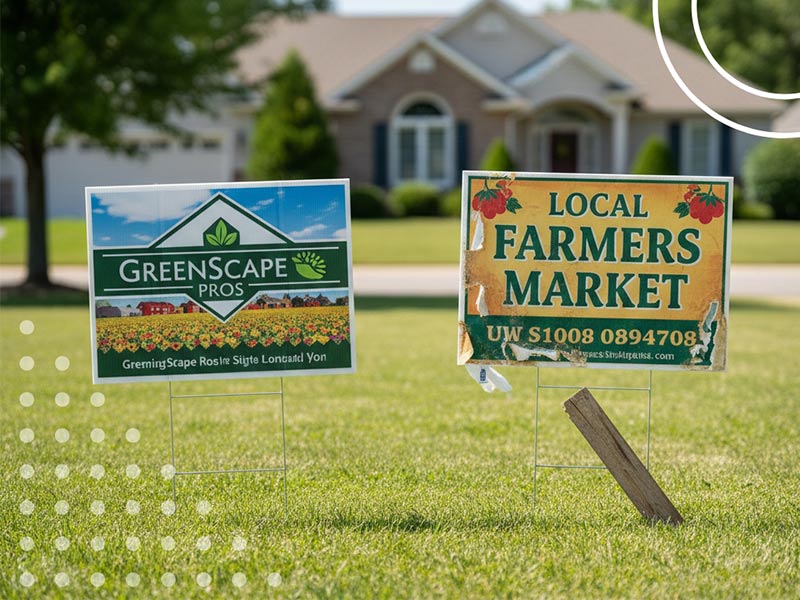
Have you ever wondered what material are yard signs made of and why it matters so much? Many people focus on price, but the sign’s material directly affects its performance.
For example, what happens if you choose a yard sign material that isn’t suitable for outdoor use? Colors fade in the sun, and the professional look is lost, right?
In contrast, using weather-resistant sign materials will help ensure clear printing and increased durability. So, making the right choice means achieving true outdoor sign durability, not just buying the cheapest option.
The Most Common Yard Sign Materials Explained
What are lawn signs made of? Below, we will take a closer look at the most important yard sign materials to understand what each one does. All types of yard signs come with either of these materials, so you have all of them covered in this guide.
Corrugated Plastic (Coroplast)
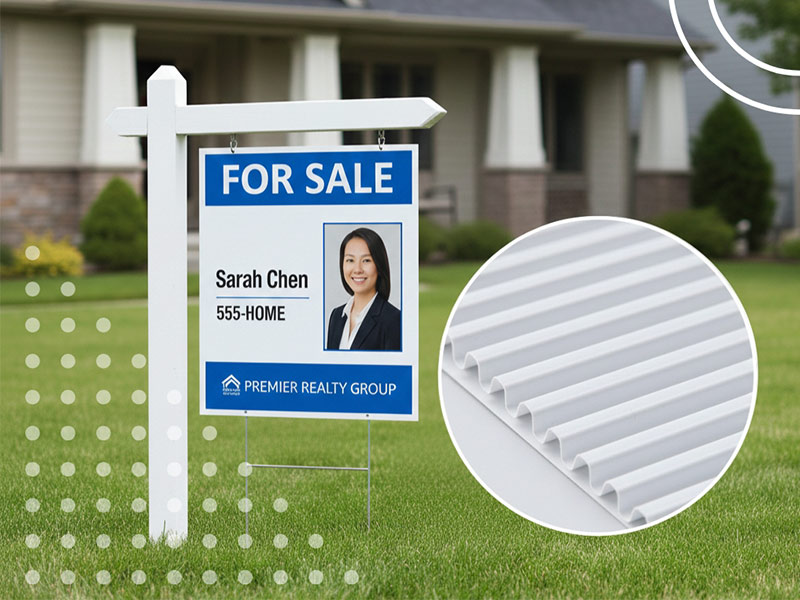
If you want to know what the most common lawn sign material is, the answer is usually corrugated plastic. Corrugated plastic yard signs are made of two thin layers of plastic with a fluted (corrugated) structure between them. This design makes them lightweight yet relatively strong.
The standard thickness is usually 4 millimeters. This material is water-resistant and will perform well for several months of outdoor use. Coroplast sign material is both affordable, and digital printing is a good choice. That’s why it’s one of the most widely used yard sign materials.
Our yard signs in Houston are crafted from corrugated plastic, providing reliable durability and long-lasting outdoor performance.
Aluminum Yard Signs
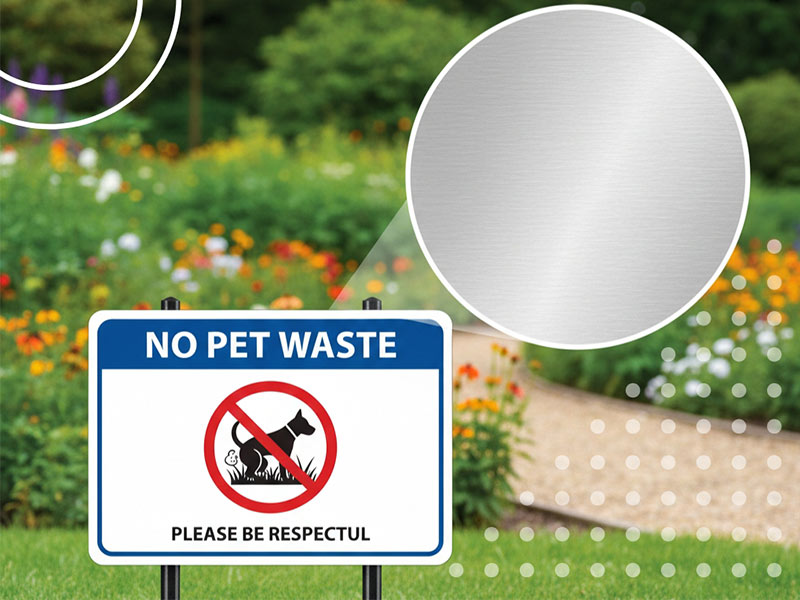
If you’re looking for durability, aluminum yard signs are a more serious option. This metal yard sign material won’t rust, is moisture-resistant, and has a more rigid structure than plastic.
In terms of longevity, it falls into the durable yard sign materials category and can remain outdoors for years. Of course, its production cost is usually higher than that of plastic. But, any types of signs that come with aluminum, promise longevity and quality over time.
Aluminum Composite (Alumacore / ACM)
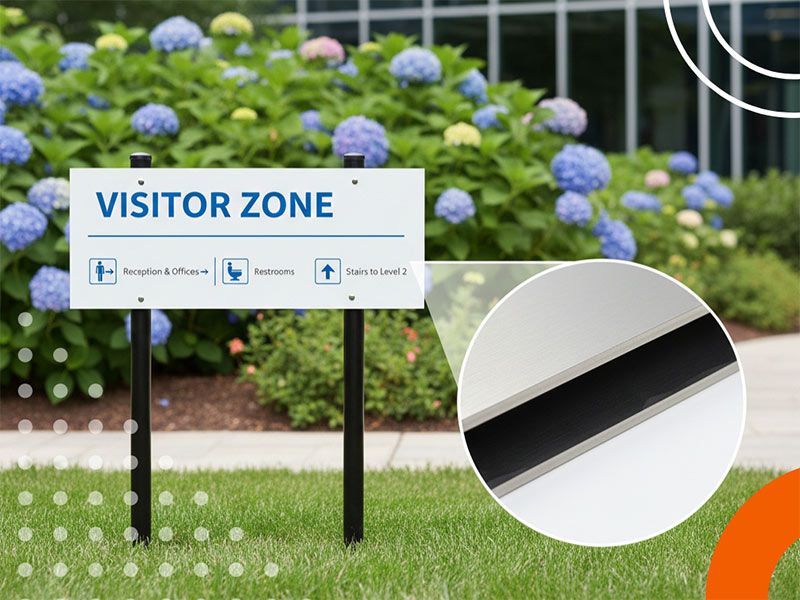
Alumacore yard signs and ACM yard signs are made of two thin layers of aluminum bonded to a central plastic core. This structure makes aluminum composite sign material lighter than pure aluminum, while offering similar strength.
They’re a bit more flexible than solid aluminum but still hold up well outdoors. Many see this material as a professional and practical choice.
Be sure to check out our aluminum sign made of .040 Aluminum for long-lasting indoor/outdoor performance.
PVC and HDPE Plastic Options
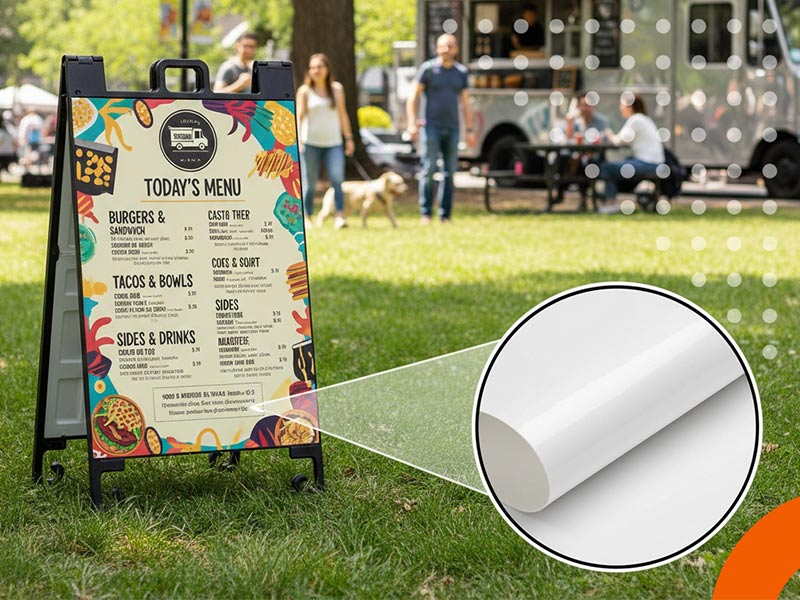
Other options among plastic yard sign materials include rigid PVC and HDPE sign material. PVC yard sign material results in a completely smooth surface and is suitable for high-quality printing.
HDPE is also a denser, more durable plastic that performs better. These options are less common than corrugated options; they are selected in situations where a smooth surface or greater strength is required.
Cardboard, Wood, and Other Short-Term Materials
Not all materials are designed for outdoor use. Some are better suited for temporary signs.
Cardboard yard signs tend to deteriorate quickly when exposed to moisture. Cardboard absorbs water, warps, and the print will fade, especially if left in the rain or damp overnight.
Wood yard sign material is also worth knowing that, while it looks more natural, it is heavier and may crack or warp in wet conditions. These options are better suited to short-term or indoor use, not to long-term outdoor installations.
What Are Lawn Signs Made Of vs. Yard Signs?
Well, in terms of material, there is no difference between the two. Whether you use the term lawn or yard, they both refer to the same type of sign and are made from the same yard sign materials.
The difference lies more in how users search on Google than in the product’s physical structure.
The most common lawn sign materials are corrugated plastic, aluminum, and aluminum composite. So if you see these two terms used interchangeably, they are not interchangeable; they refer to the same concept.
What Are Political Signs Made Of?
When it comes to election campaigns, the answer to what are political signs made of is usually simple: most of them are made of corrugated plastic. The reason is obvious. This type of political yard sign material is lightweight, affordable, and suitable for mass production.
Corrugated plastic is easy to print on, rain-resistant, and easier to transport in large quantities, making it the material of choice for election campaigns where speed, high volume, and low cost are important.
Comparing Yard Sign Materials by Durability, Cost, and Lifespan
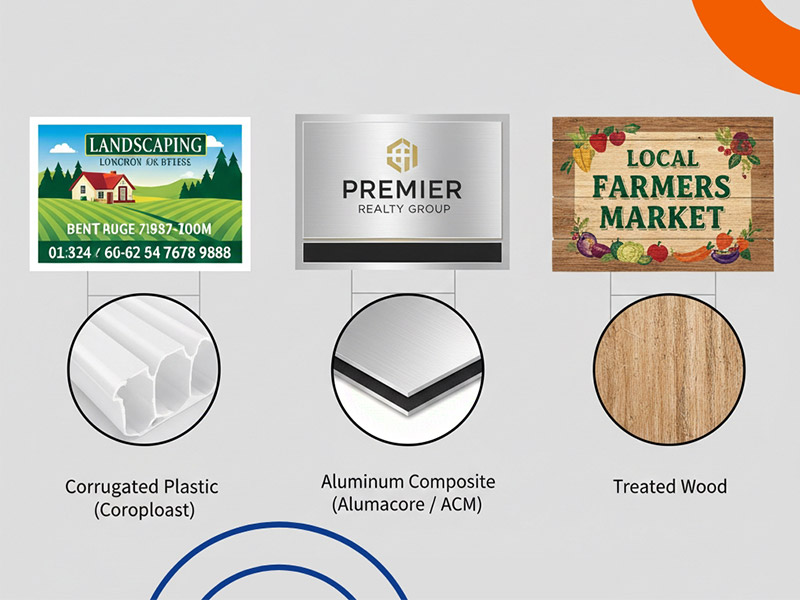
When comparing materials, three main factors to consider are durability, outdoor lifespan, and relative cost. Grooved plastic is economical, lightweight, and will perform well outdoors for several months.
In contrast, in terms of yard sign lifespan, aluminum and aluminum composite materials are usually chosen for long-term use.
In terms of cost, plastic is more affordable, composite is in the middle, and aluminum is usually more expensive. Choosing the best yard sign material comes down to how much durability you need and how long you plan to keep your sign outdoors.
Weather Resistance, UV Protection, and Print Quality
Rain, strong sun, and strong wind are the true tests of yard sign materials. Some materials are only waterproof but not very resistant to sunlight. This is where the difference between a regular sign and a weather-resistant yard sign becomes clear.
An important factor that is less often considered is UV resistance. Using UV-resistant sign materials will prevent color fading and print cracking from sunlight. The ink quality and the type of outdoor printing material will also determine how clear and durable the writing is.
Environmental Considerations & Recyclability
Not all materials are the same. Some recyclable yard sign materials, such as aluminum, are readily reprocessed and returned to the manufacturing stream. Corrugated plastic, too, can be reclaimed at many recycling facilities when sorted and collected separately. As the saying goes, “what we choose today shapes what remains tomorrow.”
The distinction between reuse and disposal is really important. If the sign has a neutral or editable design, it can be reused multiple times, reducing the need for remanufacturing.
Trust Alpha Imprint for Every Signage and Promotional Products Needs
At Alpha Imprint, we specialize in high quality signage solutions and promotional items. What you can get from us are signage Houston services and promotional products in Houston. What we offer our customers is quality and trust. With fast turnaround times and reliable support, we have you covered throughout the whole process.
Conclusion
Understanding what materials are yard signs made of will help you make better choices. When you consider the installation environment, expected lifespan, and budget, the process of choosing yard sign materials becomes simpler and more logical. Now that you’re curious about what each type of sign is used for, the next step is to explore them.
FAQs
What material is used to make yard signs?
Most signs are made of corrugated plastic, aluminum, or composite. These are the most common yard sign materials because they are both lightweight and suitable for outdoor use.
What type of board is used for yard signs?
Usually, corrugated plastic boards or thin metal sheets.
Are metal or plastic yard signs better?
If you are looking for long-term durability, metal is the stronger choice. However, for short-term or economical use, plastic is a more logical option.
What are garage sale signs made of?
Most are made of lightweight corrugated plastic. They are inexpensive and work perfectly for a few days outdoors.
What are the biggest yard sale mistakes?
Using poor material or faded printing can make the sign unreadable. Installing it in the wrong place can also ruin the whole effort.
Is it illegal to put yard sale signs on stop signs?
In many cities, yes, because it is illegal to install them on traffic signs. It is best to check local laws before installing.
Is corrugated plastic good for yard signs?
Yes, it is one of the most popular options. It is lightweight, waterproof, and suitable for short to medium-term use.
What are Canva yard signs made of?
Canva does not manufacture the material itself; it provides the design. The final print is usually done on corrugated plastic or aluminum.