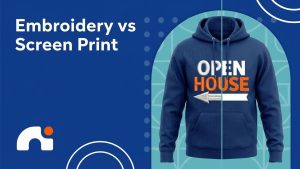



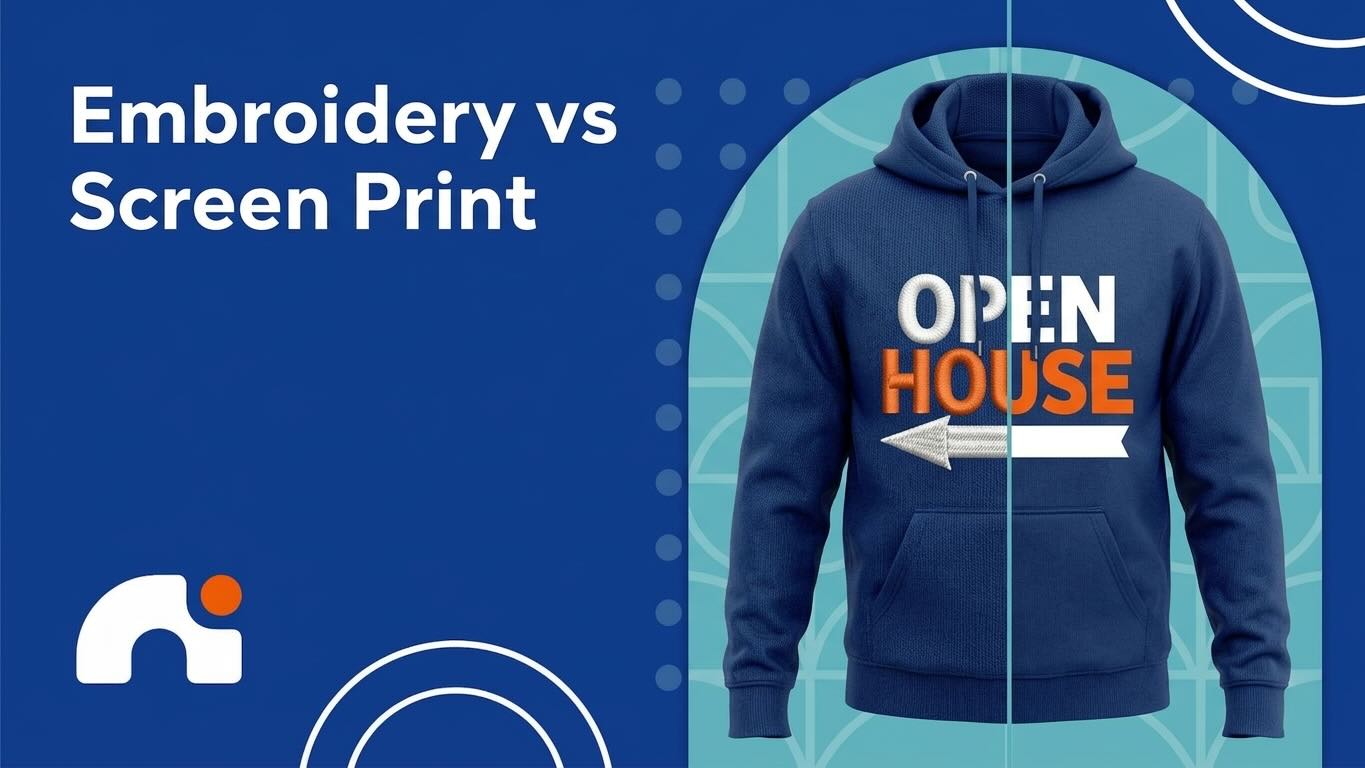
Choosing between embroidery vs screen printing is one of the first decisions you’ll face when ordering branded apparel. Neither method wins every time. The better choice depends on the garment, artwork, quantity, budget, and how you want the finished piece to look and feel.
If you’re deciding between embroidery and screen printing, this guide will help you choose with confidence.
Embroidery vs Screen Print (Quick Answer!)
Embroidery vs screen print at a glance:
| If your order has… | Go with |
|---|---|
| Polos, caps, jackets, or workwear | Embroidery |
| T-shirts, hoodies, or totes | Screen print |
| Small-to-medium logo with clean shapes | Embroidery |
| Large graphics or fine detail | Screen print |
| Corporate or client-facing look | Embroidery |
| Event, merch, or promotional use | Screen print |
| Large bulk quantity | Screen print (setup cost spreads out) |
| Frequent washing and daily wear | Embroidery |
Bottom line: Neither method is better across the board. Pick based on the garment, artwork, quantity, and the look you want.
What Is Embroidery and How Does It Work
Embroidery builds a design by stitching thread directly into the garment. Instead of placing color on the surface, the stitches create a raised, dimensional finish.
Before production begins, the artwork has to go through embroidery digitizing.
This converts a regular logo file into instructions an embroidery machine can follow, including stitch direction, density, sequence, and thread placement.
That textured finish is one reason custom embroidered apparel is so common for uniforms, polos, jackets, hats, and workwear.
A small embroidered logo on the chest of a polo, for example, feels very different from a large printed graphic on a T-shirt.
Pricing is also influenced by stitch count. A bigger, denser design takes more stitches and more machine time.
From Artwork to Stitched Logo
The process usually moves from artwork preparation to digitizing, thread selection, garment stabilization, and finally machine stitching.
Simple artwork tends to translate most reliably. Very thin lines, tiny text, or photographic effects may need to be simplified before they become stitches.
The fabric matters too. A stable polo or jacket can support dense stitching more easily than a very lightweight garment.
That’s why you should consider both stitch density and garment construction before production starts.
What Is Screen Printing and How Does It Work
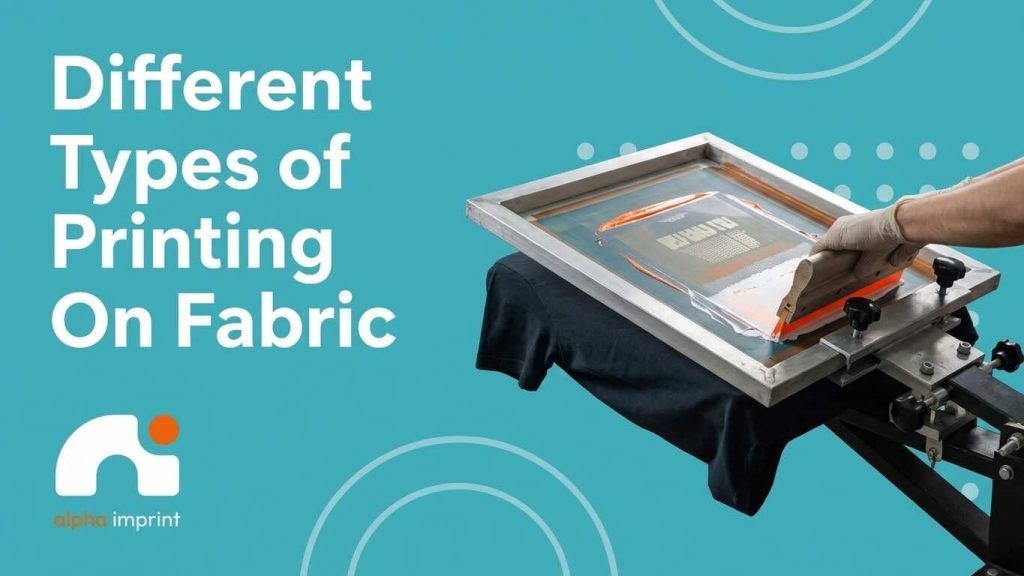
Screen printing applies ink through a stencil built on a mesh screen. The open areas let ink pass through onto the garment, while the blocked areas keep the rest of the fabric clean.
In the case of traditional multicolor artwork the design is divided by color and separate screens might be required.
The ink is pushed through the screen onto the fabric by means of a squeegee and the completed garment is then cured to make sure that the print sets properly.
This screen printing process is particularly suitable for T-shirts, hoodies, promotional clothing, and larger graphics.
It also becomes more cost-effective as quantities increase because you can spread the initial setup across more pieces.
That is why screen printed apparel is so common for events, campaigns, company shirts and merchandise.
From Artwork to Finished Screen Print
First comes artwork preparation and color separation. Then the stencil and screens are prepared.
Ink is pushed through the screen with a squeegee, one color at a time when necessary. After printing, proper curing helps the ink bond and perform as intended.
More colors usually mean more setup, which becomes important when comparing cost and production needs later.
Alpha Imprint: Trusted Local Partner for Custom Apparel in Houston
At Alpha Imprint, we work with businesses, schools, teams, organizations, and event planners who often ask the same question: should this order be embroidered or printed?
You do not have to answer that before choosing the garment.
For projects that need embroidery in Houston, we can look at the logo, garment structure, placement, and expected use together.
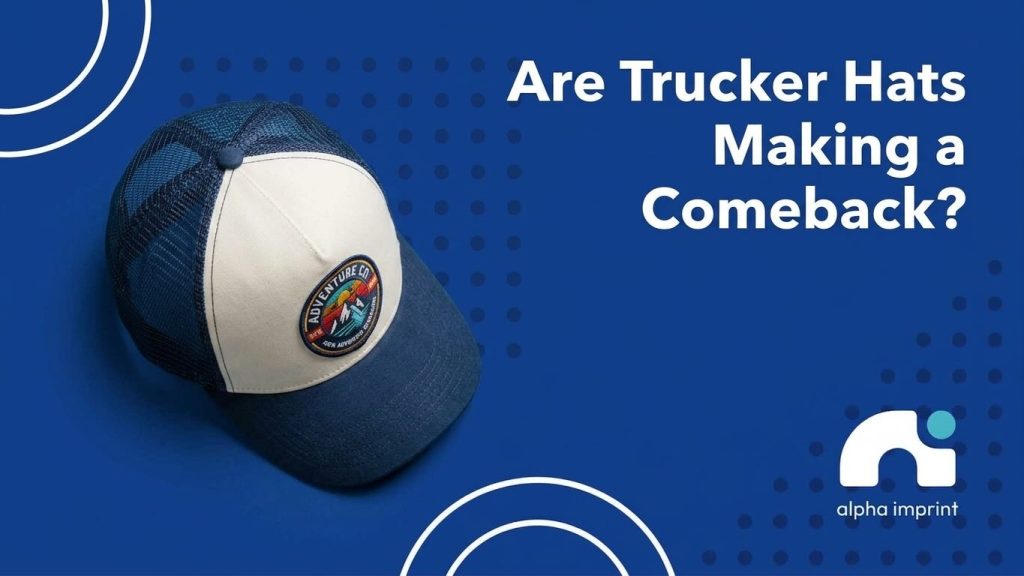
Polos, caps, jackets, uniforms, workwear, and other structured pieces are common embroidery candidates.
For T-shirts, hoodies, bags, promotional apparel, and larger graphics, using screen print in Houston may be the better direction.
The goal with custom apparel in Houston is not to force every order into one decoration method. It is to match the garment and artwork with the process that makes sense.
Choosing the Right Decoration Method for Your Order
Start with four questions:
What garment are you ordering? What does the artwork look like? How many pieces do you need? And how should the finished custom apparel look and feel?
Those four answers usually narrow down the right garment decoration method quickly.
Embroidery vs Screen Printing: The Key Differences That Matter
Here is the short version before we get into the details:
| Factor | Embroidery | Screen Printing |
| Appearance | Raised and textured | Smooth and graphic |
| Best design size | Usually small to medium | Small to very large |
| Detail | Best with stitch-friendly artwork | Better for many fine or graphic details |
| Common garments | Polos, caps, jackets, uniforms | T-shirts, hoodies, totes |
| Quantity | Works across many order sizes | Often improves in value as quantity rises |
| Common use | Corporate and professional branding | Events, merchandise, promotions |
Neither side of screen printing vs embroidery is universally better. The real question is what you are making.
Durability, Washing and Long-Term Wear
Embroidery is often chosen for clothing that will be worn and washed repeatedly.
Thread does not depend on a printed surface layer, which gives good embroidery durability for work uniforms, polos, jackets, and team clothing.
That does not mean stitching is indestructible. Threads can snag if the garment is treated roughly.
Screen prints can also be highly durable. Its lifespan depends on the ink system, curing, garment quality, washing, and use.
Poorly produced or poorly cared-for prints may eventually crack or fade, but that should not be treated as inevitable.
If frequent washing is expected, tell your decorator before ordering. The use case matters almost as much as the artwork.
Texture, Appearance and Brand Image
This is where the embroidered vs printed difference becomes obvious.
Embroidery has physical texture. A small chest logo on a polo or jacket can create a polished appearance, which is why premium embroidered apparel is popular for company uniforms and client-facing teams.
Screen printing feels flatter and works naturally with T-shirts, event apparel, streetwear, and bold promotional graphics.
Is one more professional? Not automatically.
A brewery selling graphic tees may look more on-brand with printing. A consulting company outfitting staff in quarter-zips may prefer embroidery.
The decoration should fit the identity rather than chase a generic idea of “premium.”
Design Detail, Logo Size and Color Options
When comparing an embroidered logo vs printed artwork, look at the kind of detail, not just how much detail there is.
Embroidery needs shapes that can become stitches. Tiny lettering, extremely thin lines, subtle shading, and photographic artwork can create problems, especially at small sizes.
Screen printing gives you more freedom with large graphics and fine detail.
Different ink colors can also be combined across multicolor designs, although every additional color may add setup complexity.
Large back graphics? Printing often makes more sense.
A compact company logo with clean shapes? Embroidery can be a great fit.
The key point is to consider design complexity alongside scale. Even a simple design can become awkward if you try to embroider it across an enormous area, while a detailed logo may need simplification before available thread colors can reproduce it cleanly.
Fabric and Garment Compatibility
Sometimes the garment decides before the budget does.
Structured polos, caps, jackets, button-downs, and heavier workwear are natural candidates for embroidery because they can generally support stitching well.
That is why custom polos and caps are so often embroidered.
Smooth T-shirts, hoodies, and tote bags offer excellent surfaces for printing. Custom T-shirts and hoodies also offer more room for larger artwork.
But fabric compatibility is not always straightforward. Highly stretchy, delicate, heavily textured, waterproof, or unusually constructed garments may require extra testing or another decoration method.
Choose the garment and decoration process together. Picking them independently is where problems often begin.
Order Quantity and Production Needs
Quantity changes the math.
Traditional screen printing has setup work before the first garment is printed.
Once the screens are ready, however, larger repeated runs can spread that setup across more pieces.
This is why bulk screen printing is often attractive for fundraisers, company events, promotional campaigns, and merchandise runs.
Embroidery works differently. Order quantity matters, but design size and stitch count still affect machine time on every piece.
A small company ordering twelve polos may have very different priorities from an organization ordering hundreds of event shirts.
For recurring custom apparel orders, it is also worth thinking ahead. Will you reorder the same design later? Will the garment stay the same?
Embroidery vs Screen Printing Cost: What Actually Affects the Price?
There is no useful answer to embroidery vs screen printing cost without seeing the actual order.
For embroidery, pricing can depend on design dimensions, stitch count, digitizing, garment choice, placement, and quantity.
A large, dense embroidered area takes more machine time than a small chest logo.
Screen printing has different cost drivers. The number of ink colors and screens, artwork preparation, garment choice, print locations and quantity can all affect the quote.
Because screens require upfront preparation, screen printing setup costs can make very small runs less efficient. As quantity rises, that setup gets divided across more garments.
That does not mean embroidery automatically wins small orders or printing always wins large ones. Garment and artwork can change the answer.
Which Method Is Cheaper for Small and Large Orders?
For a small staff order, a compact embroidered logo may make perfect sense.
For a medium business order, either method could work depending on the garment and artwork.
For large bulk orders of promotional T-shirts, screen printing often gains an advantage because the per-piece cost can improve as setup is spread across more shirts.
The safest way to compare is to quote the actual design, size, placement, garment, and quantity.
Is Embroidery Better Than Screen Printing? Choose Based on Your Order
So, is embroidery better than screen printing?
No, not across every order.
Choose based on what the garment needs to do.
Choose Embroidery When
Consider custom embroidered apparel when you have a small or medium-sized logo and are decorating polos, caps, jackets, button-downs, workwear, or other structured pieces.
It is especially useful for company logos that need a dimensional finish and for corporate uniforms worn regularly.
The best candidates are designs that translate naturally into stitches without relying on tiny details or photographic effects.
Choose Screen Printing When
Choose printing when you need large designs, especially on smooth garments.
Screen printed T-shirts make sense for team clothing, promotional campaigns, fundraising shirts, branded merchandise and event merchandise where bold graphics play a bigger role.
It can also become efficient when the order is large enough to make screen setup worthwhile.
Ask These Questions Before Placing Your Order
Before choosing embroidery or screen print, ask:
- What is the garment type?
- How large will the design be?
- What level of design complexity is involved?
- How many colors are needed?
- What is the order quantity?
- Will the garment be washed frequently?
- Should the finished style feel polished and corporate or bold and promotional?
- Is this a one-time project or something you expect to reorder?
Those answers will tell you far more than a generic “which method is better?” comparison.
Design Ideas and Practical Tips for Better Custom Embroidery
A print-ready logo is not always embroidery-ready.
For custom embroidery, simpler can actually look better. A small chest mark, clean initials, sleeve branding, straightforward typography, or a simplified icon can create a stronger result than forcing every tiny part of the original artwork into thread.
Need inspiration?
These embroidery ideas show how embroidery can work across hats, jackets, bags, workwear, typography, and more creative placements.
Think about logo placement while choosing the garment, not after everything else is decided. A design for a cap behaves differently from one on a jacket chest or sleeve.
Make Your Artwork Decoration-Friendly
Check the logo size first.
Very fine lines may need more weight. Tiny lettering may need to grow. You can sometimes simplify complicated areas without changing the logo’s identity.
Then look at the garment material and placement.
A compact embroidery design may look cleaner than a large stitched graphic, while some artwork simply works better as a print.
Good artwork preparation saves trouble later. When available, review a proof or mockup before full production.
Bottom Line
The best choice between embroidery vs screen printing comes down to the product and purpose. Embroidery works especially well for dimensional branding on structured garments, while screen printing offers larger graphics and more flexibility for quantity-driven orders.
For your next custom apparel project, start with the garment, artwork, quantity and branding goals, then choose the decoration method that fits the whole order.