


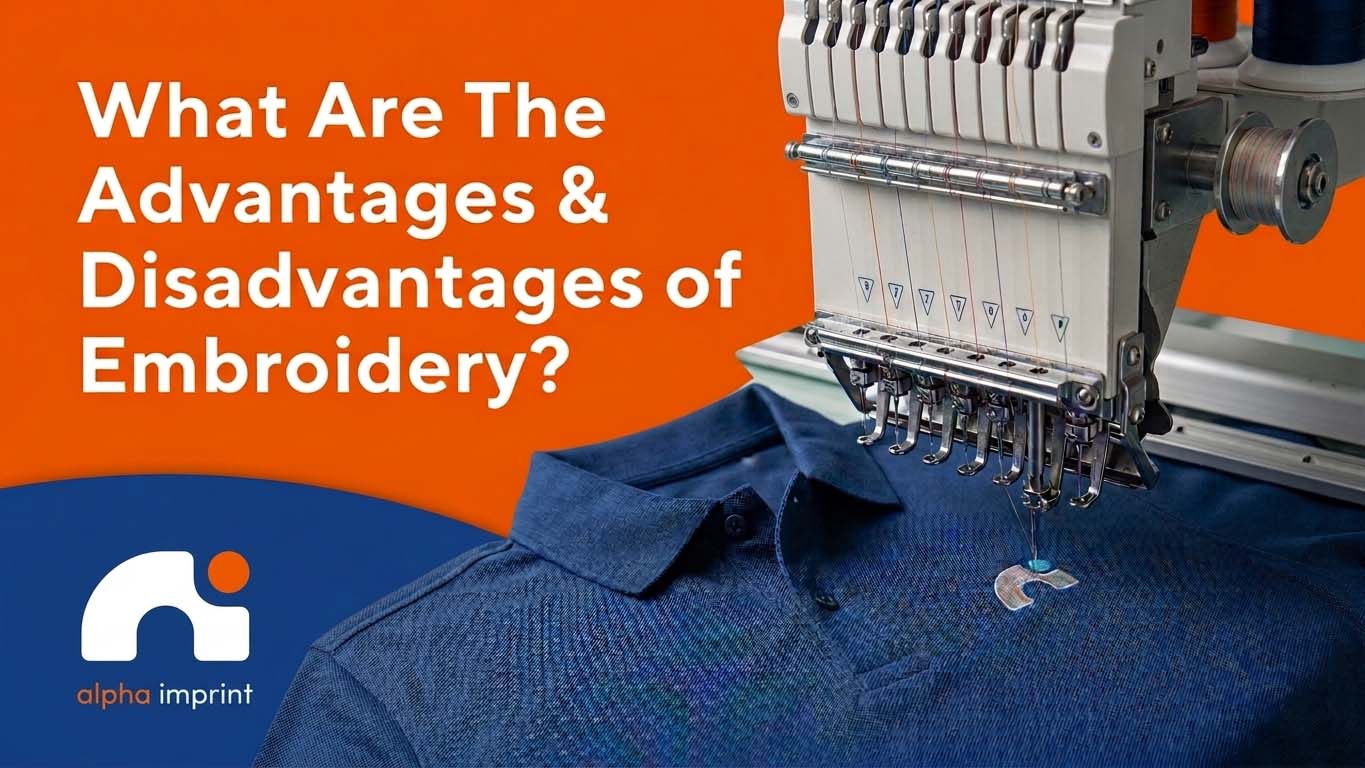
If you are choosing a decoration method for uniforms, hats, polos or branded workwear, you may be asking: What are the advantages and disadvantages of embroidery?
The biggest strengths are durability and a polished finish and the drawbacks are higher costs and some limits with fine detail.
Here is where custom embroidery works best and where it may not.
What Are The Advantages & Disadvantages of Embroidery (Quick Answer!)
| Advantages | Disadvantages |
|---|---|
| Durable — won’t peel | Higher cost |
| Premium, textured look | Struggles with fine detail |
| Great on sturdy garments | Not ideal for lightweight fabrics |
How Embroidery Works Before Considering Its Pros and Cons
A Quick Look at the Embroidery Process
Machine embroidery recreates a logo or design with repeated stitches rather than placing ink on the fabric surface.
Before production, artwork is converted into stitch instructions, then embroidery threads are selected to suit the design.
If you want a fuller breakdown, we explain what is embroidery and how the process works.
Alpha Imprint: Trusted Local Partner for Custom Embroidery in Houston
Professional Embroidery for Businesses, Teams and Organizations
For businesses looking for embroidery in Houston, Alpha Imprint provides local, in-house embroidery for polos, hats, uniforms, jackets, bags, and other embroidered apparel.
Professional execution matters because the same logo can behave differently on a structured cap, a soft polo, or heavy workwear.
The fabric and stitch density need to work with the design for a clean result.
What Are the Main Advantages of Embroidery?
Does Embroidery Last
One of the strongest benefits is durability. A stitched logo becomes part of the garment instead of relying on a surface print that can peel.
Quality thread can also maintain its appearance through regular wear and washing.
This makes long-lasting embroidery especially practical for uniforms, jackets, polos and workwear that employees use week after week.
Why Does Embroidery Look More Premium
Thread creates physical texture, so an embroidered design has depth that flat printing does not.
That raised finish often gives branded clothing a more professional appearance and premium look.
Think about a restaurant team or customer-facing sales staff. A clean chest logo on a polo can make everyday workwear feel more finished without looking overly promotional.
What Types of Designs Work Best
A clean embroidered logo with solid colors and clear shapes is usually a strong fit.
Garment embroidery works well on polos, hoodies, hats, fleece, jackets, coveralls, and other sturdy items.
Heavier garments can be particularly suitable because they provide enough structure to support the stitching.
Also Read: What Are the Limitations of Hat Embroidery?
What Are the Main Disadvantages of Embroidery?
Why Can Embroidery Cost More
The embroidery cost is influenced by how much stitching a design requires.
A larger logo or detailed artwork increases the stitch count, which means the machine needs more time to complete each piece.
For that reason, embroidery may not be the most economical option for a very large graphic or an order where keeping decoration costs low matters more than creating a textured finish.
What Details Are Difficult to Reproduce
Thread has physical limits.
Very small lettering, thin outlines, photographic detail, and smooth gradient colors can be difficult to reproduce with the same precision as some printing methods.
High design complexity can also make a logo look crowded once stitched.
Simplifying small elements often produces a cleaner result rather than trying to force every screen-based detail into thread.
Can Every Fabric Be Embroidered
Not equally well. Dense stitching can pull, pucker, or weigh down lightweight fabrics, especially when the design is large.
Good fabric compatibility matters, so thinner garments may need a smaller design or lower stitch density.
More structured polos, caps, jackets, and workwear generally provide embroidery with a more stable surface.
Embroidery or Screen Printing: Which Should You Choose?
Choose Based on the Design, Garment and Intended Use
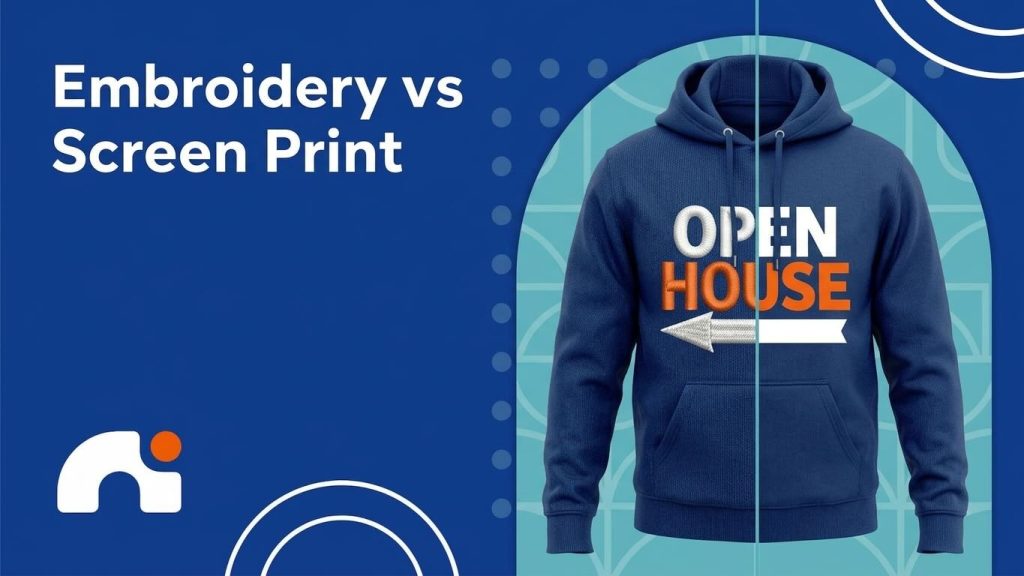
Neither method is better for every project. Embroidery is a strong choice when you want a textured, polished logo on uniforms, polos, hats, or jackets.
Screen printing may make more sense for large graphics, fine visual details, gradients, or certain lightweight garments.
Our guide to embroidery vs screen printing explains how the two forms of garment decoration compare for different applications.
Conclusion
Now you know the answer to the question: what are the advantages and disadvantages of embroidery? The main pros and cons of embroidery are closely connected. The same stitching that gives embroidered designs durability, texture, and a professional finish can also raise costs and limit very fine artwork.
The best decoration method ultimately depends on your garment, logo, budget, and intended use, not simply on which option looks more premium.