



What is embroidery? If it were only a basic stitch, why would people still choose it for branded clothing, hats, uniforms, and even luxury gifts?
Embroidery is the art of sewing designs onto fabric with thread and a needle. It is not just for hand-stitched panels; embroidery art is also used today in branded clothing, hats, uniforms, and promotional products.
In this article, we will see what does embroidery mean, its tools, methods of execution, and modern applications.
What Is Embroidery?
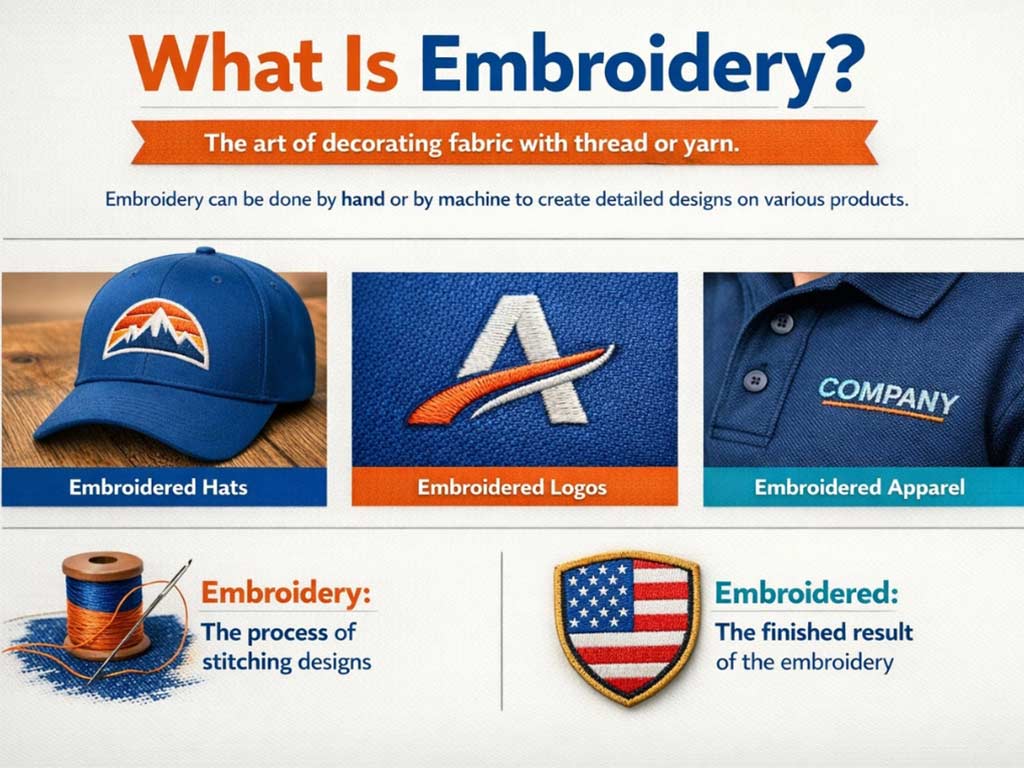
Embroidery is the art of decorating fabric with thread, yarn or fine fibers using a needle. To put it simply, when a design is created by sewing on a garment, bag, towel or hat, we are dealing with embroidery.
Sometimes beads, sequins, pearls or special threads are also used in this work to make the design more prominent and impressive.
Now, what does embroidery mean in everyday use? The same logo that is sewn on a polo shirt, the guest’s name on a hotel towel, or embroidered designs on hats and tote bags.
This type of design does not just sit on the surface of the fabric; it is sewn into the garment’s fabric and has a more permanent feel.
And what is an embroiderer? Usually, it refers to the person or machine that executes these sewn designs. Today, embroidery is done both by hand and with professional machines.
The History of Embroidery
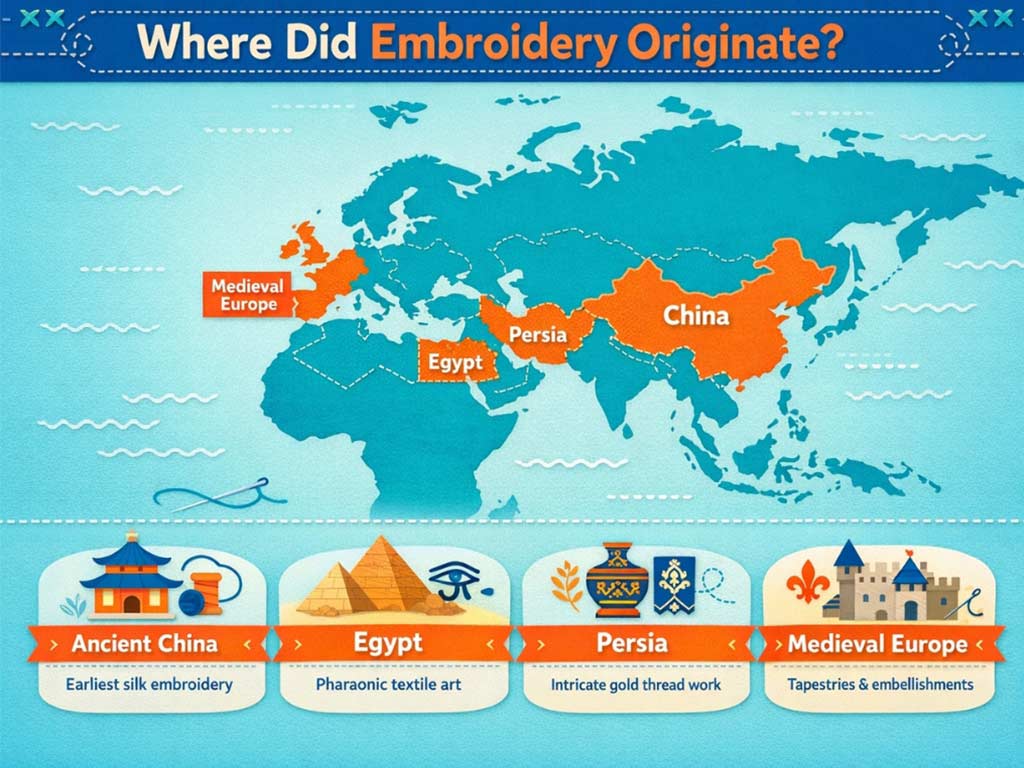
The history of embroidery is older than we usually think. Examples of ancient embroidery in China, dating from the fifth to the third centuries BC, show that this art was associated with elegance and value from the start.
In both Iran and Egypt, decorated fabrics were used for special clothing, rituals and the upper classes. Later in medieval Europe, embroidery was seen on church and aristocratic clothing.
The question is: why did this art survive? Because traditional embroidery was both beautiful and a sign of time, precision and skill.
With the Industrial Revolution, the sewing machine sped up production, and today, computer embroidery has entered fashion, branding, and promotional clothing.
How Does Embroidery Work?
The Basic Embroidery Process
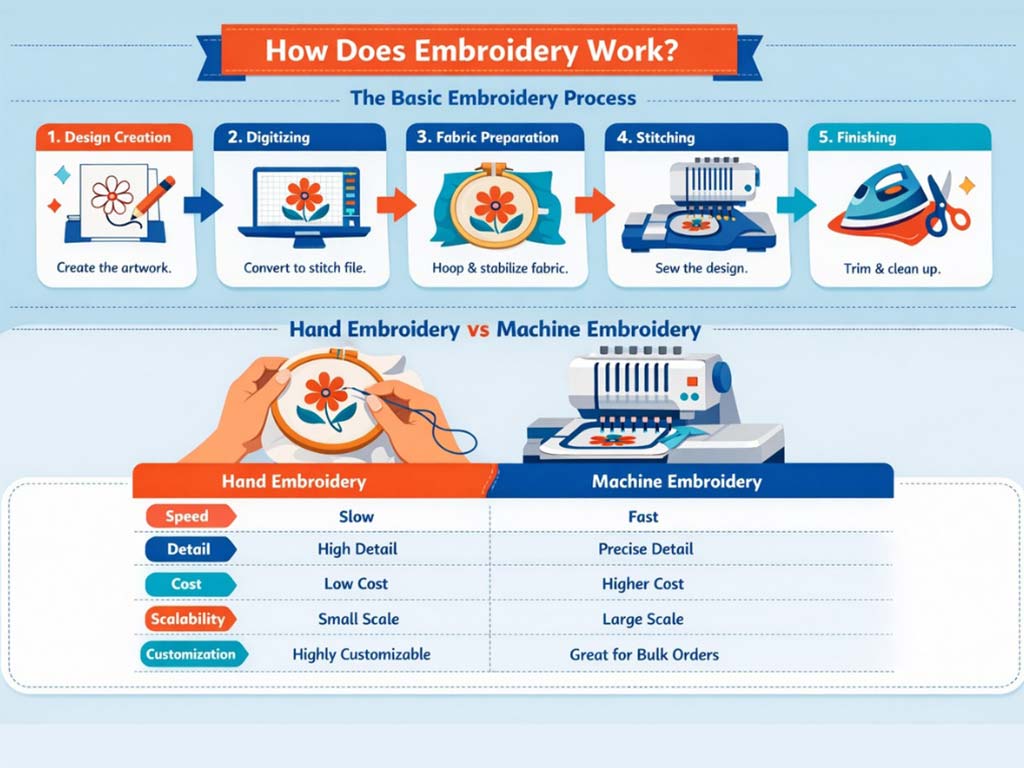
It begins with preparing the design. First, the artwork is created, for example, a logo, text, or a simple pattern.
Then the design enters the embroidery digitizing stage; that is, the file is converted into a language that tells the machine where to place each stitch, at what angle, and at what density.
Then the fabric is prepared, placed firmly in a hoop or frame, and stabilizer is added to prevent the fabric from bunching. For stretch fabrics, cut-away backing is usually better, and for woven fabrics, tear-away is used.
Then the stitching is done by hand or embroidery machine, and finally the excess threads are trimmed, the backing is cleaned, and the design is lightly pressed to give a neater final appearance.
Hand Embroidery vs Machine Embroidery
If we think of hand embroidery as a leisurely painting with thread, machine embroidery is more like the precise execution of the same design with professional tools.
In hand embroidery, every movement of the needle bears the artist’s imprint; it takes a little longer, but it works for special, delicate, and emotional works.
But when it comes to brand logos, uniforms, hats or high-volume orders, machine embroidery makes more sense. Why? Because it’s faster, the results remain consistent across all items, and costs are better controlled for large orders.
So the choice between the two depends on your goal: do you want a unique piece of art or a clean, repeatable output, ready for branding?
Common Types of Embroidery
Flat Embroidery
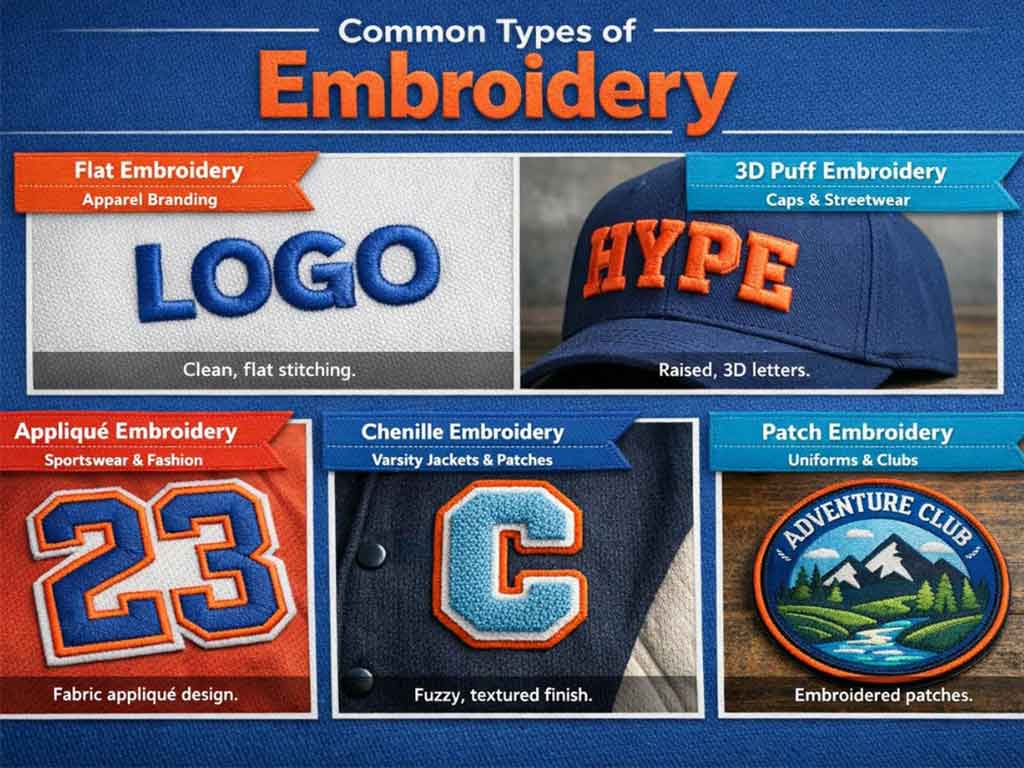
Flat embroidery is the most common and cleanest type of embroidery. In this method, the thread is sewn directly onto the fabric’s surface, so the design is not very prominent; the logo or text appears flat, legible, and neat.
For logo embroidery on a polo, shirt, hoodie, tote bag or uniform, this method is usually a safer choice, as it allows for better control of fine details, simple fonts and brand color schemes.
If your goal is custom apparel embroidery for the workplace or everyday branding, flat embroidery is the option that looks professional without being too busy.
Specialized sources also introduce it as one of the most traditional and widely used embroidery methods for logos and text.
3D Puff Embroidery
3D puff embroidery is a technique in which the design protrudes from the fabric’s surface, creating a three-dimensional appearance.
How does this happen? A layer of foam is usually placed under the stitching and the threads are worked over it; the result is a raised embroidery that looks especially impressive on hats. For embroidered hats, simple logos, large lettering, streetwear designs, and brands that want to be bold, 3D puff is an attractive choice.
Of course, it is not suitable for very fine details; the design needs enough space to stand out and remain clean. This method works best on caps, some hoodies, thicker fabrics, and items that have a structure that can hold the raised pattern.
Also Read: DTG vs. Embroidery
Appliqué Embroidery
Appliqué embroidery means that one or more pieces of fabric are placed on the garment before the final stitching and then secured around them with stitches. Simply put, instead of the entire design being made with thread alone, part of the design is formed with fabric.
This makes layered embroidery look larger, more colorful, and sometimes lighter. It’s used for athletic wear, team jerseys, children’s clothing, fashion pieces, and large logos.
If you want a large letter, team number, or design with a large area of color, decorative fabric stitching can both save on thread costs and create a more distinctive look. As a result, appliqué is more suitable for designs that are going to be seen quickly from a distance.
Chenille Embroidery
Textured embroidery has a completely different feel from Chenille.
This type of embroidery creates a soft, woolly, slightly fuzzy texture; the kind we’ve often seen on varsity jackets, letter patches, and college uniforms. Varsity embroidery is most commonly used for large letters, team crests, club names, school patches, and nostalgic designs.
The question is: Why is Chenille still popular? Because it doesn’t just make logos; It conveys a vintage, sporty, and team-oriented feel.
For brands looking for a college-inspired look, special merch, or soft, standout patches, chenille is a much more versatile option than flat embroidery.
Related sources also describe chenille patches as having a fluffy texture, bright threads, and uses in schools, clubs, football teams, and streetwear.
Patch Embroidery
Embroidered patches are useful when you want to create a design separately and then apply it to clothing, bags, hats, or uniforms.
What’s the advantage? Flexibility.
Custom patches are great for clubs, staff uniforms, streetwear brands, motorcycle groups, schools, and organizations because they create a formal, recognizable look. Unlike direct embroidery, a patch can have its own thickness, border, and shape.
Popular Embroidery Stitches and Techniques
Basic Hand Embroidery Stitches
If you’re just starting out, a few basic embroidery stitches will come in handy more than others.
Satin stitch is used to fill small areas and create letters or petals.
Chain stitch is good for decorative lines or softer designs.
Backstitch is one of the best choices for writing, outlining and precise lines. Cross stitch also creates a pixel-like design with crisscross stitches and is great for regular patterns.
Simple question: Which is better for beginners?
Backstitch for line control; satin stitch for filling in areas.
Advanced Embroidery Techniques
Once you get past the basics, embroidery techniques begin to resemble thread painting.
You’re no longer simply stitching a simple line or flower; you can now create shadow, depth and even a sense of movement by changing the direction of your stitch, the density of your thread and the color of your stitches.
With free-motion embroidery, you have more freedom. You move the fabric under the needle, so your design feels like a drawing coming to life. Thread painting builds on this, making it feel as if you are painting with thread rather than a brush.
What Is Embroidery Used For?
Fashion and Apparel
Brands use embroidery in fashion and clothing to decorate. Applying embroidery makes a plain shirt, hat, denim jacket, or golf outfit look more stylish.
Furthermore, embroidered uniforms create a more polished look for teams and businesses, as logo embroidery conveys durability, elegance, and professionalism.
Business Branding and Promotional Products
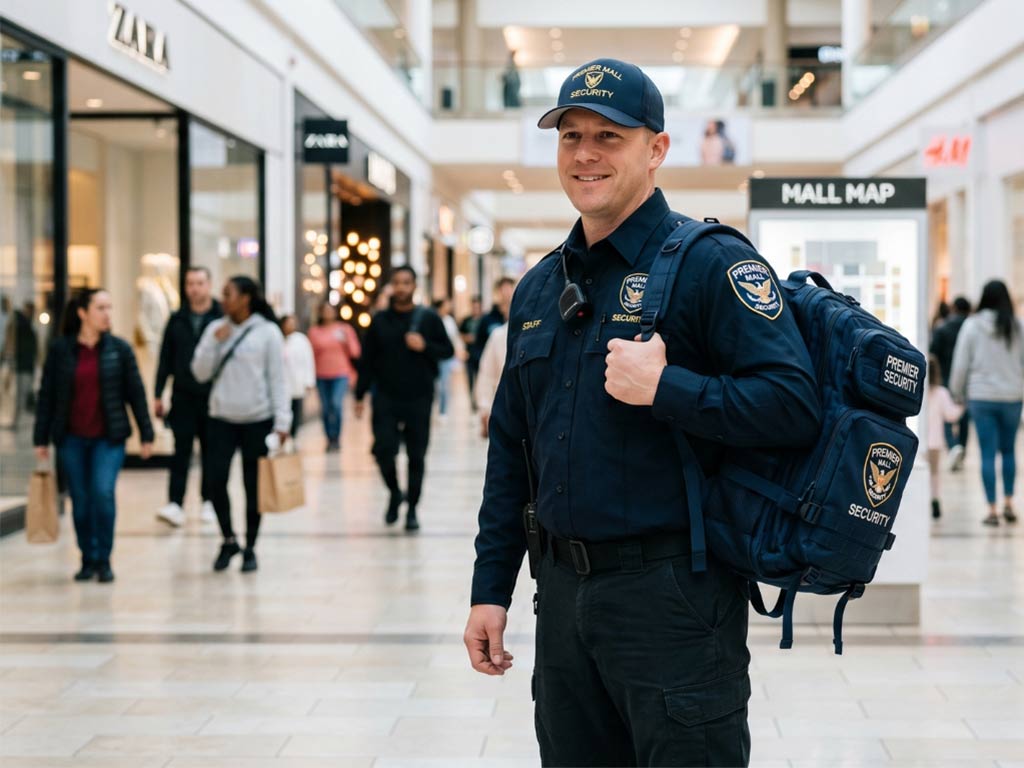
For brands, custom embroidery is more than just adding a logo; it’s a way to make a visual identity on clothing and merchandise more permanent.
Cafes, sports teams, companies, and events use embroidery on corporate apparel, bags, hats, and promotional apparel to make a promotional item look like a valuable product, not a simple gift.
Home Décor and Personalization
Embroidery is also used in the home. Personalized embroidery adds a handmade and sentimental feel to towels, pillows, baby clothes, wedding napkins or special gifts. Monogram embroidery is also a popular choice for names, initials or personal mementoes.
Alpha Imprint: Your Reliable Partner for Embroidery in Houston
Custom Embroidery Solutions for Businesses and Individuals
If embroidery is going to make your brand look more professional, it shouldn’t be routine.
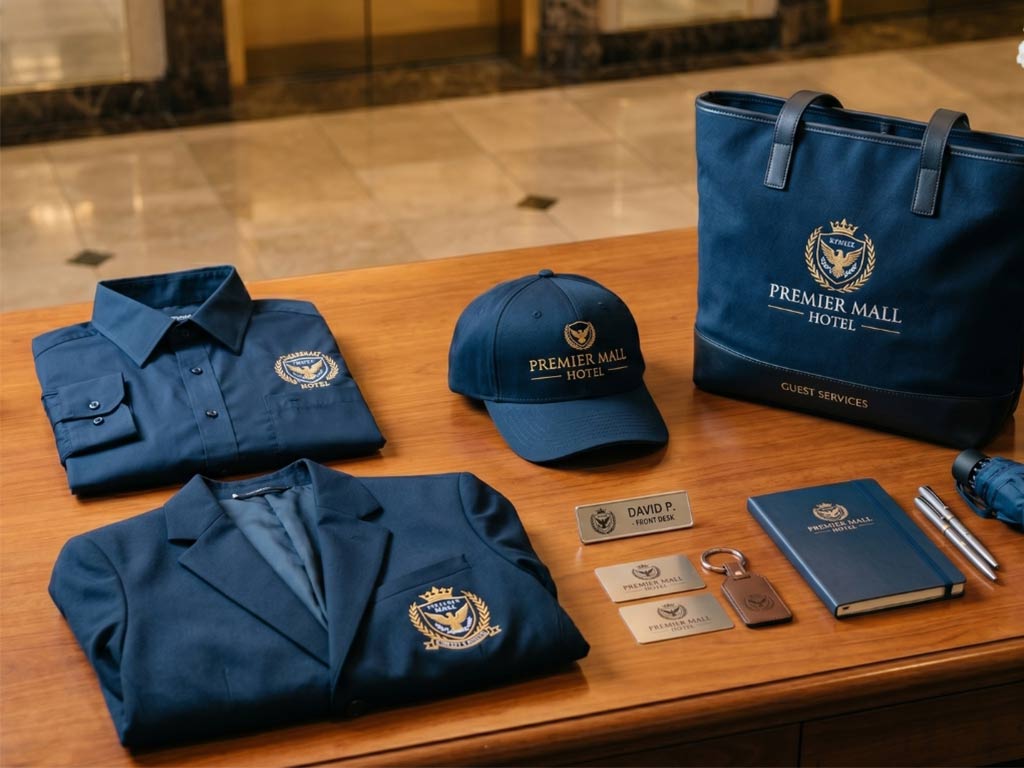
As a local team in Houston, Alpha Imprint makes local embroidery services easy for businesses, teams, and individuals, including embroidered apparel and branded uniforms, hats, bags, corporate gifts, and promotional items.
What makes a professional job different?
The difference is in the details: placing your logo perfectly, picking the right threads, making sure designs look sharp, and creating stitches that last.
At Alpha Imprint, we do all embroidery in-house, help with design, offer online mockups, and can complete some orders quickly. This means you have more control over quality every step of the way.
If your brand needs both custom apparel and promotional products in Houston, we offer a smoother and more reliable solution.
If you’re looking for quality local embroidery in Houston, we’re here to help.
Embroidery vs. Printing: Which Is Better?
Advantages of Embroidery
If you are looking for a formal, durable and professional look, embroidery is usually the stronger choice.
Embroidered logos on polo shirts, hats, jackets or uniforms don’t just sit on the surface of the garment, they’re embroidered onto the fabric, giving them a more permanent feel.
For brands seeking durable branding, embroidery holds better to washing, everyday wear and abrasion than regular printing. Premium embroidery on the other hand adds more texture, depth and value to your logo.
When Printing May Be a Better Choice
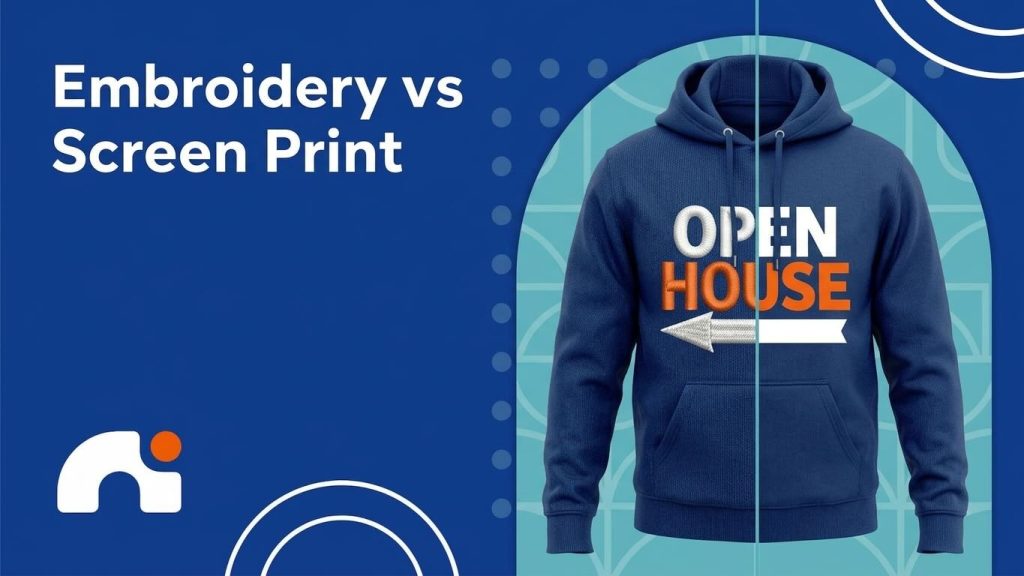
But embroidery isn’t always the best option. If your design is very large, colorful, graphic, or detailed, garment printing makes more sense.
When compared to screen printing vs embroidery, printing works best for lightweight t-shirts, budget-friendly orders, back-of-garment designs, and large graphics. In fact, the right choice in apparel customization depends on the type of product, budget, size of the project, and brand goal.
How to Care for Embroidered Clothing
Washing and Maintenance Tips
For embroidered clothing care, imagine you have a polo shirt adorned with an embroidered logo that accompanies you to work every week, “a quiet emblem of professionalism” woven into the fabric
If you wash it like a regular T-shirt with hot water and a high-powered dryer, the threads will gradually become dull and the stitching will lose its clean look.
For best results, turn the garment inside out, use cold or lukewarm water on a gentle cycle, and do not use bleach.
If you are not in a hurry, let it air dry. Ironing is also important for embroidery maintenance; do not iron directly on the logo, as heat and pressure can ruin the stitching.
Conclusion
Now, you know the answer to the question: what is embroidery?
Embroidery is both an ancient art and an effective method of modern branding. From hand stitched to machine-made embroidery techniques, it adds personality, durability and value to simple garments and products.
Because it is customizable, long lasting and professional, it is likely to remain one of the most popular methods of fabric decoration.
FAQs
What Are the Main Types of Embroidery?
The five main types of embroidery are flat, 3D puff, appliqué, chenille, and patch.
Can You Use Embroidery on All Types of Fabric?
You can do it on most fabrics. However, the fabric’s type, thickness, stretch, and the stabiliser you use will affect how neat and long-lasting the stitching is.
Logo Printed or Logo Stitched?
For a large, bold design, choose printing; but for a small logo, a professional feel, real texture, and greater durability, choose embroidery for a more stylish, serious result.
Sewing or Embroidery?
Sewing means making, attaching, or repairing a garment, but embroidery comes in when the garment itself is to have an identity, such as a name, logo, or visible detail.