


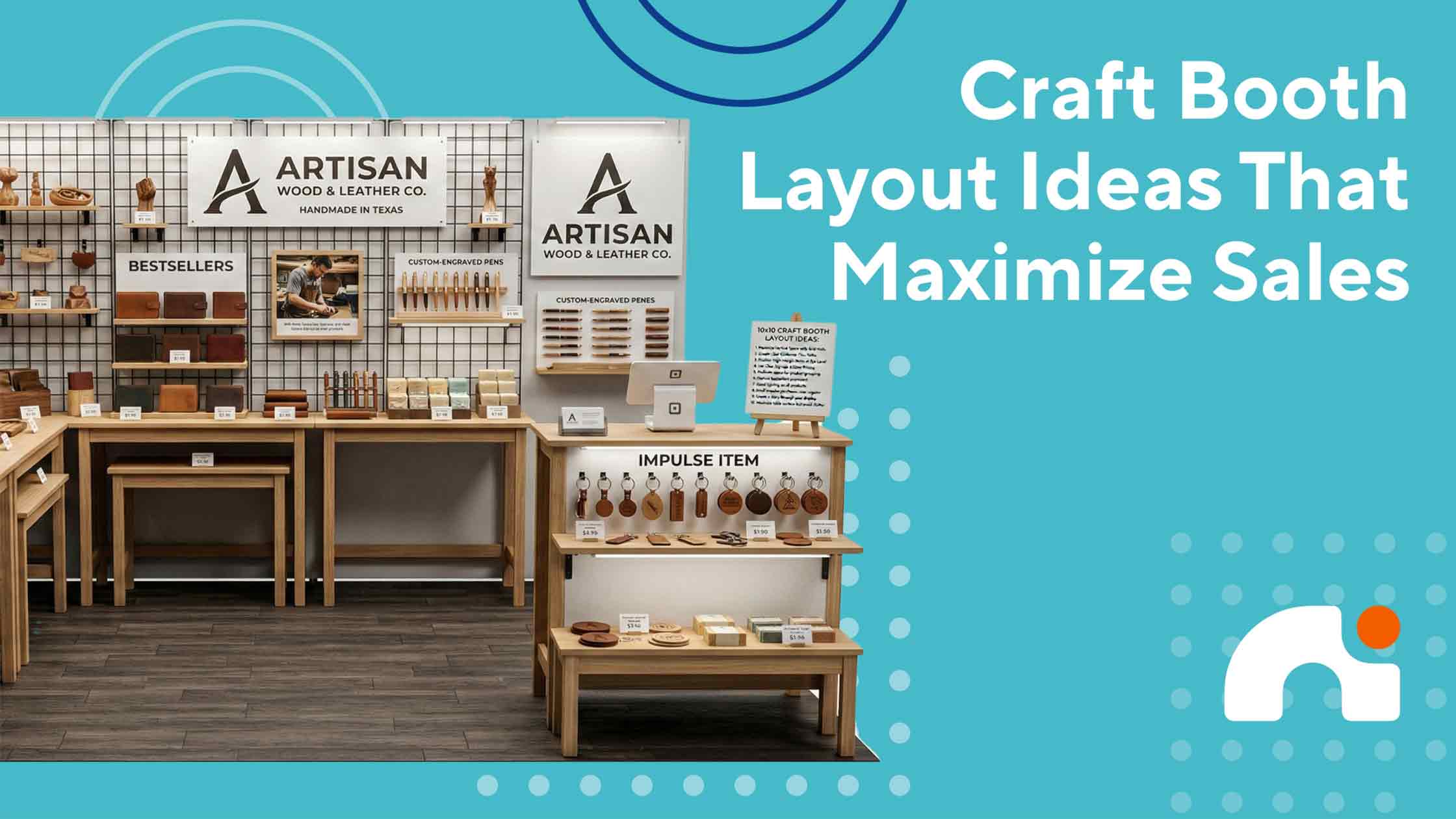
Smart 10×10 craft booth layout ideas can transform a tight 100-square-foot space into a high-performing sales machine.
Working in a 10×10 space can seem restrictive. But the truth is, the right design can transform even a small space into an attractive store. Using the right 10×10 small trade show booth ideas directly impacts flow, product visibility, and sales.
In this guide, we’ll explore practical layouts, smart design tips, and strategies to increase engagement.
What Are The Best 10×10 Craft Booth Layout Ideas? (Quick Answer!)
| Layout / Element | Best For | Key Setup | Main Advantage | Main Limitation |
|---|---|---|---|---|
| Single Counter | Beginners, limited inventory | One long front table + vertical banner/stands behind | Direct aisle visibility, simple, low cost | Customers don’t enter; limited viewing space |
| U-Shaped | Large product variety | Tables on front + both sides | Abundant display, multi-angle visibility | Customers stay outside; moderate cost |
| Inverted U-Shaped | Busy shows, high traffic | Open front, tables on sides + back | Easy entry, longer dwell time | Needs strong front signage; crowd control needed |
| L-Shaped | Corner booths | Tables on two walkway-facing sides | High exposure from 2 angles; good for demos | Customers don’t fully enter |
| Inverted L-Shaped | Corner, 2 open sides | Tables on back + one side; open front | Two entry paths, spacious interior | Checkout placement must be planned carefully |
| Z-Shaped | Storytelling displays | Zigzag tables creating guided path | Forces full-booth walk-through | Needs clear signage + vertical visibility |
| I-Shaped (Island) | Interactive demos | Table(s) in center | 360° access, tactile engagement | Low long-distance visibility |
| Creative / Lounge / Grid | Experience-focused brands | Circular paths, seating, unique shapes | Memorable, stands out | Requires careful planning to avoid clutter |
| Vertical Displays (Pegboards, Shelves) | Small space optimization | Multi-level height setup | Makes booth feel bigger, improves visibility | Poor setup looks crowded |
| Lighting & Signage | All booths | Spotlights + clear brand header + simple message | Attracts attention from distance | Weak lighting = lost visibility |
| Interactive Demos / Tech | Engagement & conversions | Product testing, tablet videos, QR codes | Increases dwell time & sales | Needs active staff involvement |
| Success Metrics | Optimization | Track traffic, dwell time, leads, sales | Improves layout over time | Requires post-show analysis |
Why Your 10×10 Booth Layout Matters More Than You Think
Our 4 years of experience designing trade show booths Houston businesses and beyond rely on, has thought us that many people think that just having good products to sell at a trade show is enough.
However, the truth is that 10×10 craft booth layout ideas can directly influence buying behavior. People decide within seconds whether to stop or keep walking.
If the layout is crowded and disorganized, it creates a sense of messiness, like a store that is hard to navigate. But A well-planned layout makes the booth feel larger and more professional.
At a craft fair, customers usually come to browse, but at trade shows, they move more purposefully.
This difference makes it necessary to choose different 10×10 booth layout ideas for each space. Good design not only increases sales but also enhances your brand’s professional image.
Customer Flow & Traffic Patterns
Have you ever walked into a booth and didn’t know exactly where to start?
That usually means the traffic flow isn’t working. Some booths have a linear layout; customers just look in and out. But in a smart craft show booth layout, the entrance is open, creating a natural flow.
Among craft fair booth setup ideas, creating breathing space and direct visibility to your best-selling products is important. When customer movement patterns are properly guided, people stay longer in the booth and are more likely to make a purchase.
10×10 Craft Booth Layout Ideas That Actually Work
Now it’s time to discuss all of the 10×10 craft booth layout ideas that can actually work and drive foot traffic. These are some of the best trade show booth ideas for small budgets.
Single Counter Layout
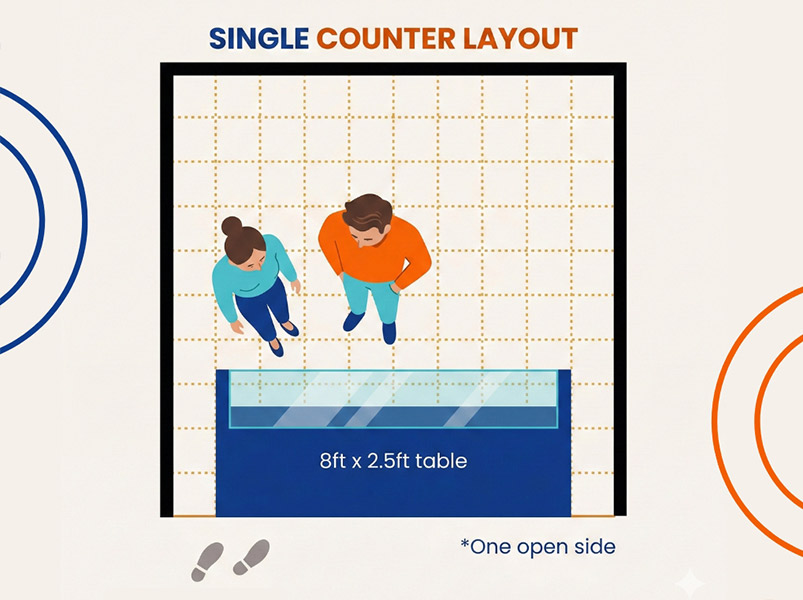
Among all the 10×10 craft booth layout ideas, the Single Counter model is the simplest and least expensive option.
In this layout, a long table is placed directly in front of the booth, with the products displayed facing the aisle. If you are a beginner or have limited inventory, this is one of the best craft booth layouts to start with.
To avoid looking like just a simple table, use vertical stands, floor stands, or banners behind the table to be seen from a distance.
The main advantage of this model is the direct view of passers-by; however, the disadvantage is that customers do not enter the booth and usually only look when passing by. If it is crowded, only a few people can see the products at a time
However, the space behind the table is great for hidden storage and easy sales management.
U-Shaped Layout
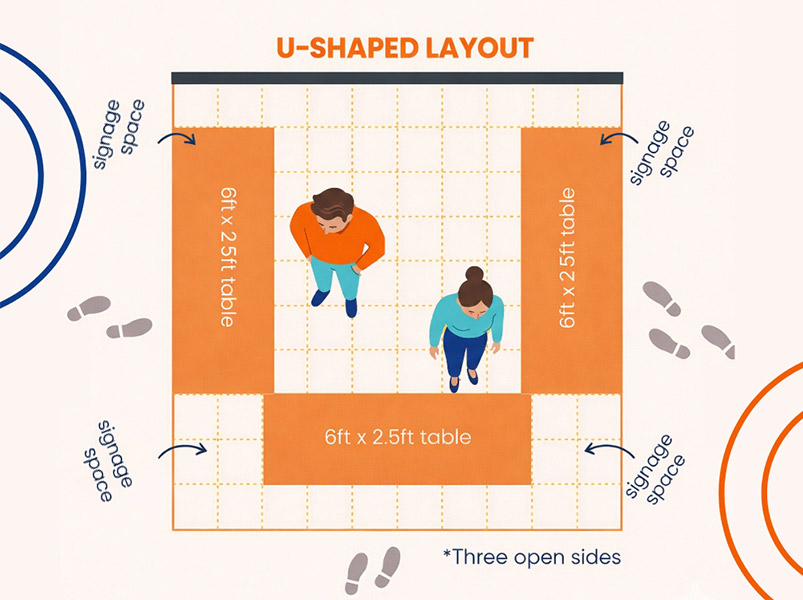
Among the most professional 10×10 booth layout ideas, the U-shaped model is one of the most popular trade show booth ideas for vendors with a wide variety of products.
In this layout, tables or stands are placed on three sides: the front and two sides. This model allows products to be viewed from different angles, creating a sense of abundance.
In many craft fair display layouts, this style works great for corner booths, as you have a view from two different directions. Using vertical displays or light shelves creates visual height.
The important thing is that customers usually do not enter the booth but move around it. So, you need to design it in such a way that each side looks attractive and complete.
This model is moderately expensive because it requires a few tables or structures, but it creates a good balance between extensive display and space management.
Inverted U-Shaped Layout
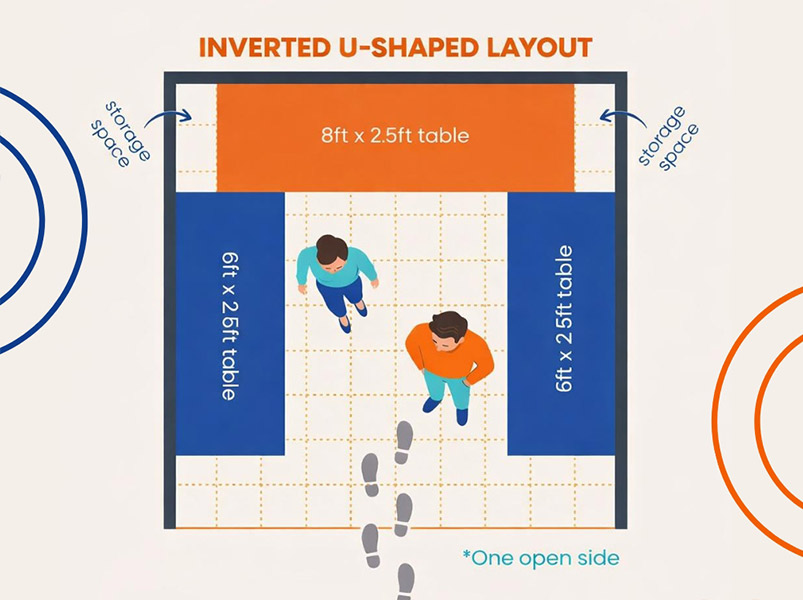
Among the most practical 10×10 small trade show booth ideas, the inverted U model is very effective for busy spaces.
In this layout, the front is completely open, with tables or shelves placed on the sides and back. This model is one of the smartest 10×10 booth design ideas for quickly attracting customers, as it makes it easy to enter.
When the entrance is open, people are more likely to take one step inside. This short entrance often leads to a longer stay.
Of course, since products are less visible from the outside, you should use front banners, vertical stands, or eye-catching elements to attract attention. If you want to create a small store feel, tall shelves are the best choice.
The only challenge with this model is managing the crowds during peak hours.
L-Shaped Layout
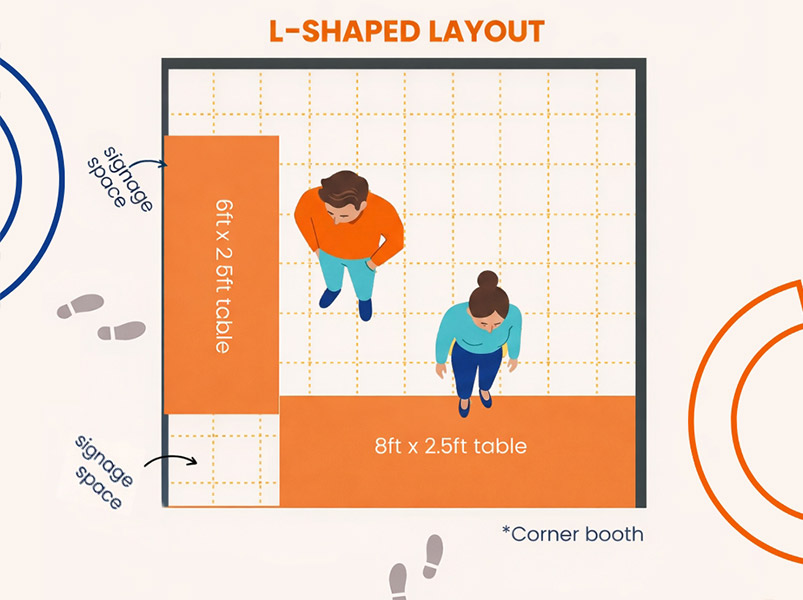
If your booth is in a corner, the L-shaped layout is one of the smartest 10×10 booth layout ideas you can use.
In this layout, the two sides of the booth facing the walkway are covered with tables or stands, while the third side is left completely open. This means that the products are directly exposed to passersby.
In a professional craft show booth layout, the corner between two tables is the best place to install a vertical banner or branding stand.
This focal point makes you visible even from a distance. The customer does not enter the booth, but can walk around it and view the products from two angles.
This model is also suitable for those who plan to run live demos, as one open side creates a space for direct interaction. It is moderately priced, and with a few vertical stands, it looks quite professional.
Inverted L-Shaped Layout
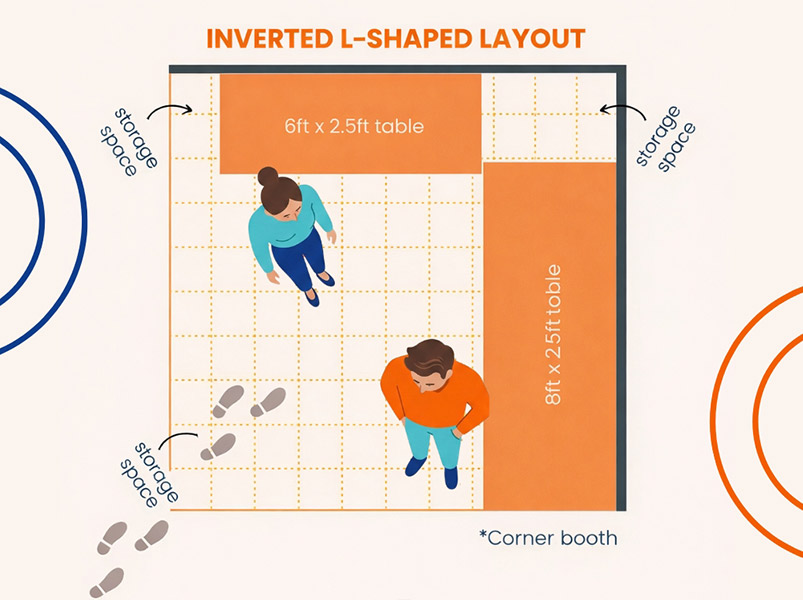
The inverted L-shaped layout is most commonly used among different craft fair booth setup ideas for corner booths with two open entrances.
In this case, the tables are located at the back and on one side, and the front entrance is completely open. The result? Two simultaneous movement paths for customers.
Since the products are located at the back, you need to attract attention with a banner or stand in front. The big advantage of this layout is the free space inside the booth. Customers can enter, move around, and even feel less crowded.
Only one important question remains: where should the checkout be? The best spot is usually an inside corner to get a view without blocking the path of movement.
Z-Shaped Layout
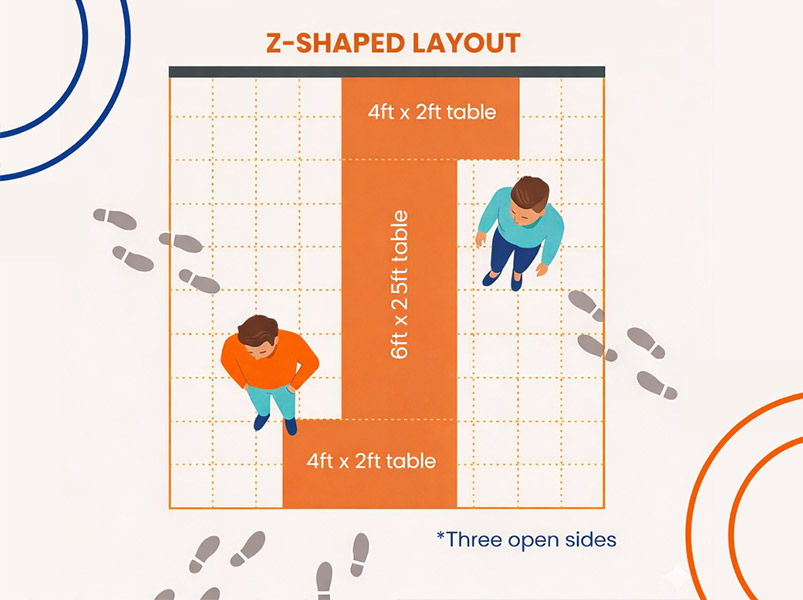
Among the trendiest craft fair display layouts, the Z-shaped layout stands out. Three tables are arranged in a zigzag pattern in the middle of the booth, creating a clear path. This is one of the most creative 10×10 craft booth layout ideas for telling a product story.
The customer enters, starts at one side, and subconsciously walks through the entire booth. This model is great for vendors with products staged from raw materials to finished products.
Crowd control is easier with this layout, as people can enter from both sides and move naturally. Just use vertical stands and clear signage so you can be recognized from the outside.
I-Shaped (Island Center Table) Layout
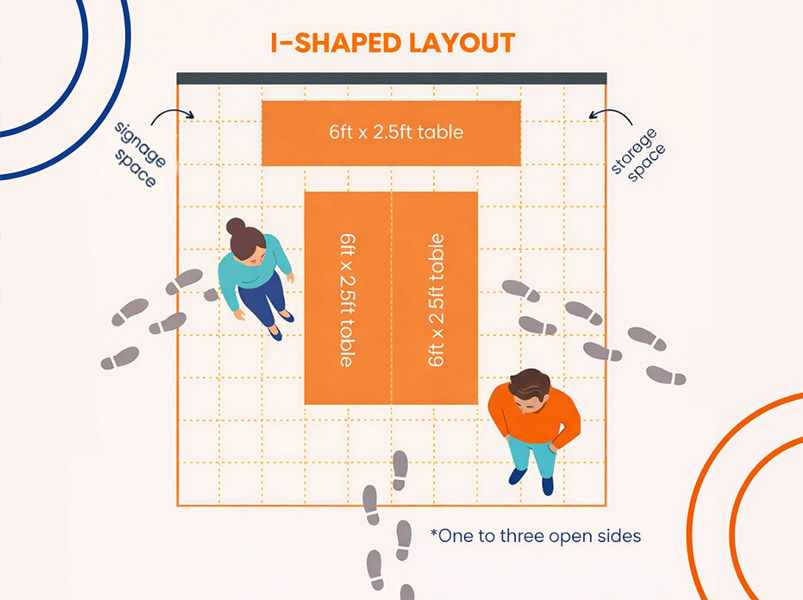
The I-Shaped (Island Center Table) layout is one of the most unique options available.
In this layout, one or two tables are placed in the center of the booth, and customers can move around them from all sides. This layout is great for interactive displays, live demos, or products that need to be touched and tested.
The main challenge here is visibility from a distance. Since you don’t have a wall or back wall, use vertical elements like stands, banners, or tall shelves to create a focal point.
If you design the craft booth traffic flow correctly, customer movement will be natural and uncluttered.
Creative & Non-Traditional Layouts
If you want to be different, it’s time to try creative layouts. Some 10×10 booth design ideas include grid systems, circular product-browsing paths, and even triangular displays with a central focal point. These models will make your booth stand out from the crowd.
One of the non-traditional best craft booth layouts is the semi-lounge design, which includes part of the space for short seating or interaction.
This style works well for brands aiming to create an experience. But it needs careful planning to keep the look appealing and make sure customers can move around easily.
Booth Structures & Design Elements That Elevate Your Layout
The layout isn’t just about the location of the tables; the booth structure is the framework that holds the entire experience together. Many 10×10 booth design ideas look professional when supported by the right structure.
For example, using pop-up tents isn’t just for outdoor spaces. At many indoor trade shows, if you don’t have strict height restrictions, using a pop-up canopy booth instantly sets your booth apart from the crowd.
A flat-roof or gable tent not only creates a branding ceiling, but also multiplies the surface area for printing and graphics by adding a backwall or half-wall.
This means it’s visible from a distance. Conversely, if you want a more minimalist space, modular structures or stretch-fabric frames (like SEG) offer a modern, seamless look. Backlit SEG graphics can make your brand “shine” in the hall.
Branded flags, standing banners, inflatable structures, and even truss systems can also create visual height. Choosing the right structure is the foundation for the rest of the layout.
Backdrops, Media Walls & Graphics
A strong backdrop creates a sense of authority. Using different media wall display ideas, such as arched walls or illuminated frames, creates a vertical focal point and helps your brand stand out.
When your logo is large and clear against the backdrop, even the photos people take become advertisements for you.
Portable & Modular Booth Systems
Portable trade show booths are a smart choice for those attending multiple events. These systems are lightweight and quick to set up.
Modular structures let you adjust the layout slightly for each event without having to rebuild everything from scratch. Flexibility means saving time, money, and energy.
Smart Display & Space-Maximizing Tips for Craft Fairs
The biggest issue with many craft fair booth setups isn’t the lack of space.
Many people just fill the tabletop, leaving the walls and the booth’s height almost empty. If you learn how to maximize vertical space, even a 10×10 booth can feel twice as big.
Using pegboards, lightweight shelves, decorative ladders, or tiered shelving allows multi-tiered product displays. This layering enhances visibility and creates a professional look. Successful layouts often combine varied heights to establish visual rhythm.
Hidden storage under the table using long cloths or dual-purpose boxes is essential. Small mirrors can enlarge the space visually, and risers highlight best-selling items.
Vertical Display Strategies
If everything is displayed at the same height, the display feels flat. But when you use vertical shelving or pegboards, your gaze is directed upwards, and your booth can be seen from a distance.
This is one of the most important principles in professional booth setup for craft fairs. You can even place cheaper products lower and specialty items at eye level.
Lighting & Signage Best Practices
Lighting and signage aren’t just decorative details; they determine whether your booth is visible from ten meters away. Most showrooms use flat, neutral lighting, so if you don’t add your own lighting, your products will get lost in the crowd.
Using spotlights on your best-selling items will make them stand out first. Warm lighting creates a sense of intimacy for handmade items, while cool white lighting gives a more modern look.
When it comes to signage, simplicity wins. Your brand name should be at the top and legible. Below that, a short sentence that says exactly what you’re selling. Your prices are clear and unambiguous.
This simple hierarchy will help customers make a decision without asking any questions. If someone has to guess what you’re selling, they’ll probably pass.
How to Make Your 10×10 Craft Booth More Engaging
Interactive Demos & Technology
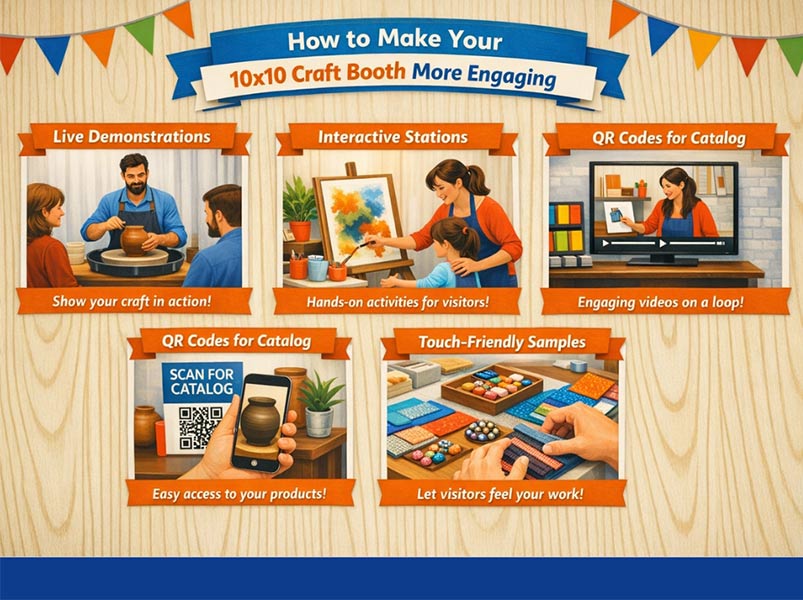
How do you transform passerby into engaged buyers? A booth with products simply resting on a table is easily ignored. Add interactive demos, and everything changes, “experience turns interest into action.”
For example, if you sell handmade candles, let the customer compare scents. If you sell wood products, let customers feel the texture. This tactile experience will encourage visitors to stay longer and ask questions.
On the other hand, clever use of technology in booths can be impactful. A tablet with a short video of the production process, or a QR code that directs customers to the full catalog, demonstrates your brand’s professionalism.
In many successful craft fair booth setups, technology complements the in-person experience rather than replacing it.
Staff Positioning & Customer Interaction
After years of providing signage Houston businesses use to stand out at trade shows in Texas and beyond, we learned that many sellers just stand behind their tables and wait, which is a big mistake. Instead, position yourself so you can move around easily and talk with visitors.
You’ll make people feel more welcome if you stand a bit inside your booth and smile.
Try asking something like, “Is this your first time at this show?” to start a conversation. When customers feel at ease, they’re more likely to buy. Personal interaction is still the best sales tool.
Measuring Booth Success & Improving Your Layout Over Time
Most vendors focus on one number after the show: total sales. But if you really want to be among the pros, you need to take a closer look at craft fair booth success metrics. Sales are important, but they’re not enough.
First, measure foot traffic. How many people actually stopped by your booth? How many people entered? That’s the primary measure of the craft booth layout’s performance. If there’s a lot of traffic but few purchases, maybe the flow or checkout location isn’t right.
Dwell time is the next indicator. If people are staying for less than a minute, your layout or messaging isn’t engaging. But if they’re in the booth for 3-5 minutes and still haven’t made a purchase, you probably need a special offer or stronger engagement.
For more professional metrics, also consider the number of leads registered, QR code scans, or business cards collected. After each event, create a simple checklist:
- Was the flow smooth?
- Were the best-selling products in the right places?
- Could one of these 10×10 booth layouts have worked better?
Look at the layout like an experiment. Every trade show is an opportunity to test, refine, and improve.
Conclusion
10×10 small trade show booth ideas come with a smart design. When you thoughtfully choose your layout and continually improve it, you’ll see results in your sales.
Using the right 10×10 craft booth layout ideas effectively can transform this limited space into a professional, organized, and highly profitable booth.
FAQs
How to set up a 10×10 booth?
Start by designing your layout around traffic flow, not just the locations of your booths. Display products vertically, leave the entrance open, and place your best sellers at eye level.
How big is a 10×10 booth?
A 10×10 booth is 100 square feet; about the size of a small room. Space is limited, so each table and stand should be chosen with purpose.
How to design a small booth effectively?
Focus on simplicity, visual height, and lighting. Avoid clutter, foster flow, and display only the products you really want to sell.