




Wayfinding signs can make a confusing building feel easy to navigate from the start.
If you ask yourself what wayfinding signage is, the answer is simple: a system of signs that guides people from one point to another.
Wayfinding signage is not just installing a few signs; it is part of a signage & wayfinding strategy to manage people’s movement in different spaces. This article explores its types, design principles, and real-world applications.
Quick Answer!
| Aspect | Summary |
|---|---|
| What Is Wayfinding Signage? | A coordinated system of signs purposed toward guiding people from one point to another one using clean, well-designed visuals that help with navigation and orientation. |
| Core Sign Types | Identification: Shows exact location (e.g., room number).
Directional: Uses arrows/directions at decision points. Informational: Provides details (e.g., hours, directories). Confirmational: Reassures users they are on the right path. Regulatory: States rules and safety requirements. |
What Is Wayfinding Signage?
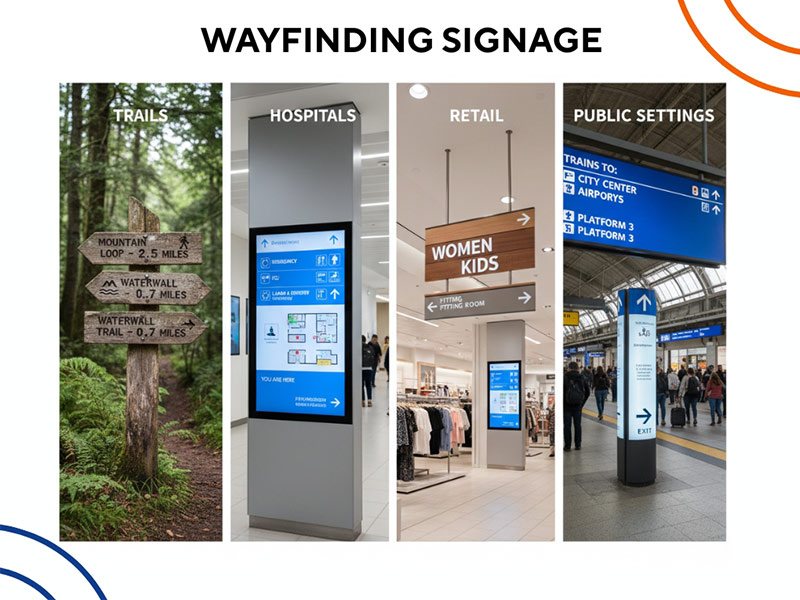
When we ask what wayfinding signage is, we do not mean just a simple sign. Wayfinding signage is a coordinated set of signs designed for navigation and orientation.
This system uses specific visual cues to help the user find the right path and flow through the space without confusion.
How is it different from regular signs? A regular sign may only show the name of a room. But in signage & wayfinding, all the signs work together.
From the entrance to a park to the emergency room of a hospital, from the shops of a shopping mall to public office buildings, the concept of wayfinding and signage means purposeful guidance, not just information.
This system makes decisions simple and fast.
Why Wayfinding Signage Matters
The importance of wayfinding and signage becomes clear when you enter a large and complex space.
Imagine you are in a multi-story hospital and you do not have the time and energy to search. A professional wayfinding signage system reduces confusion and clarifies routes.
In addition to reducing stress, this system also increases safety. On nature trails, the lack of clear signs can be dangerous.
On the other hand, a good design provides better orientation and greater accessibility for all users, even people with disabilities.
These types of signs are also important for branding. Consistency in color, font, and messaging creates a cohesive experience and enhances the user experience.
Ultimately, a better user navigation experience means less time getting lost and more focus on the main purpose of being in the space.
Core Wayfinder Sign Types
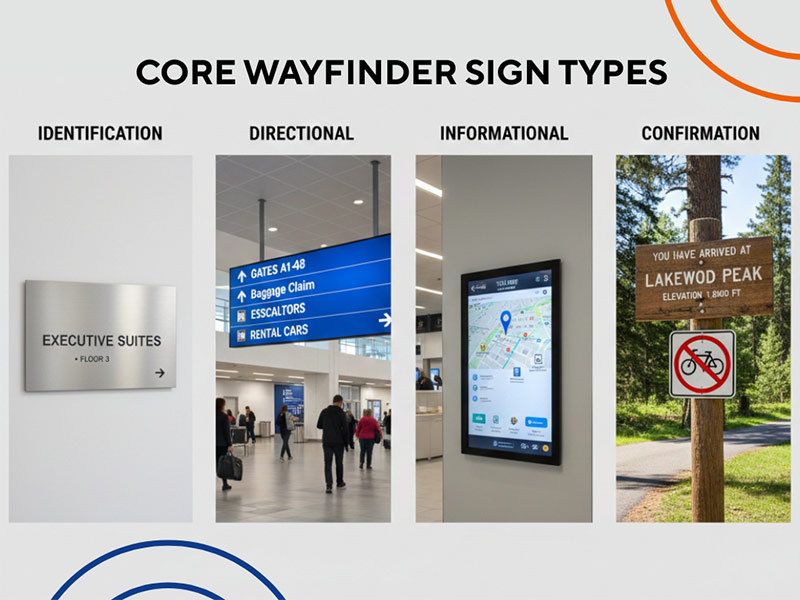
Identification Signs
Identification signage indicates a specific point. For example, a sign with the name of a university building or a hotel room number.
These types of wayfinder signs tell the user exactly where they are standing. Without this, people would not be sure they had reached their destination, even if they had followed the correct route.
Directional Signage
Directional signage is a type of sign that guides the user with arrows and directions. These signs should be installed at decision points.
For example, at the intersection of hospital corridors. These types of wayfinder signs guide movement and prevent unnecessary turns.
Informational Signs
Informational signage provides additional details, such as opening hours, usage guidelines, or facility information.
In parks and shopping malls, outdoor directory signs are an example of this category that provide an overview of the space.
Confirmational Signs
Confirmational signage assures the user that they are on the right path. This type of navigation reassurance is simple but vital.
Regulatory Signs
Regulatory signage specifies safety rules and requirements and is an important part of safe wayfinding.
How Wayfinding Signage Systems Work
A wayfinding signage system functions as a continuous journey rather than a collection of scattered signs.
Imagine entering a large shopping mall. At the entrance, a general map shows the routes. A few steps ahead, signposts guide you to the right floor. At each intersection, a short and clear sign helps you decide between several options.
This is what effective decision-point management looks like.
In a professional signage & wayfinding approach, each sign complements the next. The design is based on spatial mapping so that the user moves from the entry point to the final destination without unnecessary pauses.
When everything is coordinated, navigation feels natural and stress-free.
Design Principles for Effective Wayfinding
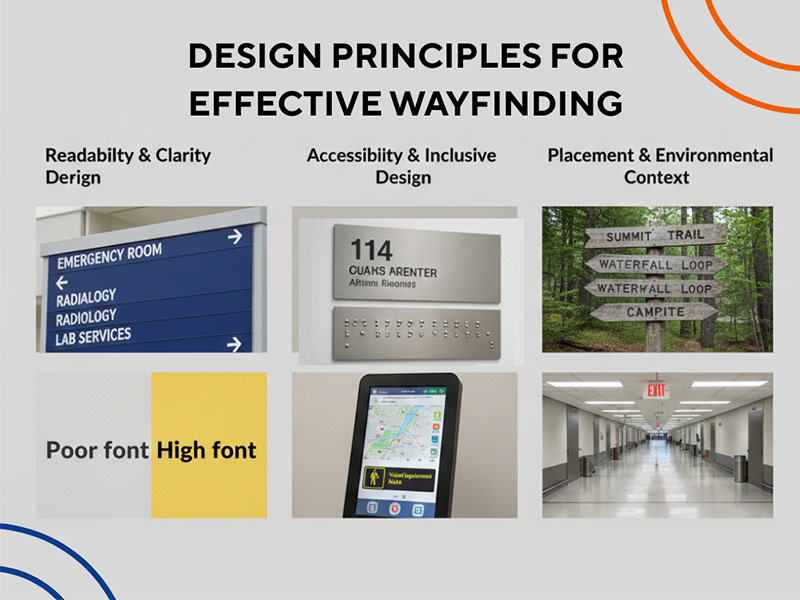
The success of a wayfinding signage system hinges on its meticulous design. Without sound guiding principles, even the most brilliant concepts will fail to perform, “design is the silent navigator of every space.”
Readability & Clarity
In wayfinding sign design, legibility is the top priority. The font should be simple and recognizable. Plus, sufficient color contrast between the text and the background is essential.
Information hierarchy is also important, so use larger headings and smaller supporting text. With these tips, the user should understand the message in a few seconds.
Accessibility & Inclusive Design
In a good wayfinding sign design, all users are considered. Using Braille, following ADA standards, and using clear symbols for people with visual impairments are part of the basic principles.
Accessibility signage is not just an optional extra; it ensures that everyone, without dependence on others, can find their way independently and safely.
Placement & Environmental Context
In any wayfinding sign design project, the placement of the sign is as important as its design. Sign placement should align with the natural flow of people, right where users pause before choosing a route.
If the sign is hidden behind a pillar or installed after a turn, it is practically useless. The lighting, height, and viewing angle should also be in harmony with the environment.
Alpha Imprint; Your Reliable Local Partner for Signage Services
If you are based in Houston, and need professional signage, you can count on Alpha Imprint. With over 3 years of hands-on industry experience we deliver signage Houston businesses and beyond trust.
High-quality printing and professional design are two of the main focal points of our business; and with affordable prices and reliable support, we have you covered from start to finish. So, if you need wayfinding signs or any other sign types, request a free quote today.
Outdoor vs. Indoor Wayfinding
Outdoor wayfinding signage should be weatherproof. It is important to use durable materials (like vinyl) with high visibility. In parks or university campuses, outdoor directory signs play an important role in introducing the overall space.
In contrast, interior wayfinding signage is more concerned with interior lighting and coordinating with the decor. In enclosed spaces, insufficient or inconsistent lighting can affect readability.
Therefore, the material, color, and font size should be selected according to the environmental conditions.
Wayfinding Signage Examples by Sector
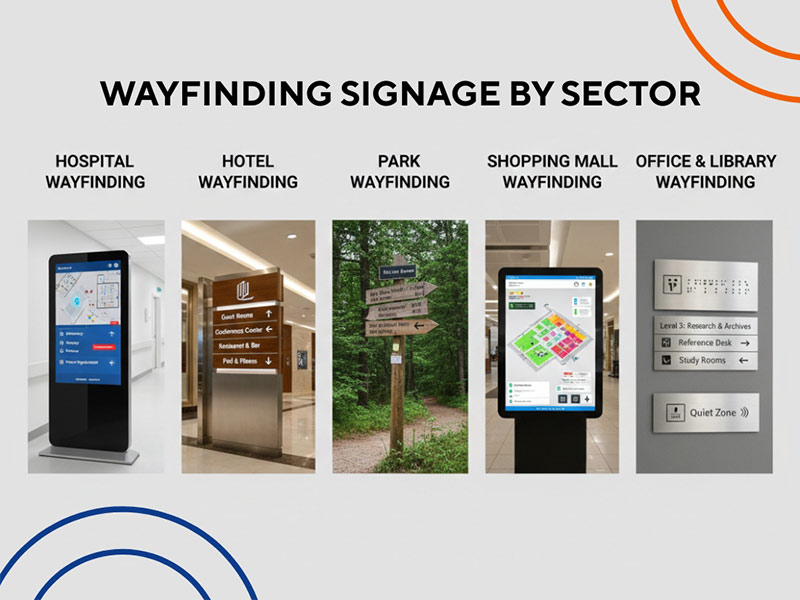
The use of wayfinding signage varies by industry, and its design changes depending on the type of space.
Hospital Wayfinding Signage
In hospital wayfinding signage, clarity is crucial as people are often under stress. Clear Directional signage on each floor, separate color schemes for sections, and room numbering ensure that the patient or their companion reaches their destination without confusion.
Hotel Wayfinding Signage
Hotel wayfinding signage should convey a sense of brand while also providing guidance. Wayfinder signs in the lobby, corridors, and facilities, such as the pool or restaurant, should be in harmony with the hotel’s visual identity.
The guest should find their way without asking questions.
Park Wayfinding Signage
Environmental conditions in parks are challenging, right? Outdoor wayfinding signage must be resistant to rain and sun, and walking paths, landmarks, and facilities should be clearly marked.
Shopping Mall Wayfinding
In shopping mall wayfinding projects, the main challenge is the vastness of the space. The visitor enters and is faced with dozens of stores.
Here, outdoor directory signs play a vital role at entrances; they provide an overview so people know where they are and which floor their destination is on. Then the directional signs guide him step by step to the desired store.
Office & Library Wayfinding
In office buildings, directional signage must clearly identify departments, floors, and even room numbers. An employee who has come for a meeting does not have time to get lost.
In contrast, library wayfinding projects focus on guiding users to the shelves, reading room and check-out desk; precise, simple and completely functional.
Creative & Digital Wayfinding Trends
Nowadays, creative wayfinding signage is not limited to printed signs. Many modern spaces use digital directories and interactive maps to help users find their destination.
In some shopping malls or universities, mobile apps have become part of the wayfinding and signage strategy, personalizing the navigation experience.
Furthermore, creative design has also become popular. For example, in a theme park, signs are combined with graphic elements specific to the space.
This approach shows the way and enhances the user experience.
Conclusion
Wayfinding signage is not just a few simple signs; it is a coordinated system for effectively guiding people. From the different types of signs to professional design principles, everything plays a role in the success of signage & wayfinding.
When implemented correctly, wayfinding signage enhances user experience, improves safety, and makes navigation effortless.
FAQs
What is wayfinding and signage?
A coordinated set of signs that guides people through different spaces, identifies routes, and helps them reach their destination without confusion.
Where is outdoor directory signage used?
It is used in parks, universities, outdoor shopping malls, and large areas so that people can see the overall map of the space and routes before moving.
What are the types of wayfinding signage?
Wayfinding includes identification, directional, informational, and confirmation signs that guide users along their path.
What are common wayfinding mistakes?
Incorrect placement, illegible fonts, poor design coordination, and a lack of signage at decision points are among the most common mistakes.
How to design wayfinding signage?
The user’s path should be analyzed, decision points identified, a legible font with appropriate contrast should be used, and signs should be installed in direct view.
What are the principles of wayfinding signage?
Clarity, simplicity, design continuity, accessibility, and proper placement are the main principles that make navigation quick and stress-free.