



A font that looks fancy on a monitor doesn’t always look good on clean fabric; this is where choosing the best embroidery fonts comes into play.
Font selection in embroidery is not just a matter of taste. If the fonts are not legible or not chosen properly for the fabric, even a good design will look bad.
In this article, we will review embroidery fonts and embroidery typeface styles for hats, polos, logos, personal names and modern clothing to make the choice easier.
Best Embroidery Fonts and Typeface Styles in 2026 (Quick Answer!)
| Font / Embroidery Typeface | Best For | Style |
|---|---|---|
| Times New Roman | Formal logos & uniforms | Classic serif |
| Georgia | Polos & tote bags | Soft, readable serif |
| Garamond | Monograms & luxury branding | Elegant serif |
| Helvetica | Business embroidery | Clean sans-serif |
| Arial | Names & small logos | Simple, safe |
| Montserrat | Hoodies & modern brands | Minimalist modern |
| Futura | Short chest text | Geometric modern |
| Brush Script | Classic embroidered names | Smooth cursive |
| Pacifico | Casual gifts & towels | Friendly script |
| Lobster | Boutique & stylish apparel | Bold script |
| Varsity Fonts | Jackets & patches | Retro sporty |
| Western Fonts | Hats & vintage merch | Bold vintage |
Best Serif Fonts for Embroidery Designs
Times New Roman
If the garment is going to look formal, Times New Roman is still a reliable choice. This font is often used in common embroidery fonts because it has a classic, serious feel; it works well for a law firm uniform, an executive shirt, or a small logo on a formal jacket.
For very small lettering, it’s best to be a little cautious because the thin serifs may not show up in a clean stitch.
Georgia
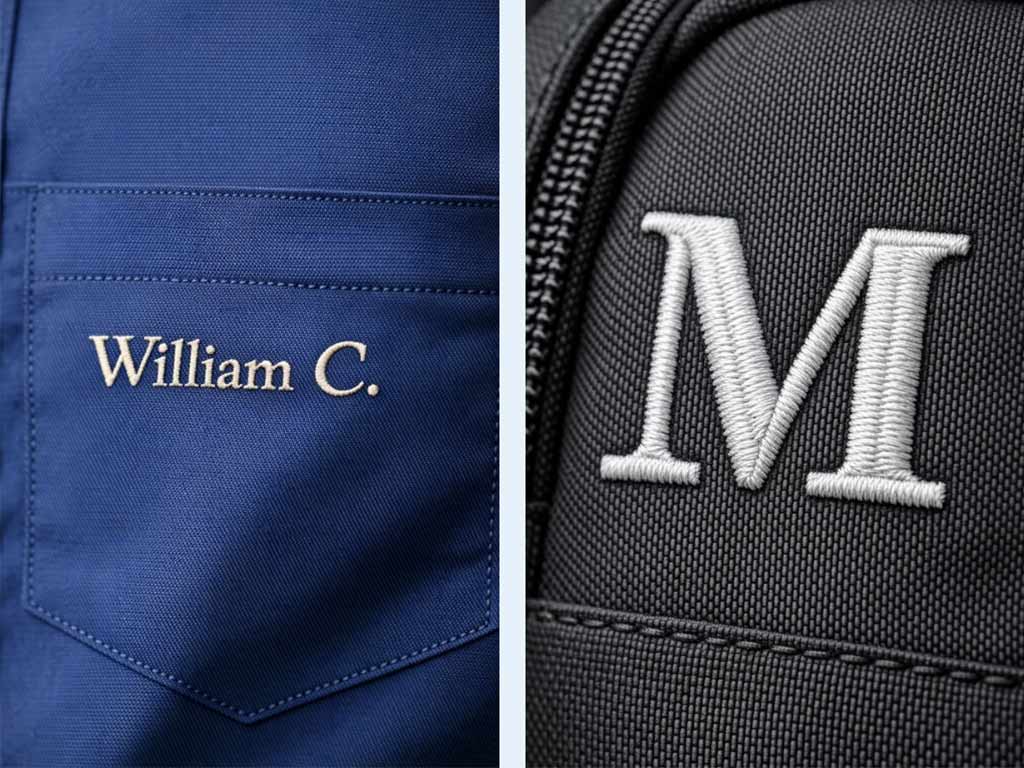
Georgia looks a little softer and more legible. If a brand name, staff name, or a short sentence is going to be embroidered on a medium-sized polo, tote bag, or sweatshirt, this font can be a good choice.
Among embroidery fonts, Georgia is a good pick for formal designs that still feel inviting.
Garamond
Garamond has a more elegant and luxurious feel. It is considered one of the best embroidery fonts for monograms, formal wear, special gifts, and brands seeking a classic look.
But for very small text or thin fabric, it’s a good idea to do a test stitch first.
Best Sans-Serif Fonts for Embroidery
Helvetica
Helvetica is a very safe choice for embroidery branding. Why? Because its letterform is clean, simple, and without any added extras. This simplicity helps the text remain legible from a distance.
Among the standard embroidery fonts, Helvetica is widely used for formal and minimal typography embroidery, especially when the design should not look crowded.
Arial
If someone is new to choosing text or a name for embroidery, Arial is usually the least hassle. Its letters are familiar, legible, and simple.
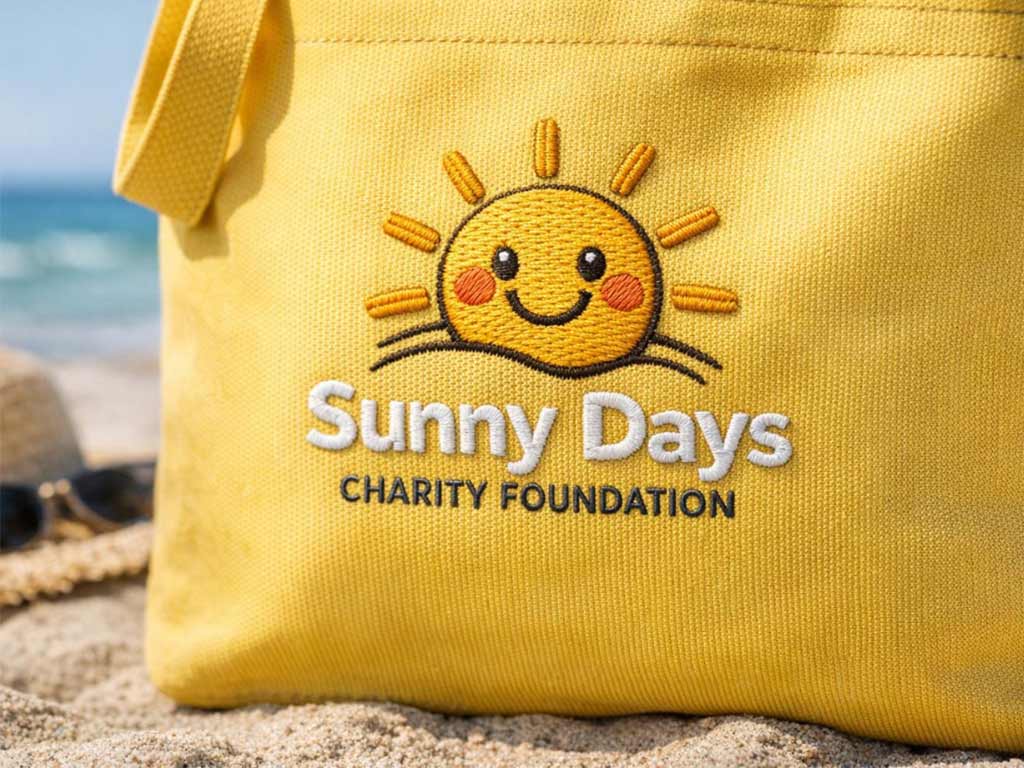
For an employee’s name on a uniform, a short inscription on a tote bag, or a small logo on a t-shirt, Arial is one of those embroidery design fonts that will quickly produce acceptable results. It is not too formal, not too fancy.
Montserrat
Montserrat has a more modern feel. If your brand is a startup or minimalist, this font will look great on a hoodie, sweatshirt, or hat.
Among the different popular embroidery fonts, Montserrat works well for short texts and simple logos, as it is geometric but doesn’t look too cold or lifeless.
Futura
Futura, with its neat, geometric letters, is perfect for modern designs. If the text is short, like the brand name on the chest or a word on the sleeve, this embroidery typeface can be performed very cleanly with satin stitch.
For very small text, it is better to choose a slightly thicker font weight.
Best Script and Cursive Fonts for Embroidery Names
Why Script Fonts Can Be Challenging
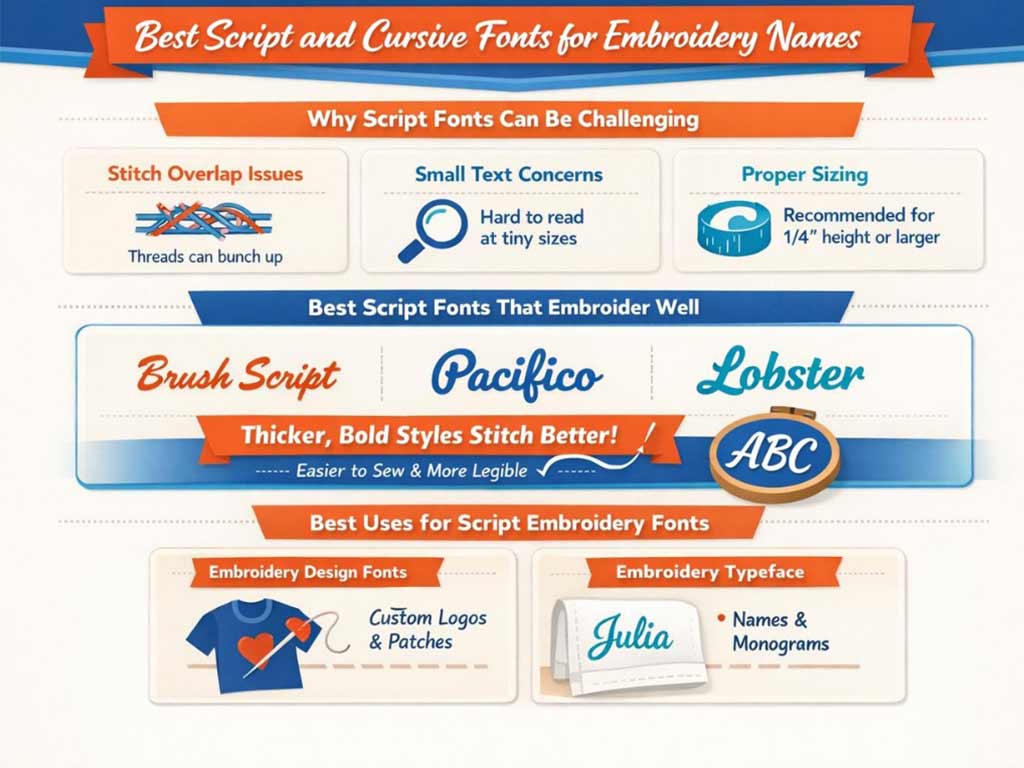
Script names look great, but they don’t always stitch easily. Because the letters are connected, if the text is too small, the stitches overlap, making it difficult to read.
That’s why, among embroidery fonts, scripts usually require a decent size and clean digitizing.
If you’re looking for the best fonts for embroidery names, it’s best not to make the name too small, especially on a towel or baby’s clothing.
Best Script Fonts That Embroider Well
Fonts like Brush Script, Pacifico, and Lobster usually work best, as their lines are a bit thicker and don’t look lost in a perfectly thin stitch.
Pacifico features a friendly, slightly casual feel; Lobster is more stylish for boutiques and gifts; Brush Script is a familiar choice for classic names.
These are popular embroidery fonts and, if sized correctly, can be among the best embroidery fonts for names.
Best Uses for Script Embroidery Fonts
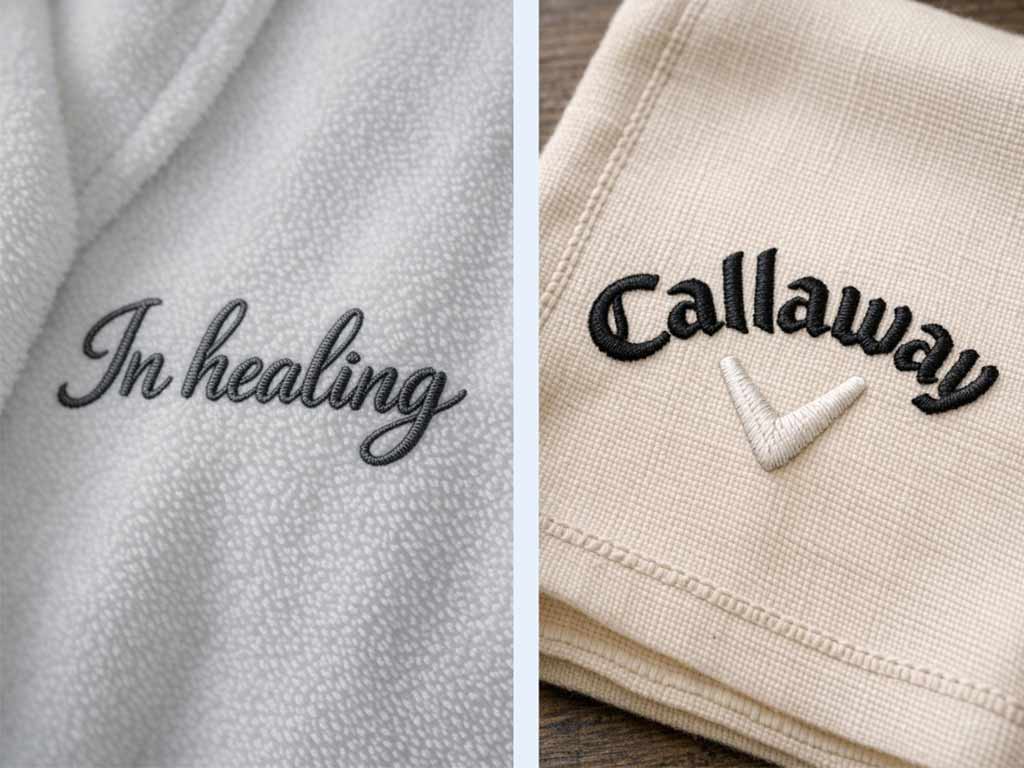
This type of embroidery typeface is great for personal items, like a baby’s name on a blanket, a monogram on a robe, the bride and groom’s names on a towel, or a delicate inscription on a boutique tote bag. Just keep the text short.
For example, “Emma” on a towel looks much cleaner than a long sentence in a complex font.
Modern Embroidery Font Trends in 2026
Minimalist Typography Embroidery
In 2026, many brands are going for simpler fonts; not because they lack ideas, but because it looks cleaner. Modern embroidery fonts are usually executed with wider letter spacing, smooth lines, and legible sans-serifs.
For example, a short word on the chest of a hoodie or on the side of a hat, if sewn correctly, gives a more authentic brand feel than a busy logo.
This embroidery style font works very well for streetwear, startup clothing, and minimalist merch. New trends also emphasize readability, proper spacing, and simple shapes.
Retro and Vintage Embroidery Fonts
Retro fonts are back. Styles like varsity, western, and team-inspired fonts bring a sense of nostalgia and personality.
These embroidery fonts style work well on hats, varsity jackets, sweatshirts, and embroidered patches.
In 2026, puff embroidery has taken this style to a new level, the letters are slightly more prominent, and the design pops out from the garment’s surface. That’s why, among embroidery design fonts, vintage fonts are an attractive choice for brands that want a bolder look.
Fonts to Avoid in Embroidery Designs
Thin Decorative Fonts
A font that is too thin may look nice on a laptop screen, but it doesn’t always look as clean on fabric. When an embroidery typeface has thin lines, lots of curves, or small decorative details, the thread can get lost, break, or the text can look illegible.
For example, a small name on a sleeve in a font that is too thin will look more like a messy line than real text after it’s sewn on.
Overly Condensed or Complex Typography
Fonts that are too tight can also be a problem. The stitches are too close together, and the letters are overlapping.
In embroidery typography, this problem is especially common on hats, pockets, collars, and sleeves, where there is little room to sew. If the text is long or the font is too complex, the result can be crowded and heavy, even with a good machine.
For these spots, choosing a simple font usually gives you a cleaner result.
Test Stitching Before Final Production
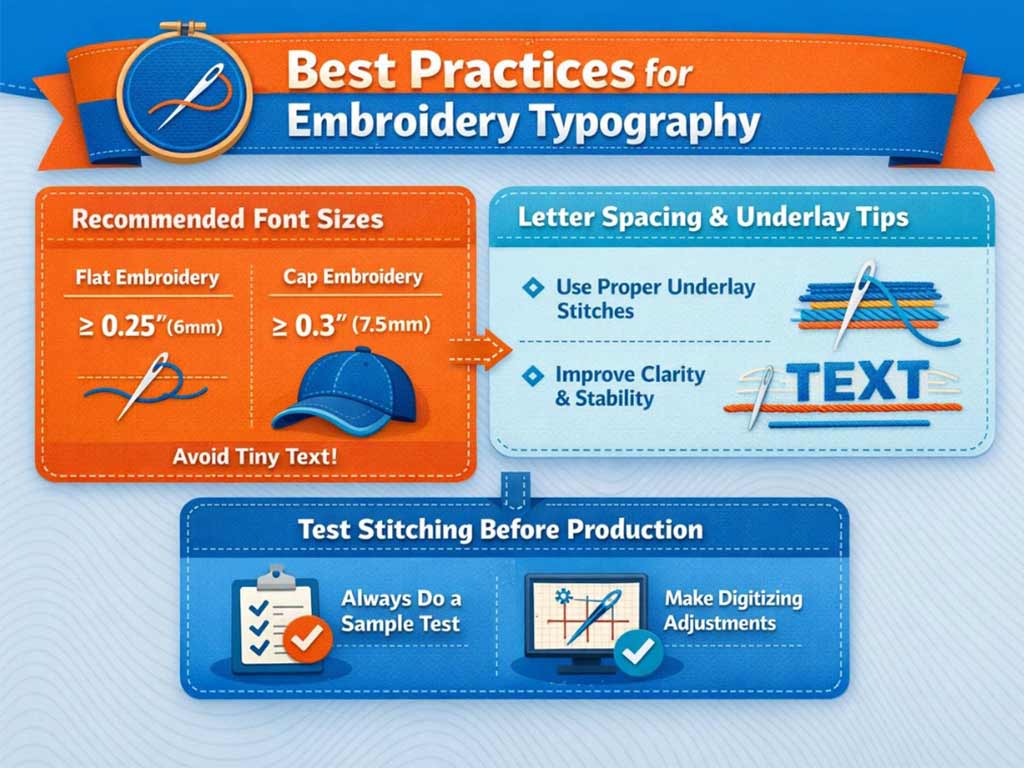
Be sure to stitch a sample before final production. Even the best embroidery fonts don’t work the same on every fabric. A name on a polo might look great, but the same design on fleece might look a little puffy or lumpy.
Creative Embroidery Font Ideas for Different Projects
Fonts for Business Logos and Uniforms
For business logos and uniforms, legibility should be the top priority. Helvetica, Arial, or Montserrat are usually safe choices among embroidery fonts, as they look clean on polo shirts, hats, and work jackets.
If a company is ordering branded clothing for its sales team or exhibition, it’s best to keep the font to a minimum.
In addition to clothing, the same typographic style can create a more uniform look across promotional products in Houston.
Fonts for Personalized Apparel and Gifts
For gifts, the space is a little more personal. For example, a name on a robe, a monogram on a tote bag, or a short message on a jacket can be enhanced with a bolder script font.
For custom apparel orders in Houston, these “embroidery ideas” are very practical for birthdays, corporate gifts, or formal wear.
Just make sure the font is nice, not so complicated that the name can’t be read.
Fonts for Local Embroidery Branding
For local brands, consistency is key. If a cafe, club, or store uses embroidery in Houston for uniforms, hats, and tote bags, it’s a good idea to keep the same font throughout.
This will make the brand look more professional and recognizable.
How to Choose the Best Fonts for Embroidery
Prioritize Readability and Stitch Simplicity
Ask first: Will the passage be readable after stitching?
Standard embroidery fonts generally feature crisp lines and balanced thickness. Avoid fonts that are overly thin or excessively ornate for small names; not every embroidery typeface will appear as lucid on fabric as it does on a screen, especially when “the thread begins to swallow the finer details.”
Minimum letter height is also important, and for small text a sample test is essential.
Match the Font to the Garment and Branding Style
A hat font is not always the same as a jacket font. For polo shirts and uniforms, legible sans-serifs are best. For streetwear, modern embroidery fonts look more attractive with wider letter spacing or a bolder font.
Of the embroidery style fonts, a corporate brand font should be neat, but on a tote bag or hoodie, you can choose a bit bolder.
Consider Fabric Type and Stitch Density
Fabric also plays a role in choosing embroidery fonts. On fleece or thick fabrics, small letters can get lost in the texture. Puff embroidery is also not suitable for very fine lettering, as the foam’s volume obscures the details.
Among popular embroidery fonts, even the simplest ones will look bad if the stitch density and pull compensation are incorrect.
Conclusion
In the end, the best results are achieved when legibility, font size, and digitizing are in harmony.
Not every embroidery font and embroidery typeface style looks the same on every fabric; so before producing a large number, it is better to sew a sample to be sure of the font, density and final appearance.