


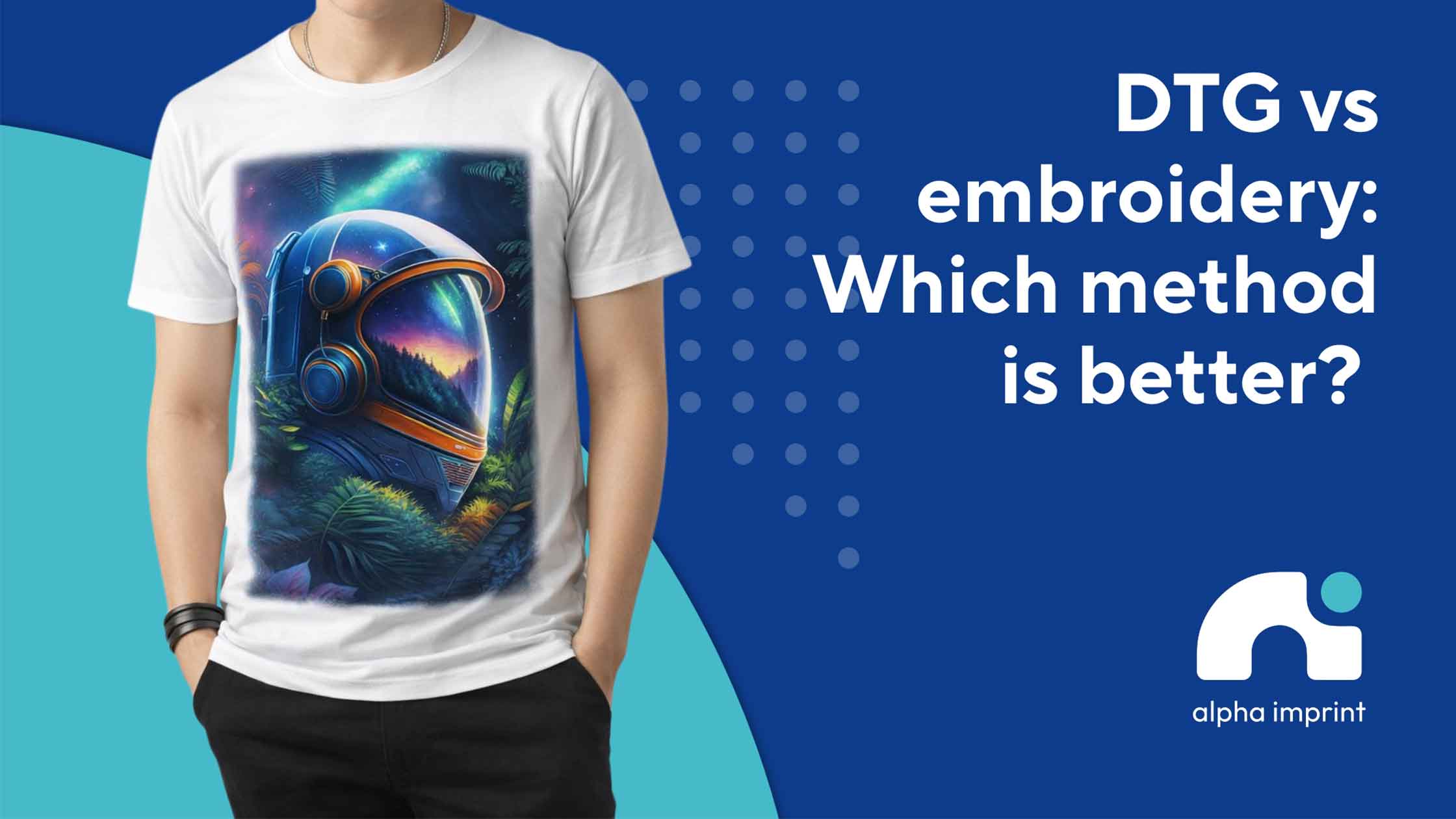
Is embroidery better for a formal logo or DTG for a color scheme? This DTG vs embroidery guide simplifies exactly that.
Choosing DTG vs embroidery is not just a superficial decision. These two methods are the most popular options for customizing clothing, but their end results are quite different.
If the design’s appearance, durability, cost, and brand feel are important to you, you need to understand where each method works best.
What Is DTG Printing

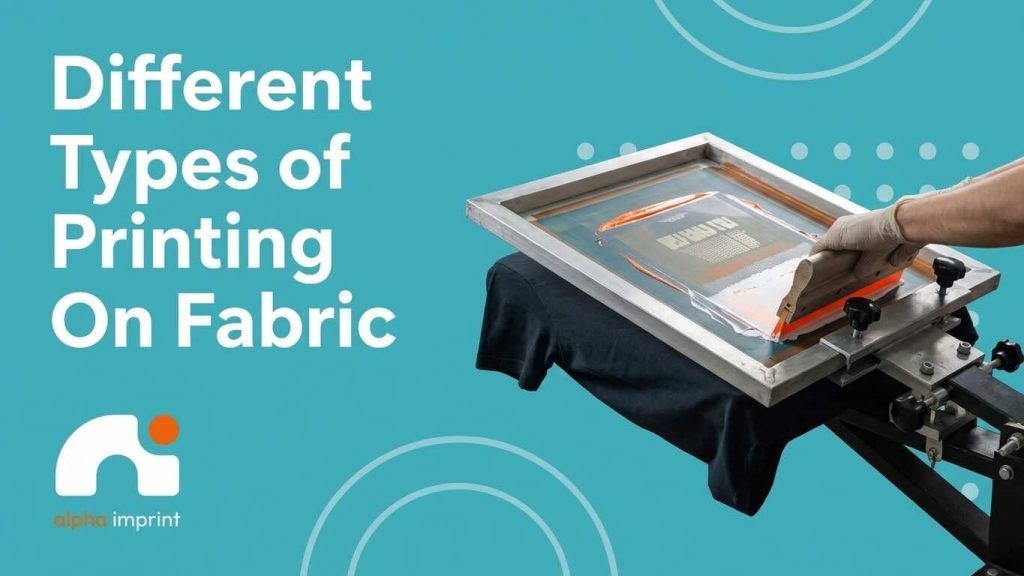
Direct-to-garment printing means that the design is printed directly onto the garment. It’s like printing a photo on paper, only this time the machine works on the fabric. The inks are also usually water-based, so the output on the garment doesn’t feel too dry or heavy.
DTG is well-suited for colorful, detailed designs, so if you want to print 20 T-shirts with a multicolor graphic design for an event, DTG apparel printing is a convenient option. It doesn’t require a complicated template, nor does it have a very high start-up cost.
That’s why it’s often used in small batch apparel printing.
This method works well on t-shirts, hoodies, sweatshirts, and some tote bags.
The advantages are unlimited color, clean details, and a soft feel on the garment. But it’s not perfect. DTG durability depends on the fabric and washing, doesn’t work the same on all fabrics, and is slower for very large orders. For colored printed apparel, DTG is usually the logical choice.
What Is Embroidery
When we ask ‘what is embroidery’, the answer is very simple: it is a design sewn onto fabric with thread. Unlike printing, the thread itself becomes part of the garment. That is why a company logo embroidered on a polo, hat, or jacket feels more solid and professional.
In today’s orders, the design is first converted into a digital file. Then the embroidery machine sews the threads onto the fabric according to that file.
This method is very common for uniforms, hats, polos and corporate jackets, because embroidered apparel usually looks neater and more durable.
Of course, embroidery is not always the best option.
Here, you need to consider the pros and cons of embroidery. For a small, textured logo design, premium apparel branding is great. But for a design that’s too large, too small, or too detailed, it may cost more or look a little heavy on a thin garment.
Overall, embroidery customization is better suited to brands that want a clean, formal, and durable look.
DTG vs Embroidery: Key Differences Explained
Print Quality and Visual Appearance
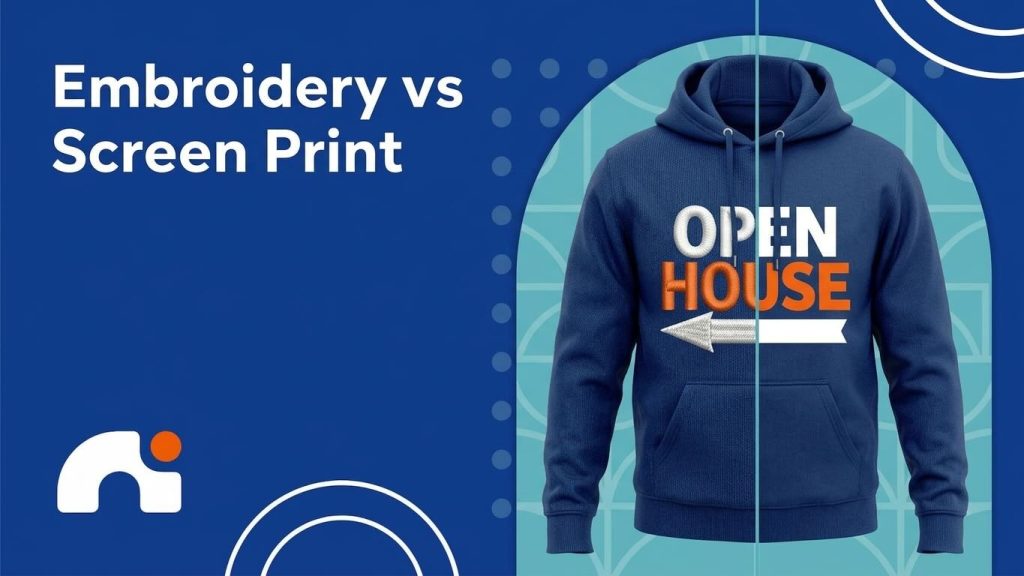
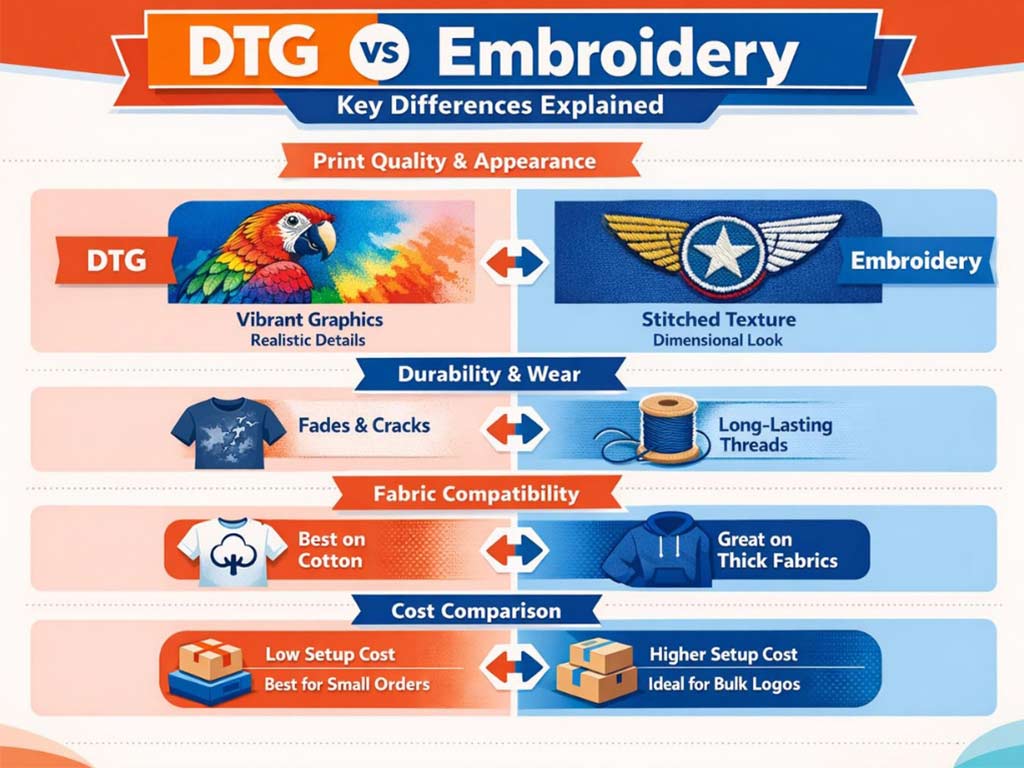
The simple question is: Does your design look more like a photo or colorful graphic or a clean, formal logo? If you’re going to print a busy, shaded, or multi-colored design on a t-shirt, DTG print quality is usually the better choice. For a cartoon, pet, or colorful artwork, DTG is a more comfortable choice.
But if your brand logo is small and you want it to look more serious on a polo, hat, or sweater, embroidery feels better.
The embroidery texture makes the design not only visible, but also tactile. This makes the embroidered logo appear more premium.
Long-Term Wear
Which lasts longer? In everyday use, embroidery is usually more durable because the design is sewn with thread inside the fabric.
For work uniforms, hats or garments that get frequent washing, the lifespan of embroidered clothing is usually longer.
DTG is also durable when properly washed, but it may fade slightly after several washes. To improve DTG wash resistance, it is best to wash the garment inside out, not in very hot water and not on a high heat setting in the dryer.
If you’re looking for long-lasting apparel printing, it’s not only the printing method that matters; how you care for the garment is also important.
Fabric Compatibility
Not every fabric pairs gracefully with every customization method. For DTG, cotton usually delivers the finest results, which is why cotton DTG printing remains a favorite for t-shirts and hoodies, especially for designs with “soft detail and vivid character.”
Embroidery works best on thicker fabrics. Polos, fleece, denim, jackets, and hats are all good choices.
Cost Comparison for Small and Bulk Orders
DTG is a good option for small orders. For example, if you only want 15 t-shirts for a short event, there is no high setup cost. But in bulk apparel customization, especially when a logo is repeated many times, embroidery makes more sense.
Of course, you also need to consider the embroidery setup cost. In custom apparel pricing, it is not just the final price that matters; you also need to consider whether the garment will be simple and economical or have a more premium look.
Which Customization Method Is Better for Different Apparel Types
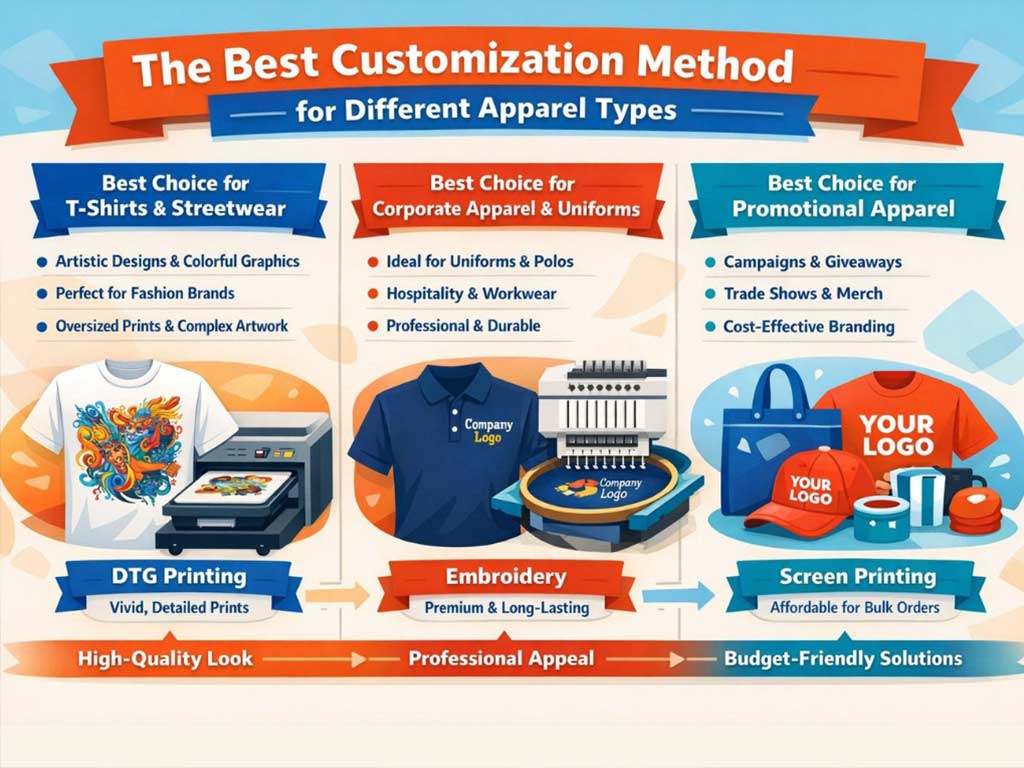
Best Choice for T-Shirts and Streetwear
Ask yourself: Does your design look like a colorful artwork or a simple logo?
If you have a design for a t-shirt, oversized hoodie, or custom streetwear with shadows, lots of colors, or a large image, DTG usually works best.
DTG streetwear printing is a more comfortable choice for small drops, artistic designs, and graphic t-shirt printing because it shows off the details better and doesn’t make the garment feel too heavy.
Best Choice for Corporate Apparel and Uniforms
But what about workwear? If a restaurant employee, sales team, or hotel staff is going to wear branded clothing every day, embroidery is usually a safer choice. Embroidered uniforms look neater on polo shirts, jackets, aprons, and workwear.
The reason is simple: A sewn-on logo feels less promotional and more trusting and organized.
That’s why professional embroidered apparel is best for brands that want a formal look.
If you have a local business and want to do embroidery in Houston, Alpha Imprint can help you provide a more practical choice for team uniforms and workwear.
Best Choice for Promotional Apparel
For promotional apparel, the answer isn’t always the same. If you have high volume and a limited budget, DTG is better suited to simple event t-shirts or short campaigns.
But if you want your brand gift to look more valuable, like an embroidered hat, hoodie or tote bag with a subtle logo, embroidery gives a more premium feel.
When choosing branded merchandise and promotional products in Houston, you first need to determine your goal: visibility at a lower cost, or durability and a more professional look?
Can You Combine DTG Printing and Embroidery?
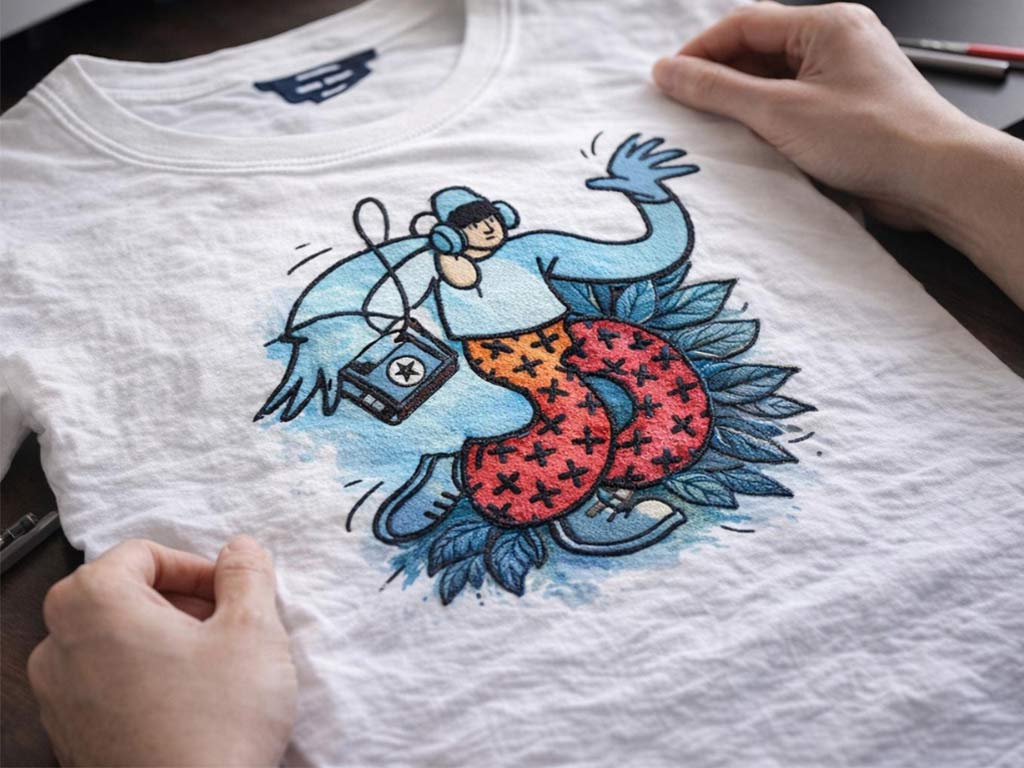
Yes, and sometimes it works better. The question is: where? Let’s say a streetwear brand wants a small embroidered logo on the chest of a hoodie and a large, colored design printed on the back. Here, the DTG and embroidery combination works very well.
With embroidery, you have a premium look and high-quality texture, while DTG is better suited for graphic, shaded, and colored designs.
This hybrid apparel customization model also applies to branded workwear; for example, a logo sewn onto a polo shirt and a graphic printed on the back.
Overall, mixed garment decoration helps to make the garment look more premium and more valuable to the customer.
How to Choose Between DTG and Embroidery
Ask yourself a few simple questions to decide between DTG vs embroidery.
- What is the garment: a cotton t-shirt, hoodie, polo or hat?
- Is your design photo-like and bold or just a small logo?
- Is the order volume low, or will it be repeated monthly?
The guidelines consider the same criteria: fabric type, design complexity, order volume, budget and expected durability.
If you have a colorful design and a low order volume, DTG printing vs embroidery usually comes closer to DTG.
If you want your item to look formal, have a long-lasting logo, and feel high-quality, embroidery is the better option.
For best results, think about how the garment will be used, and try out a sample with your chosen material and design before making a final decision. This way, you can be sure you’re picking the right method for each project.
Conclusion
This was your complete DTG vs embroidery guide; still not sure which method is best for your order?
Start your Direct-to-Garment Printing vs Embroidery comparison with the garment application. If you have a color scheme, high detail, and a limited order, DTG is a more convenient choice. If the garment is going to be worn every week and has a more formal look, embroidery usually gives a more reliable result.
FAQs
Is DTG or embroidery better?
If your design is photo-based and in color, DTG is better. If you have a small logo, uniform, or branded hat, embroidery usually looks more professional and durable.
What are the downsides of DTG printing?
DTG is good for large, colorful designs, but it’s not great on all fabrics, it’s slower for very large orders, and it can fade with poor washing.
Can you embroider over DTG?
Yes, but it’s usually better to start with a mixed design; for example, an embroidered logo on the chest and a color DTG print on the back of the garment.
What is the lifespan of a DTG print?
There is no fixed lifespan for a DTG print. However, washing inside out in cold water and drying gently will increase longevity.
Does DTG printing peel off?
DTG doesn’t stick to clothing like vinyl; the ink is absorbed into the fabric fibers. So it usually doesn’t peel, but it may fade after multiple washes.
What sells most on print on demand?
T-shirts, hoodies, tote bags, mugs, phone cases, and posters typically sell well with print on demand because they are easy to customize and in constant demand.
Does DTG printing feel like vinyl?
No, the ink is printed directly onto the fabric, the output is smoother and less plasticky or sticky.