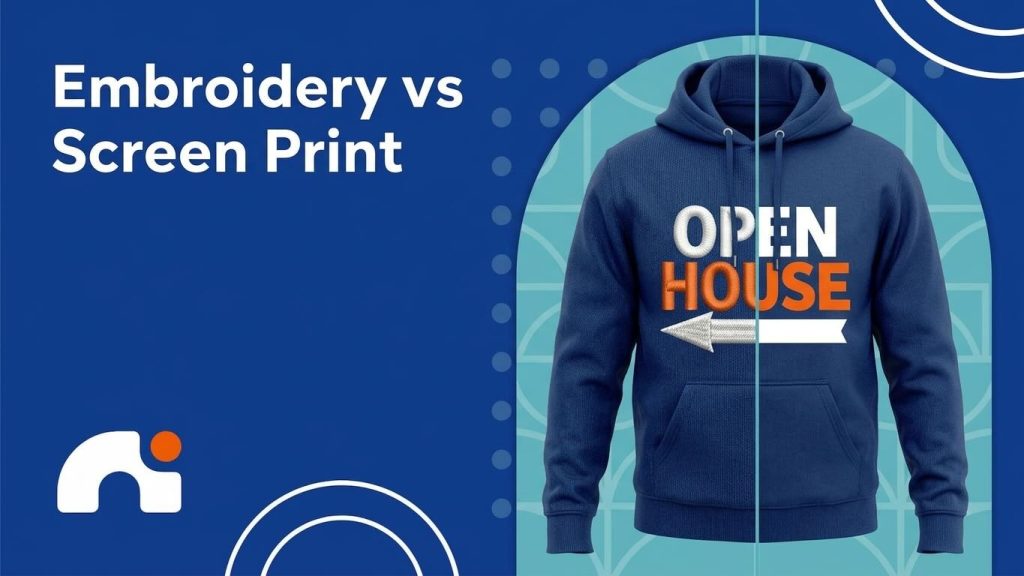



If you still think that sewing and embroidery are the same, a comparison of embroidery vs sewing will quickly clarify the main difference.
At first, sewing and embroidery can look the same because both use thread, needles and fabric. That’s why the question of embroidery vs sewing comes up so often for beginners, fashion lovers and businesses.
The difference is simple: sewing builds or repairs fabric items, while embroidery adds designs, logos, names or decorative details.
What Is Sewing?
The Main Purpose of Sewing
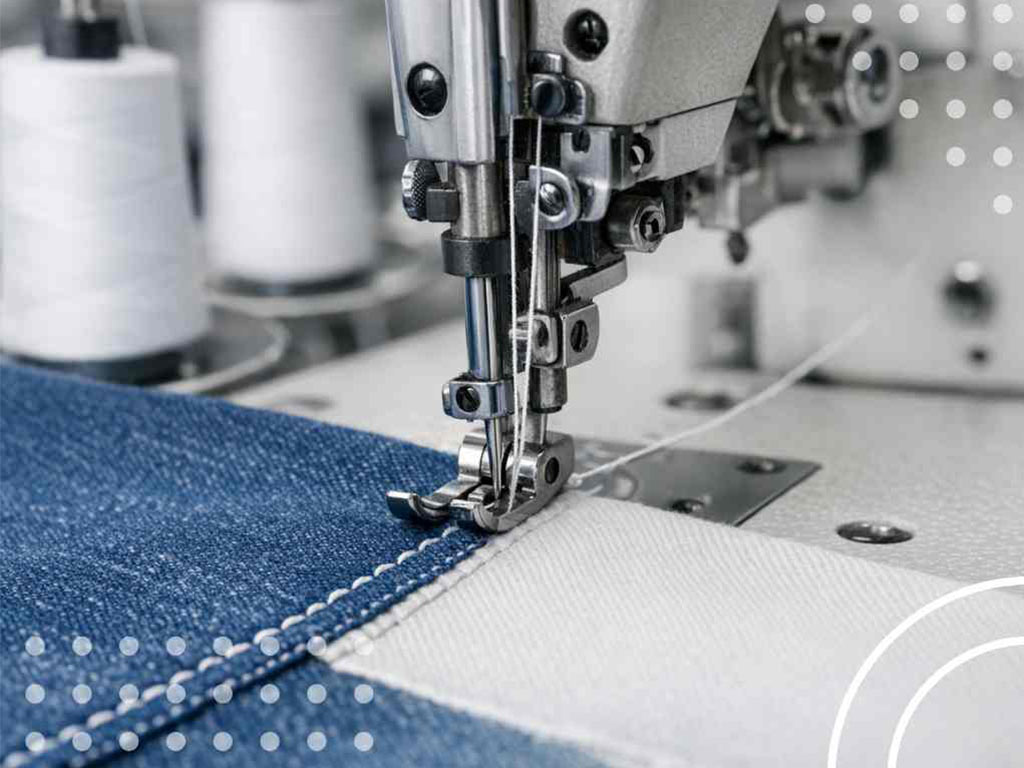
The definition is simply: sewing means to connect fabrics with thread and needle. For example, when pants are shortened, a dropped button is sewn back on, a seam is repaired, or a fabric bag is made from several pieces of fabric, we are talking about sewing.
In comparison of embroidery vs sewing, sewing is more about making, connecting, and repairing. That is, its main purpose is functional, not decorative. This can be done by hand or with a sewing machine.
Common Sewing Tools and Materials
Common sewing tools are familiar things: needles, thread, sewing machine, scissors, pins, tape measure, and fabric. Sewing tools are mostly used for cutting, measuring, holding, and sewing.
Sewing materials also include fabric, thread, buttons, zippers, elastic and lining. In sewing, the priority is to make the garment or item work properly and last.
What Is Embroidery?
The Main Purpose of Embroidery
What is embroidery? Unlike sewing, which usually joins fabrics together, embroidery is more commonly used to beautify or brand an item.
For example, a logo sewn on a polo shirt, a name on a towel, a flower on a tote bag or a small icon on a hat are all examples of embroidery.
In the stitching vs embroidery discussion, it should be said that embroidery also uses stitches, but its purpose is to create a design, texture, logo, or artwork, not to make the garment itself. This is the simplest embroidery definition.
Common Embroidery Tools and Materials
Embroidery tools are more used for fine details.
Things like an embroidery hoop, stabilizer, backing, embroidery floss, special thread, and embroidery machine are common in this work.
The difference with sewing is that here it is not just about stitching; the design must remain clean, legible, and stable on the fabric. A stabilizer also helps the fabric not to bunch or move during sewing.
Embroidery vs Sewing: The Core Differences
Functionality vs Decoration
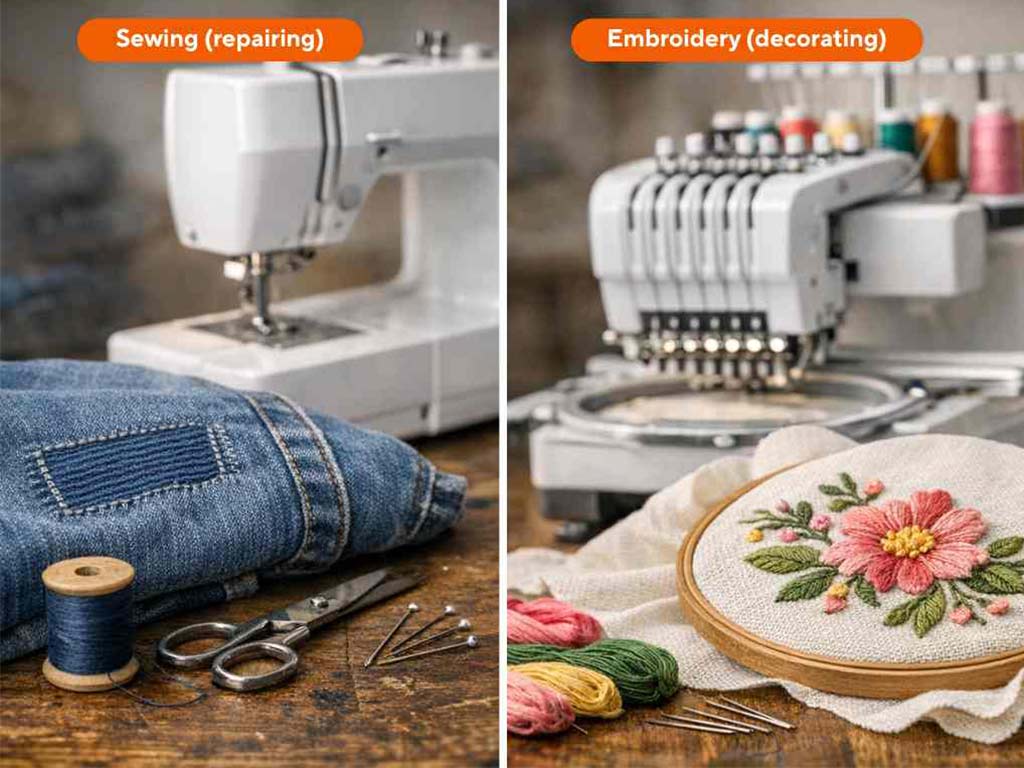
The main difference between embroidery vs sewing starts with the goal. Sewing is for practical things, like to join two pieces of fabric, or to mend ripped pants, or sew on buttons or to shorten sleeves. But embroidery is more used to make fabric more beautiful.
In the stitching vs embroidery discussion, it should be said that both use stitches, but one is more for construction and repair, the other for design and appearance.
Techniques and Stitching Styles
In sewing, stitches should usually be strong and clean, such as a garment seam, hem or zipper stitch. Sewing stitches are mostly planned to hold the fabric.
On the other hand, embroidery uses more decorative stitches like satin stitch, chain stitch, running stitch and fill stitch.
So in embroidered vs stitched comparison, stitched can be any kind of stitching while embroidered means stitching that creates design and visual effect.
Equipment and Machines
A sewing machine is used to sew seams, repair and make clothing.
Embroidery equipment like hoops, stabilizers, and embroidery machines are used to execute a design more precisely.
In computerized embroidery, the design is first digitized so that the machine knows where to stitch the thread and at what density. Some newer machines also do both sewing and embroidery.
Is Embroidery Sewing
Understanding Their Relationship
Is embroidery sewing?
Technically, embroidery is a type of sewing, as it is done with thread and a needle.
Sewing is used to make or repair clothing like sewing a seam on a pair of pants or attaching a sleeve. Embroidery is more about adding a design, logo or writing to a piece of fabric.
When comparing stitching vs embroidery, embroidery is typically more decorative and visual.
Of course, someone who does embroidery should also be familiar with basic sewing skills.
Are Embroidered and Stitched the Same
Understanding the Terminology
Embroidered and stitched are not exactly the same.
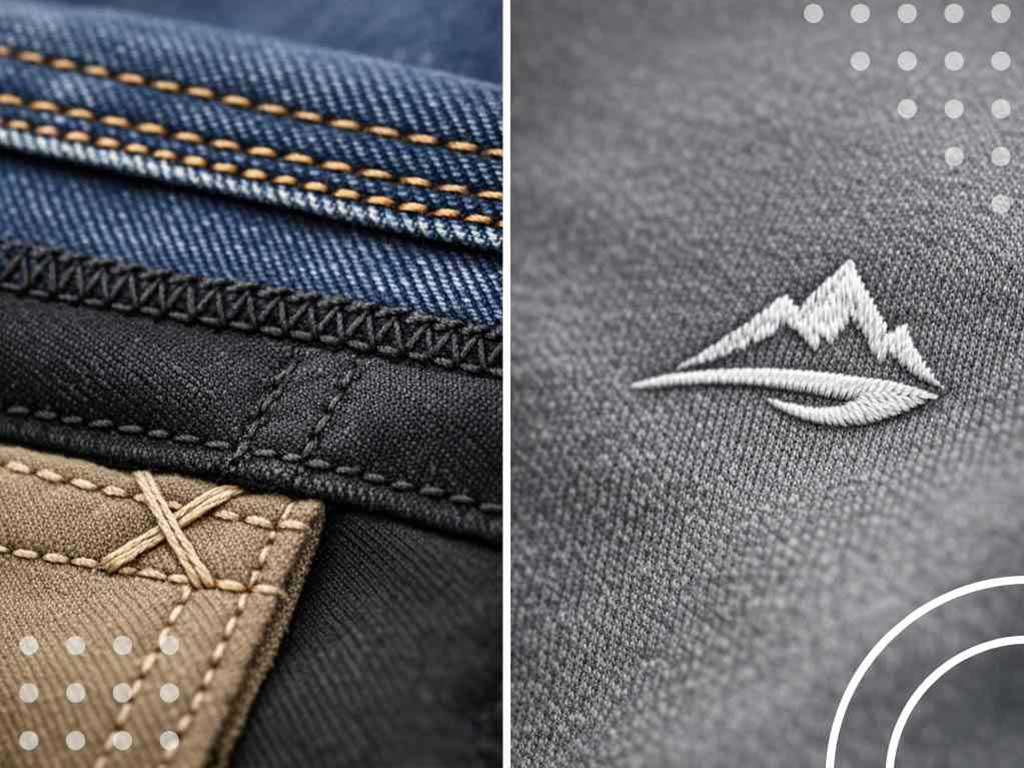
Stitched means something is done with stitches; this could be a simple seam inside a garment, a zipper stitch, or even repairing a tear.
But embroidered means stitching that is used to create a design or decorative appearance.
For example, the side seam of a T-shirt is stitched, but a logo sewn on a polo shirt is embroidered.
For this reason, embroidered apparel is usually clothing such as hats, polo shirts, hoodies, or uniforms that have a logo, name, or design embroidered with thread, rather than just the structural stitching of the garment.
Which Is Easier to Learn for Beginners?
Beginner Difficulty Comparison
To start, sewing may seem a little more practical; you can quickly sew on a button, shorten a pair of pants, or mend a simple seam.
But learning embroidery requires a little more patience and precision, because the goal is not just to sew; the design should look clean and legible. Embroidery for beginners usually starts with small designs, simple letters, or tiny flowers.
If you go for machine embroidery, you’ll also need to familiarize yourself with a design file and digitizing software. But it’s not difficult; it’s just better to start with simple projects.
Trust Alpha Imprint for Reliable Custom Embroidery in Houston
Professional Embroidery for Businesses and Events
In Houston, many brands need items that are both functional and professional for trade shows, employee uniforms, local events, and company branding.
If you need to do embroidery in Houston, Alpha Imprint will guide you as a local partner. Keep in mind, embroidered hats, polos, uniforms, tote bags and branded apparel build trust when executed with a clean logo and proper placement.
With over 250,000 customizable products, design help, mockups, in-house embroidery and printing services, we also offer a wide range of options for promotional products in Houston.
When Should You Choose Sewing Instead of Embroidery
Best Use Cases for Sewing
When your goal is to make, repair, or alter the shape of a garment, sewing is the better choice. Sewing applications include shortening pants, mending a torn seam, sewing on a button, tightening a shirt, making a dress from a pattern, or even sewing chair covers and curtains.
If a sleeve is too long or a zipper on a bag is broken, embroidery won’t help; here, sewing is faster, more practical, and makes more sense, because the main concern is not the decorative appearance, but the functionality and durability of the fabric.
When Should You Choose Embroidery Instead of Sewing?
Best Use Cases for Embroidery
If you want to give an identity to a garment or textile product, embroidery is the better choice. Embroidered applications are great for a company logo, a name on a uniform, a monogram on a towel, a patch on a jacket, a decorative design on a tote bag, or a branded hat.
Unlike sewing, which is more structural, embroidery gives the product a more polished and enduring appearance. “It transforms ordinary fabric into something with identity and presence.”
For businesses, custom embroidered apparel like polo shirts, hats, or workwear can make the brand look more serious and be more visible in everyday use.
Conclusion
The easiest way to understand sewing vs embroidery is to look at the goal. Sewing is for making, fixing, or shaping fabric.
Embroidery is for decorating, branding, or making it personal. So before choosing a method, ask yourself one thing: do you need structure, or do you need design?
FAQs
Is sewing easier than embroidery?
For starters, sewing is usually easier; you can sew on buttons, mend seams or shorten pants more quickly.
Is sewing a lost skill?
No, sewing is still useful. Many people relearn it for clothing repair, alterations, DIY projects and thrifting.
Is embroidery beginner friendly?
Yes, if you start with simple designs. Short letters, small flowers and simple icons are good for you.
Is embroidery more expensive than sewing?
Usually yes, because embroidery requires more precise design, digitizing, colored threads, stabilizer and time.
Can a sewing machine do embroidery?
No, a regular sewing machine does not, but some newer machines are hybrids and do both sewing and machine embroidery.