



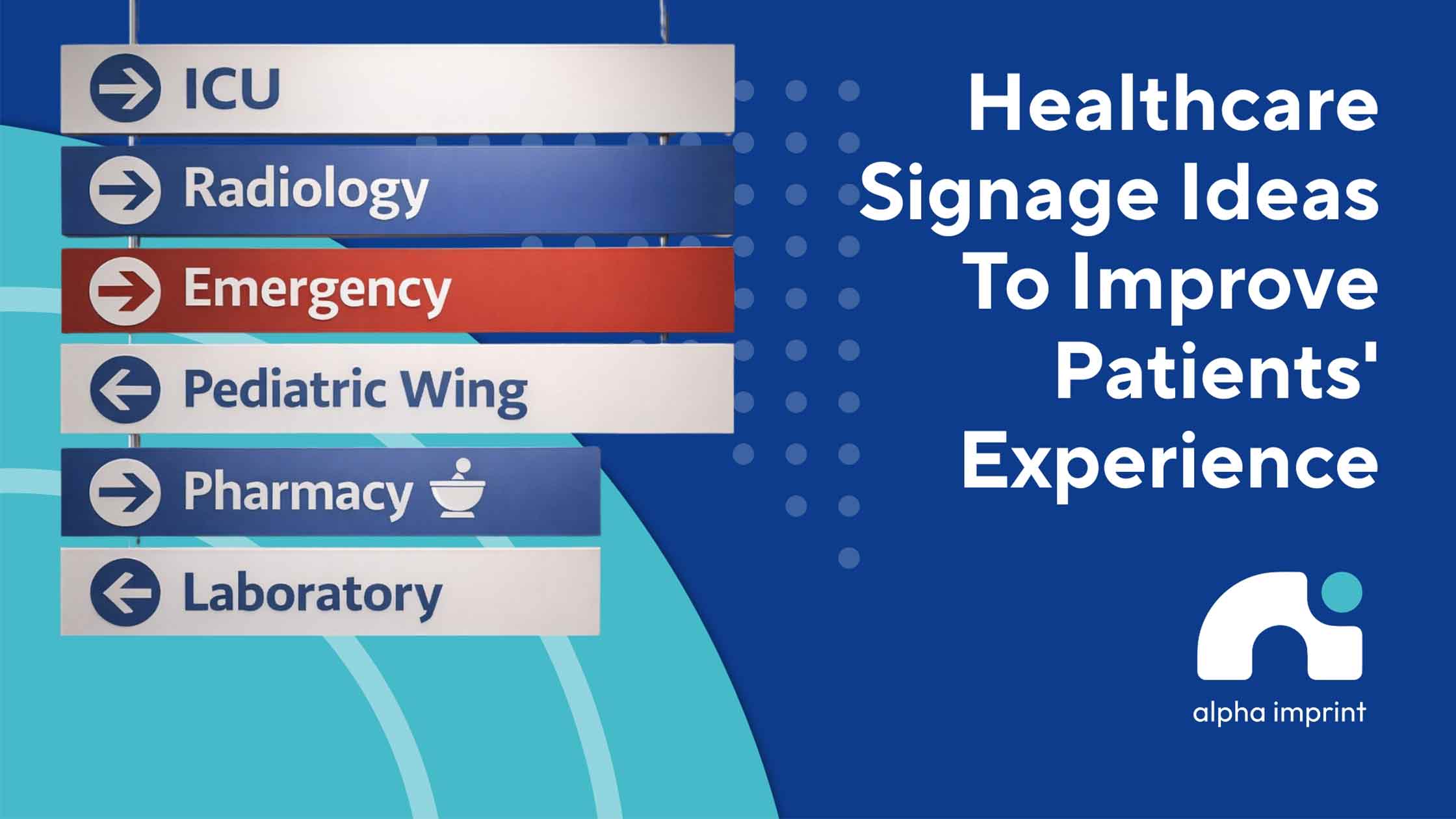
When designed properly, the right healthcare signage ideas just show the way; they build trust.
When patients arrive at a clinic or hospital, they want clear directions.
Using the right hospital signs ideas helps reduce stress, simplify navigation and build trust.
Today, physical and digital signage is used in healthcare facilities for navigation, safety, communication, branding and better patient flow management.
What Are The Best Healthcare Sign Ideas? (Quick Answer!)
| Signage Idea | Purpose | Example |
|---|---|---|
| Wayfinding & Directional Signs | Help patients navigate easily | Floor directories, arrows, elevator signs |
| Waiting Room Signs | Keep patients informed | Wait times, queue updates, wellness tips |
| Exterior Healthcare Signs | Build trust & visibility | Monument signs, entrance signs, parking signs |
| Department Identification Signs | Identify hospital areas clearly | ICU, radiology, ER, pharmacy signs |
| ADA-Compliant Signs | Improve accessibility | Braille signs, raised letters, high-contrast signs |
| Digital Signage | Share real-time updates | Appointment schedules, emergency alerts |
| Reception & Front Desk Signs | Simplify check-in process | Insurance info, visitor rules, check-in signs |
| Branded Clinic Signs | Strengthen healthcare branding | Logo walls, branded room signage |
| Interactive Kiosks | Provide smart navigation | Touchscreen maps, self check-in kiosks |
| Wellness & Calming Signs | Reduce patient anxiety | Nature graphics, calming messages |
Why Healthcare Signage Matters for Patient Experience
How Signage Reduces Patient Stress and Confusion
When a patient first enters a hospital or clinic, they are usually not relaxed and unconcerned; they are looking for an admissions office, an emergency room, a lab, or a doctor’s office.
Straightforward healthcare signage helps patients ask fewer questions, find their way around more quickly and feel more in control.
Plus, for caregivers and urgent situations, hospital navigation signs, such as directional arrows, floor numbers and ward names, prevent confusion.
The Role of Signage in Modern Healthcare Facilities
In modern healthcare facilities, signage is part of communication, safety and brand identity. Medical center signage can include fixed signs, digital displays, warning signs, reception signs and ward guides.
For hospitals, clinics, urgent care centers, and specialty practices, healthcare facility signs create a more professional, organized, and trustworthy environment.
Best Healthcare Signage Ideas for Hospitals and Clinics
Wayfinding and Directional Signs
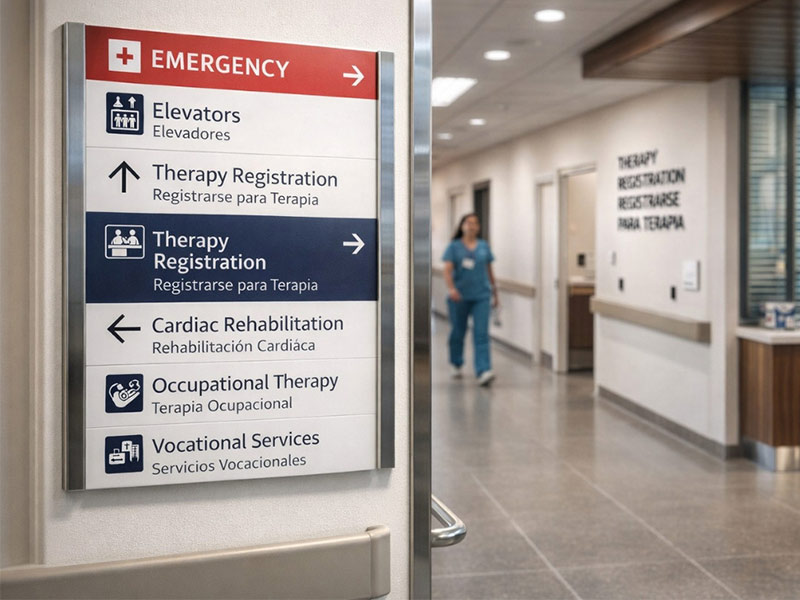
Of all the hospital sign ideas, the wayfinding system is the most important. Hospitals need floor directories, directional arrows, ward labels, parking signs, elevator signs and interior hospital signage.
If a patient is looking for radiology or emergency, they don’t have to ask staff in every hallway. In public spaces, ADA-compliant signage, legible contrast, clear icons and sometimes multilingual signs also improve the patient experience.
Waiting Room Signs That Keep Patients Informed
Waiting room signs can show estimated wait times, reminders about documents, tips for visits, wellness messages, and admissions guidelines.
Healthcare digital displays can display up-to-date appointments, queue updates, and educational messages, making the wait feel shorter.
Exterior Healthcare Signage That Builds Trust
Before a patient enters, exterior signage is the first sign of trust. Clinic exterior signage, such as monument signs, illuminated signs, entrance signs, building numbers and parking signs, should be clearly visible from the street.
For clinics and local healthcare facilities that require signage in Houston, brand color coordination, lighting and material durability are all important.
Interior Hospital Signage Ideas That Improve Navigation
Department Identification Signs
Inside a hospital, every sign should quickly answer: “Where do I go?”
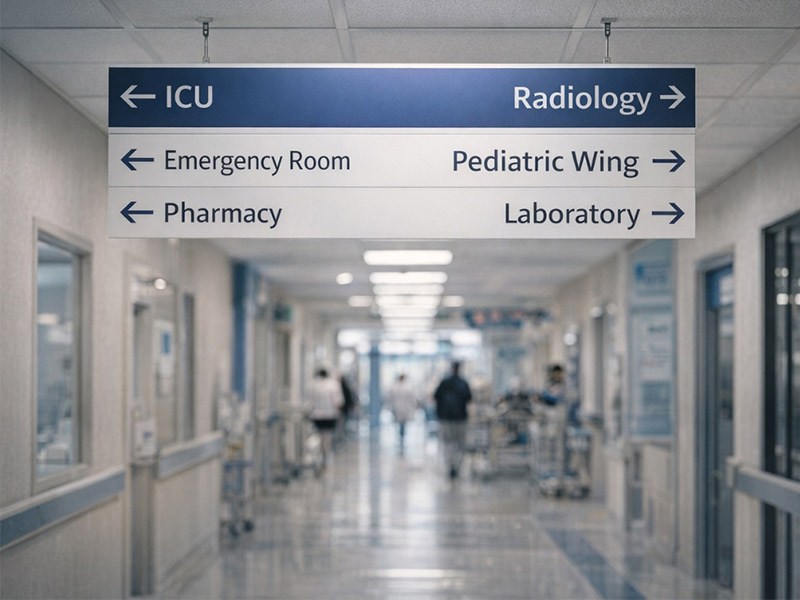
Hospital department signs for the ICU, radiology, emergency room, pediatric wing, pharmacy and laboratory should be designed with the same font, clear color scheme and simple icons.
For example, if the pediatric ward is marked in blue and the laboratory in green, the patient or companion will recognize the route more quickly.
Emergency room signs should be clearly visible from the hallway and the entrance, and radiology signage should guide patients to the imaging department without much inquiry.
ADA-Compliant and Accessibility Signage
In terms of ADA healthcare signage, legibility is not just for the able-bodied.
Permanent room signs should also be usable by people with low vision or blindness; this means raised characters, Braille, good contrast and a glare-free surface are important.
These types of patient-accessibility signs help patients feel safer in the healthcare setting.
Digital Signage for Real-Time Communication
Digital healthcare signage provides real-time information, such as appointment numbers, doctor schedules, appointment changes, emergency alerts or educational messages.
In a busy waiting area, displaying queue updates and appointment schedules helps patients feel less confused and helps staff avoid answering the same question over and over again.
Medical Clinic Signage Ideas for Smaller Practices
Reception and Front Desk Signage
In a small clinic, the reception area is the first point of contact for patients.
Medical clinic signage should be simple and functional: check-in is here, insurance cards are available, where companions can wait, and what the rules are for visiting or canceling appointments.
A branded welcome sign behind the reception desk also adds a professional touch. When this information is clear, the waiting list is shorter and staff work more smoothly.
Personalized and Branded Clinic Signs
Branded healthcare signage for dental clinics, urgent care centers, and private practices builds trust.
A logo, corporate colors, consistent fonts, and consistent messaging make the patient feel like they’re in a well-organized facility.
For example, a dental clinic can use calm colors, a smile icon, and simple signage for the examination, billing, and consultation rooms.
Digital Healthcare Signage Trends and Smart Technology
Interactive Kiosks and Smart Navigation
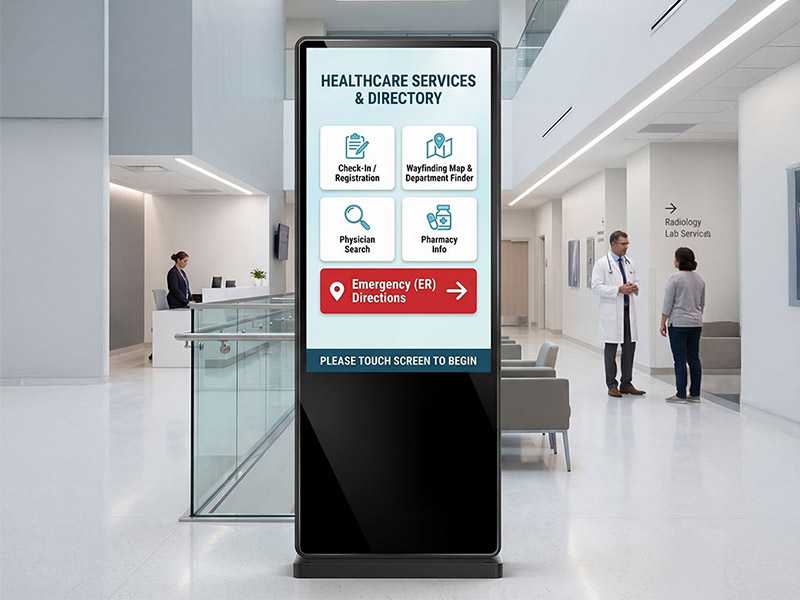
In large healthcare facilities, healthcare kiosks can help reduce the workload at the reception desk.
Patients can use a touchscreen map to find directions to the lab, pharmacy, or radiology floor, check in or quickly access basic forms.
Digital wayfinding systems are also more useful for anxious patients and out-of-town visitors when they are multilingual and have accessibility options.
These healthcare signage ideas model transform navigation from a confusing experience to a simpler process, especially in busy hospitals.
AI-Powered and Dynamic Content Displays
AI healthcare signage can adjust messages to the time, department or hospital conditions. For example, displaying wait times, doctor schedules, emergency alerts or alternate routes during busy times.
Dynamic digital signage updates more easily than printed signage and is more practical for queue management, appointment scheduling and brief health education.
Creative Sign Concepts for Better Engagement
The best signage ideas are those with a sense of calm. Nature imagery, soft colors, wellness messages and childlike graphics reduce anxiety. In modern hospital sign ideas, clean design, good lighting and a brief message are more important than visual clutter.
Common Healthcare Signage Mistakes to Avoid
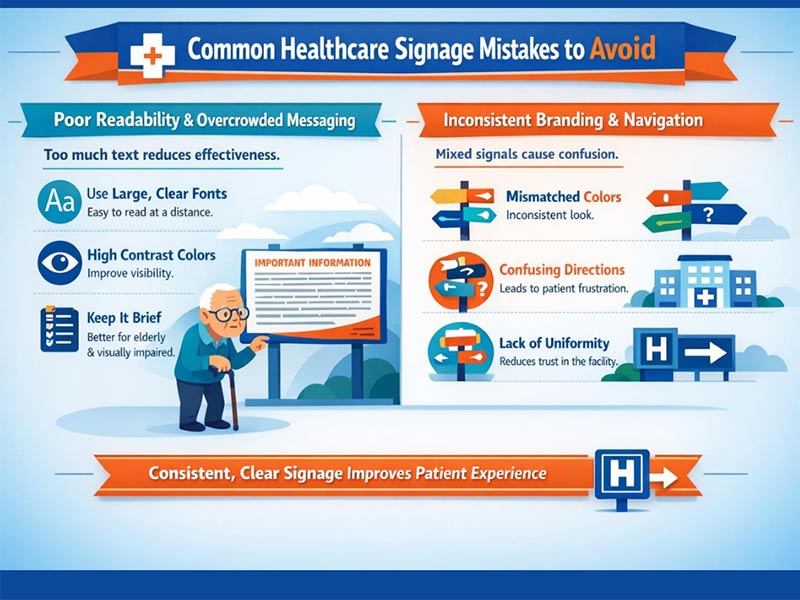
Poor Readability and Overcrowded Messaging
One of the most common healthcare signage mistakes is putting too much information on one sign.
A patient in the hallway doesn’t have time to read a paragraph, especially if they’re elderly, visually impaired or anxious. Small fonts, poor contrast, close-packed colors and long messages create healthcare communication problems.
The sign should quickly answer the question:
- Where do I go?
- Which door do I enter through?
- Which department is this?
Inconsistent Branding and Navigation
If one floor is marked blue, but the same department on the next floor is green, the patient will be confused. The best healthcare signage ideas are designed with a single system; the font, arrows, colors, icons and department names should be consistent.
Inconsistency causes healthcare wayfinding issues and makes patients feel less confident in the hospital’s organization.
What Does a Hospital Sign Look Like?
Common Features of Effective Hospital Signs
What does a hospital sign look like? It is usually simple, legible and easy to understand.
A good sign includes a large arrow, an elevator icon, a specific color for each department, the department name, room numbers, ADA signs or a digital display.
Among different hospital sign ideas, emergency entrance signs, floor directories, patient room signs and parking lot signs remain some of the most essential, “guiding patients through the maze with quiet clarity.”
Conclusion
With the right hospital sign ideas, directions are clear, patients are less confused and staff can easily manage daily communications. Healthcare signage is part of the patient experience, the healthcare facility’s brand and the space’s safety.
Combining traditional signage with digital displays makes clinics and hospitals look more organized, calm and trustworthy.
FAQs
What types of healthcare signage are most important?
The most important signs are those patients really need: emergency entrances, ward routes, elevators, parking lots, rooms and easy-to-read hospital signage.
How does digital signage improve patient experience?
Digital signage shows wait times, appointment numbers, doctor schedule changes and urgent messages. This reduces patient confusion.
What are the best signs for patients in waiting rooms?
In waiting rooms, the best signs provide simple information: approximate wait times, required documents, admission procedures, companion rules and short health messages.
Are healthcare facilities required to use ADA-compliant signs?
Yes, in many healthcare settings, accessible medical signs are required, like Braille, raised letters, high contrast and appropriate signage for accessible routes.